

 UK
 EN



Нурваті Ю.1
 Діана Р.2
Гардінсях Г.3
Ангграіні Р.1
Нур Афіфа Ч.А.1
Ісмаваті Р.1
Фікрі А.М.4
Праното А.5
Ключові слова: якість харчування, продовольча безпека, кишкова мікробіота, харчування, соціально-економічний статус
Key words: diet quality, food security, gut microbiota, nutrition, socioeconomic status
Реферат
Однією з ключових ролей мікробіоти кишківника є підтримання здоров’я людини. Продовольча безпека, зокрема пов’язані з харчуванням фактори, такі як якість раціону, доступність продуктів харчування та соціально-економічні умови, може впливати на відмінності в характері харчування і, відповідно, на склад мікробіоти кишківника. Метою цього систематичного огляду є узагальнення даних досліджень за участю людей щодо взаємозв’язку між продовольчою безпекою та пов’язаними з харчуванням факторами, з одного боку, і різноманітністю та складом мікробіоти кишківника – з іншого. Пошук літератури проводили в базах даних PubMed, Scopus, Google Scholar, Crossref та Semantic Scholar за публікаціями, опублікованими у 2005-2025 роках, відповідно до рекомендацій PRISMA. До огляду включали обсерваційні та інтервенційні дослідження за участю людей, у яких безпосередньо оцінювали стан продовольчої безпеки або використовували пов’язані з ним показники, такі як якість раціону, характер споживання їжі та соціально-економічний статус, а також наводили результати щодо різноманітності або складу мікробіоти кишківника на основі аналізу секвенування. Загалом критеріям включення відповідали 20 досліджень. У цілому дослідження, у яких безпосередньо оцінювали продовольчу безпеку, виявили відмінності в різноманітності та складі мікробіоти кишківника між групами з різним рівнем продовольчої безпеки. В інших дослідженнях, у яких використовували пов’язані з харчуванням фактори, було показано, що раціони вищої якості, зокрема багаті на рослинні продукти та клітковину, асоціюються з більшою різноманітністю мікробіоти та підвищеною чисельністю бактерій, що продукують коротколанцюгові жирні кислоти. Водночас раціони низької якості або обмежений доступ до продуктів харчування часто асоціювалися з менш різноманітною мікробіотою та переважанням умовно-патогенних бактерій. Ці результати відрізняються залежно від вікових груп і географічних умов, причому більшість доказів отримано в обсерваційних дослідженнях. Отже, цей систематичний огляд демонструє наявність взаємозв’язку між продовольчою безпекою та пов’язаними з харчуванням факторами, з одного боку, і різноманітністю та складом мікробіоти кишківника в людських популяціях – з іншого. Однак неоднорідність визначень продовольчої безпеки, відмінності в методах оцінювання мікробіоти та обмеження дизайну досліджень потребують обережної інтерпретації отриманих результатів. Для посилення наявної доказової бази необхідні лонгітюдні та експериментальні дослідження з використанням стандартизованих методів оцінювання продовольчої безпеки.
Abstract
Food security and diet-related factors associated with gut microbiota composition and diversity in human populations: a systematic literature review. Nurwati Y., Diana R., Hardinsyah H., Anggraini R., Nur Afifah C.A., Ismawati R.,Fikri A.M., Pranoto A. One of the key roles of the gut microbiota is to maintain human health. Food security, including diet-related factors such as diet quality, food access, and socioeconomic conditions, may influence dietary intake and, consequently, gut microbiota composition. This systematic review aimed to synthesize evidence from studies in human populations regarding the associations of food security and diet-related factors with gut microbiota diversity and composition. A literature search was conducted in the PubMed, Scopus, Google Scholar, Crossref, and Semantic Scholar databases for articles published between 2005 and 2025, following the PRISMA guidelines. The review included observational and interventional studies in humans that directly assessed food security status or used related indicators, such as diet quality, dietary patterns, and socioeconomic status, and reported findings on gut microbiota diversity or composition based on sequencing analysis. A total of 20 studies met the inclusion criteria. In general, studies that directly assessed food security reported differences in gut microbiota diversity and composition between groups with different levels of food security. Other studies using diet-related factors showed that higher-quality diets, particularly those rich in plant foods and fiber, were associated with greater microbiota diversity and a higher abundance of short-chain fatty acid – producing bacteria. Meanwhile, low-quality diets or limited access to food were often associated with less diverse microbiota and a predominance of opportunistic bacteria. These findings varied across age groups and geographic contexts, with the majority of evidence coming from observational studies. In conclusion, this systematic review demonstrates associations of food security and diet-related factors with gut microbiota diversity and composition in human populations. However, heterogeneity in the definitions of food security, variations in microbiota assessment methods, and limitations in study designs require cautious interpretation of the results. Longitudinal and experimental studies using standardized measures of food security are needed to strengthen the existing evidence.
The human gastrointestinal tract not only digests food and absorbs nutrients but also defends against disease-causing microbes (pathogens),contributes to immune homeostasis, and plays a role in regulating the immune system. The amount and quality or type of food components or nutrients influence the changes in the composition and diversity of gut microbiota including the relative abundance of commensal taxa, short-chain fatty acids (SCFA)-producing bacteria, proteolytic bacteria, and opportunistic taxa. Indigestible carbohydrates, a major components of dietary fiber, are fermented by fiber-degrading bacteria to produce SCFAs that support intestinal homeostasis under physiological conditions [1, 2]. In contrast, undigested proteins, of which an estimated 12-18 grams of protein reach the intestine daily and undergoes fermentation by the colonic microbiota[3,4], can serve as a substrate for the growth of proteolytic bacteria that produce branched-chain fatty acids such as isobutyrate, isovalerate, as well as nitrogen metabolites such as ammonia and p-cresol [4]. Meanwhile, dietary fat stimulates the secretion of bile acids from the gallbladder into the small intestine, where primary bile acids are further modified by intestinal bacteria into secondary bile acids through the processes of deconjugation and dehydroxylation [5]. Approximately 5% of conjugated bile acids that escape ileal reabsorption reach the colon and undergo further metabolism by the colonic microbiota, thereby influencing the composition and diversity of the gut microbiota [6].
The human gut microbiota, with the colon as its major reservoir, plays a key role in enabling and maintaining health by engaging in digestion, metabolic regulation, immune modulation, and neurodevelopment. Diversity and composition in this complex ecosystem, comprising trillions of microorganisms, are formed by multiple host, dietary, lifestyle, and environmental factors [7-9]. Considering the fact that up to 1,150 bacterial species may inhabit the human gastrointestinal tract, with the average healthy individual hosting 160 different species, the dominant phyla include Actinobacteria, Bacteroidetes, Firmicutes, Proteobacteria, and Verrucomicrobia, with Firmicutes and Bacteroidetes alone accounting for nearly 90% of the total microbial community [10, 11].
The last two decades of growing research have proven that ecological imbalance is a sign of microbiota dysbiosis. One of the most significant environmental and socioeconomic factors affecting gut microbiota dysbiosis is food intake, which is linked to food security status. Food security, including the availability, accessibility, and utilization of food, remains a cornerstone of public health globally [12]. In contrast, food insecurity, which indicates limited or no access to sufficient nutritious food, has the potential to decrease diet diversity and quality. In the long term, food insecurity can reduce dietary diversity and quality and can be categorized as mild, moderate, or severe [13]. The human gut microbiota is a complex ecosystem strongly influenced by diet-related factors, including food availability, accessibility, and utilization – dimensions that are closely linked to socioeconomic status, which forms individuals' capacity to access and consume nutritionally adequate diets [14, 15, 16].
These identified factors include low income, lower education, restricted community access to technology, particularly food-processing technologies, and limited household availability of food high in protein, vitamins, and minerals. Robinson et al. [17] also highlighted social equity as a major research priority in microbiome science, emphasizing the need to better understand how social conditions shape microbial exposures and health outcomes.Insufficient household food access may result in stunted children [18]. A study by Khine et al. [19] showed that dietary variables and the gastrointestinal environment had an influence on children’s microbiota profiles more strongly than does maternal microbial transmission. Children’s faecal microbiota changes from Bacteroides and Bifidobacterium to Prevotella as a result of dietary changes following weaning, which lowers Bifidobacterium levels [19]. Poor nutrition among toddlers and pre-schoolers has been reported to be associated with reduced gut microbiota diversity and increased Firmicutes-to-Bacteroidetes ratio, an indication of a dysbiosis condition [20].
Astudy by Ratnayani et al. [21] further highlights the interconnected influence of diet, environmental factors, and lifestyle on the gut microbiota composition. The results showed that stunted children were shown to have higher levels of potentially pathogenic bacteria, such as Escherichia coli, Enterococcus, Mitsuokella, and Providencia alcalifaciens, whereas non-stunted children demonstrated higher abundances of beneficial bacteria such as Bifidobacterium, Lactobacillus, and Akkermansia muciniphila. Determinants such as delivery mode, exclusive breastfeeding, sanitation practices, drinking water quality, and overall nutrient intake play critical roles in modulating gut microbiota composition [21]. Similarly, a study in Bangladesh revealed that despite nutritional interventions with the use of ready-to-use therapeutic foods (RUTF) and Kichuri Halwa, there remain chronic gut microbiota immaturity in malnourished children, suggesting that longer-term interventions or microbial supplementation may be needed for restoration of gut microbial development [22].
Food insecurity can contribute to nutritional deficiencies, thus adversely affecting the gut microbiome composition. Based on the bidirectional relationships between food security, diet quantity and quality, health, and the gut microbiota, this systematic review aims to summarize scientific evidence regarding the relationship between food security and dietary factors on gut microbiota diversity and composition in human populations. This review is expected to clarify the role of food security as an indirect determinant of the microbiota through diet quality, while also identifying evidence gaps for further research.
This research paper is structured over several sections. First, the methodology describes the search strategy, eligibility criteria, and data extraction procedures. Later, the results section integrates the findings obtained from the literature review. Further, the discussion section examines the findings and limitations of the review. Finally, the conclusion summarizes the key findings and provides recommendations for future research. Following this structured approach, the research aims to provide critical insights for nutrition policies, especially to improve food security condition and microbiome-targeted interventions to achieve the Sustainable Development Goals (SDGs), especially those aimed to ending hunger and malnutrition by 2030.
MATERIALS AND METHODS OF RESEARCH
This review was conceived as a systematic review to identify, select, and synthesize human studies reporting associations between food security or diet-related factors on gut microbiota diversity and composition. A systematic literature search was conducted from June 2025 to December 2025. Duplicate records were identified and removed using Covidence software prior to screening. The screening process was conducted in two stages: title and abstract screening followed by full-text assessment, both performed independently by two reviewers. Disagreements were resolved through discussion or consultation with a third reviewer. Studies were excluded if they were not published in English, involved non-human subjects, did not report gut microbiota outcomes, or lacked data on dietary or food security exposures.
A literature search was conducted using PubMed, Scopus, Google Scholar, Crossref, and Semantic Scholar databases. The search was conducted for articles published between 2005 and 2025. The keywords used were combined using the following Boolean operators: (“food insecurity” OR “food security” OR “diet quality” OR “food access” OR “socioeconomic status”) AND (“gut microbiota” OR “gut microbiome”) AND (“diversity” OR “composition”). An example of the search strategy in PubMed is as follows: (((“food security”[Title/Abstract]) OR (“diet quality”[Title/Abstract]) OR (“dietary pattern”[Title/Abstract]) OR (“food access”[Title/Abstract]) OR (“socioeconomic status”[Title/Abstract])) AND ((“gut microbiota”[Title/Abstract]) OR (“gut microbiome”[Title/Abstract])) AND ((“diversity”[Title/Abstract]) OR (“composition”[Title/Abstract]))). Based on preliminary evidence suggesting a link between food security, dietary patterns, and microbial health, this systematic review hypothesizes that food security status and diet-related factors are associated with gut microbiota diversity and composition in human populations. Furthermore, a better-quality diet is expected to be associated with higher microbiota diversity and a greater proportion of short-chain fatty acid (SCFA)-producing bacteria. This identification step, with the application of these keywords, yielded a total of 407 articles. Figure illustrates the steps involved in conducting this systematic literature review.
Ethical approval for the study was granted by the Ethical Committee Universitas KH. A.Wahab Hasbullah (No. Ket-081/LPPM-UNWAHA/S.Ket/IV/2026).
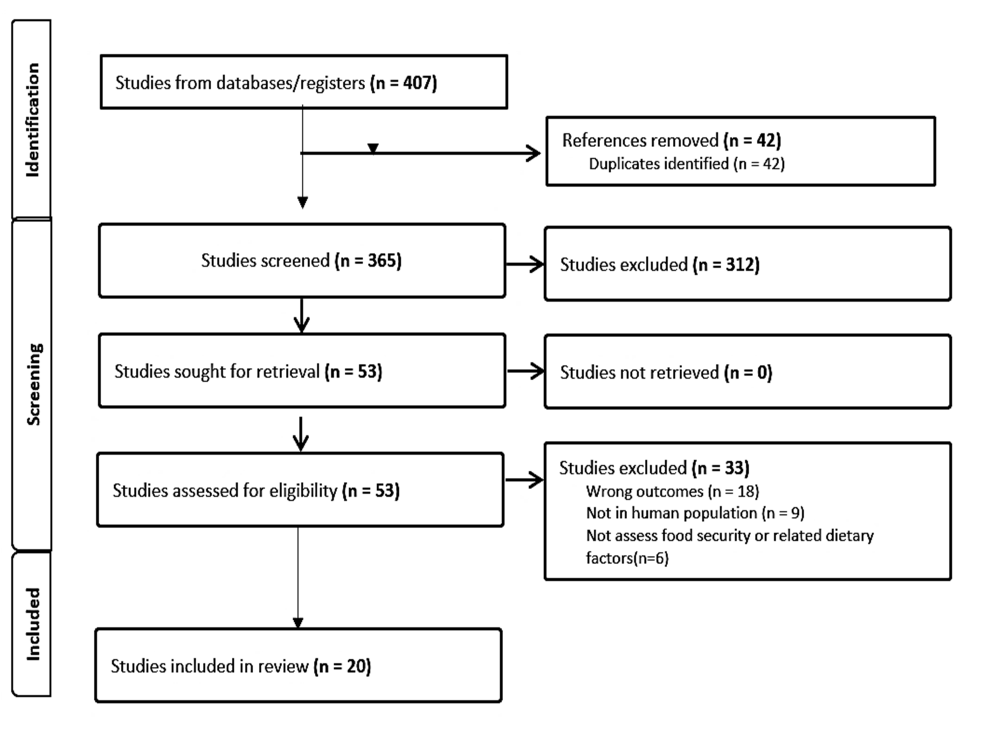
Data sources were chosen based on predefined criteria established by the authors. Eligible studies were defined as follows: 1) original research written in English; 2) research in human populations; 3) assessed food security directly or using related indicators (diet quality, food access, or socioeconomic status); 4) reported results on gut microbiota diversity or composition based on sequencing analysis; 5) observational or interventional study designs. The selection process followed PRISMA guidelines. Both the selection and screening were conducted collaboratively by the authors through iterative evaluation.
Extracted data included authors, study design, population characteristics, location, method of assessing food security or dietary factors, microbiota analysis method, and key outcomes related to gut microbiota diversity and composition. The methodological quality of cross-sectional and longitudinal observational studies (13 studies) was assessed using the Newcastle-Ottawa Scale (NOS) and studies with randomized controlled trial designs (7 studies) were assessed using the Cochrane Risk of Bias tool version 2 (RoB 2). Assessments were conducted independently by two authors and discrepancies were resolved through discussion. Most observational studies demonstrated good to high methodological quality (NOS 8-9/10) (Table 2 and 3). RCTs generally showed a risk of bias of some concern, primarily due to the lack of blinding and short intervention duration. Overall, the quality of evidence was assessed as adequate for the systematic review. Due to heterogeneity in study designs, food security measurement methods, and microbiota outcomes, a structured narrative synthesis was conducted. Results are presented by age group and type of exposure to food security or diet-related factors.
RESULTS AND DISCUSSION
A literature search of scientific databases yielded a number of articles, which were then selected through identification, title and abstract screening, and full-text evaluation. After eliminating duplicates and applying inclusion criteria, 20 studies were eligible for analysis in this systematic review (Table 1). The detailed study selection process is shown in the PRISMA diagram (Figure). The included studies came from various geographic regions, including Europe, Asia, North America, and Latin America. This diversity of study locations allows for exploration of the relationship between food security, dietary patterns, and gut microbiota in populations with different socioeconomic and cultural backgrounds. Therefore, the results of this review reflect evidence from diverse geographic and socioeconomic contexts of microbiota variation associated with dietary factors and food access. A recent narrative synthesis by Ratcliff et al. reviewed 26 studies investigating the relationship between socioeconomic position and gut microbiota. While their review provided an important conceptual overview, our systematic review expands the evidence by incorporating more recent studies and applying a structured systematic-review methodology [15].
Author Design Subjects Location Methods Results Bixby et al [23] Cross-sectional 643 participants from the Survey of the Health Wisconsin (SHOW) and its ancillary Wisconsin Microbiome Study (WMS) Madison Individual nutrition scores were calculated using the My Nutrition Index (MNI) from food frequency questionnaires (FFQ) and demographic surveys. Food security assessment: self-reported questionnaires Gut microbiome analysis: 16S amplicon sequencing of DNA extracted Associations, adjusted for confounding and interaction by food security, were estimated using Weighed Quantile Sum (WQS) regression models with Random Subset and Repeated Holdout extensions (WQSRSRH) The average MNI was 66.5 and 22.8% of participants were food insecure. Increased MNI was significantly associated with gut microbiome alteration, with Ruminococcus, Oscillospira, and Blautia among the most heavily weighted of the 21 genera associated with the MNI score. Bisanz et al. [24] Randomized open-label pilot study A group Mwanza, Tanzania Blood-metal analysis: HR-SF-ICP-MS Gut microbiome analysis: 16S rRNA sequencing on Ion Torrent platform DNA Extraction: EZNA stool kit The children and pregnant women in the study were found to have elevated blood levels of lead and mercury compared to age- and sex-matched Canadians Consumption of probiotic yoghurt had a protective effect against further increases in mercury and arsenic blood levels in the pregnant women, but this trend was Elevated blood lead was associated with increases in Succinivibrionaceae and Gammaproteobacteria relative abundance levels in stool Noh et al. [25] Cross-sectional 222 healthy Koreans aged 18-58 years The Republic of Korea Lifestyle questionnaire and a food frequency questionnaires (FFQ) on-site fecal A plant-and fermented food-based diet was positively associated with higher alpha diversity and beneficial Firmicutes genera such as Lactobacillus, Ruminococcus, and Eubacterium. The Ruminococcus heterotype was associated with higher intake of vegetables, seaweeds, and nuts/seeds, and higher scores of the high alpha diversity dietary pattern Garcỉa-Vega et al. [26] Cross-sectional 441 Colombians 18-62 years of age, sex, age groups (18-40 and 41-62 years) and BMI (lean, overweight, and obese) Colombia Dietary data were collected using 24-hour dietary recalls. Gut microbiota was assessed using PCR amplification and sequencing of the 16S rRNA gene. Individuals with higher intake of plant-based nutrients had higher microbial diversity and a microbiota rich in SCFA-producing bacteria. Diets high in animal products and ultra-processed foods were associated with an inflammatory microbiota characterized by bile-tolerant and opportunistic pathogens Diet quality was strongly associated with gut microbiota composition with plant-based diets promoting a healthier microbiota Han et al. [27] Randomized-controlled trial 24 obese women (30-60 years) were randomly assigned to either fresh or fermented kimchi group for eight weeks of intervention The Republic of Korea Pyrosequencing was used to analyze fecal microbiota Fermented kimchi decreased the Firmicutes/Bacteroidetes ratio, increased Bacteroides and Prevotella and decreased Blautia, indicating a shift towards a lean enterotype pattern. Foerster et al. [28] Randomized-crossover intervention trial 20 healthy adults consumed two isocaloric diets; one rich in whole grain products and the other high in red meat, in a 10-week crossover intervention Germany Gut microbiome analysis used 16S rRNA-based denaturing gradient gel electrophoresis (DGGE) Blood samples were collected to analyze clinical blood parameters (CRP, cholesterol, and uric acid) Faecal samples were analyzed for microbiota composition using PCR-DGGE and for SCFA using gas chromatography Dietary intervention with whole grain (WG) and red meat (RM) modified intestinal microbiota composition with 8 bands changing in at least 4 participants. The WG intervention reduced obesity parameters, while the RM diet increased serum levels of uric acid and creatine. The intervention did not significantly change SCFA concentrations and calprotectin measured in faecal samples Koponen et al. [29] Cross-sectional 4930 participants aged 25-74 from the FINRISK 2002 study Finland Dietary intake was assessed using a food propensity questionnaire which was transformed into a healthy food choices (HFC) score Stool samples were analyzed using SHOGUN for taxonomic classification Both microbial alpha diversity and beta diversity were associated with the HFC score For alpha diversity, the strongest associations were observed for fiber-rich breads, poultry, fruits, and low fat cheeses (all positive) For beta diversity, the most prominent associations were observed for vegetables, followed by berries and fruits. Genera with fiber-degrading and SCFA-producing capacities were positively associated with the EHFC score Bourdeau-Julien et al. [30] Longitudinal 21 healthy young adults from 20 to 34 years old consisting of 11 women and 10 men with general good health and a body mass index between 18.5 and 30 kg/m2 Quebec City, Canada Participants received a Mediterranean diet for 3 days, followed by a Canadian diet for 13 days, and then another Mediterranean diet for 3 days Fecal and blood samples were collected at the end of each dietary phase Plasma lipid mediators were measured using LC-MC/MS SCFA and BCFA were quantified using a GC-FID system The gut microbiota responded immediately to dietary changes, Neacsu et al. [31] Randomized-controlled crossover trial 20 healthy male and female volunteers aged 18-65 years old with BMI 18-35 kg/m2, received two Aberdeen, UK The intervention diets were standardized with a four-day rotation menu, and energy requirements were tailored to individual participants based on their resting metabolic rate Both intervention diets were as satiating as the volunteers’ Fava bean diet promoted the growth of the gut bacterium Coprococcus eutactus Rosés et al. [32] Observational 360 Spanish adults of self-reported European ancestry Spain Participants’ dietary intake was assessed using a validated FFQ and a PREDIMED questionnaire to measure adherence to the Mediterranean Diet (MD) Fecal samples were collected and analyzed using 16S rRNA gene sequencing Bifidobacterium animalis was the species with the strongest association with the MD. In conclusion, this study showed that MD, fiber, legumes, vegetable, fruit, and nut intake are associated with an increase in butyrate-producing taxa such as Roseburia faecis, Ruminococcus bromii, and Oscillospira plautii Malinowska et al. [33] Cross-sectional 200 participants divided into healthy dietary pattern (HDP) and western dietary pattern (WDP) groups Poznań, Poland Diet assessment using 3-day food records and Easy Diet Screener questionnaire Fecal microbiota composition assessed by 16S rRNA gene sequencing There was a difference in gut microbiota composition between individuals with healthy (higher abundance of Firmicutes and Faecalibacterium) and western dietary pattern The abundance of beneficial gut microbiota is associated with high intake of vegetables, fruits, and fiber, while unfavorable microbiota is linked to high intake of added sugar and soft drinks and the low intake of fiber Zhang et al. [34] Longitudinal 64 Mongolians; 454 pyrosequencing and q-PCR technology Ulan Bator, TUW Province and the Khentii pasturing area Fecal samples were collected from 64 Mongolian The Mongolian gut microbiota is dominated by Bacteroidetes The dietary structure was diverse and stable throughout the year in Ulan Bator and TUW but was simple and varied during the year in Khentii Seasonal dietary changes significantly impact the intestinal microbiota, particularly Stull et al. [35] Randomized-crossover trial 20 healthy adults, aged 18-65 years Finland Participants consumed either cricket-containing or control breakfast foods for 14 days, followed by a washout period and then switched to the other treatment Blood and stool samples were collected at baseline and after each treatment period Cricket consumption was found to be safe and non-toxic Cricket powder supported the growth of the probiotic bacterium Bifidobacterium animalis. Cricket consumption was associated with reduced plasma TNF-alpha, indicating a decrease in systemic inflammation Ren et al. [36] Independent cohort The Chinese Healthy Gut Project (n=483) China Fecal samples were collected using sterile tubes Prevotella and Bacteroides were identified as the most abundant genera in a healthy Chinese gut microbiome Lifestyle factors, such as sleep procrastination, negative mood, and drinking habits were found Wang et al. [37] Randomized-crossover controlled trial 123 healthy subjects (63 men and 60 women) China Participants consumed ginger juice Gut microbiota analysis: 16S rRNA sequencing; DNA extraction Ginger juice intervention increased the species number of intestinal flora and altered the relative abundance of certain bacterial genera, such as decreasing proinflammatory species and increasing anti-inflammatory species Short-term intake of ginger juice had substantial effects on the composition and function of gut microbiota in healthy people Roy et al. [38] Observational 1,000 predominantly female UK twins Employed FFQs from Twin-UK cohort UK Consumption of yoghurt: 131-item FFQ Healthy Eating Index (HEI) to identify the association between yoghurt consumption and eating patterns Healthy biomarkers by collecting body composition measurements Faecal sample collection for measuring gut microbiota Yoghurt consumption is associated with reduced visceral fat mass and changes in the gut microbiome, including a transient increase in yoghurt-containing species like Streptococcus thermophilus, and Bifidobacterium lactis Consumers have a healthier diet pattern and improved metabolic health as indicated by higher healthy eating index and reduced visceral fat mass Moran-Ramos et al. [39] Cross-sectional 926 children aged 6-12 years Latin America 926 faecal samples SES is the leading environmental factor influencing gut microbiota composition in Mexican children Overweight and obese children do not show the normal increase in gut microbial diversity associated with age Huey et al. [40] Cross-sectional Children between 10 and 18 months of age living in urban slums of Mumbai, India Urban Slums of Mumbai, India Rectal swabs were collected Increased microbial diversity was associated with current breastfeeding, greater head circumference, higher fat intake, lower hemoglobin concentration and weight-for-length Z-score Age and dietary intakes of iron and PUFA significantly explained variations in phylogenetic diversity Differences in microbiota community structure were observed based on the consumption of fats and oils, with Proteobacteria dominating the gut microbiota Zapico et al. [41] Experimental studies 20 low-income adults underwent a 4-week intervention Northern Spain Dietary information was collected using three 24-hour dietary recalls The intervention included a 1-hour educational session on healthy and affordable diets 35% of subjects presented higher compliance with dietary recommendations, increased consumption of vegetables and lignans and reduced consumption of processed meats and nitrosamines, together with depleted levels of Actinomycetota Eggers et al. [42] Observational Data came from the Survey of the Health of Wisconsin and its ancillary Wisconsin Microbiome study (n=360) Madison Analytic sample included adult participants with complete data on food insecurity, risk of cognitive impairment, and 16S rRNA sequencing Alpha diversity and individual taxa associations with RCI were estimated using linear regression Food insecurity status was weakly associated with RCI Gut microbiome diversity had an increased association with RCI in both the food secure and insecure groups Bacteroidetes sp. was associated with RCI in the food secure group only
from stool samples
of 44 school-aged children was followed over 25 days, and 60 pregnant women were followed over their last two trimesters until birth administered, while control group received either whole milk or no intervention
not statistically significant in the children
but not all changes were reversible. Higher initial microbiome diversity was associated with reduced microbiota modulation after short-term dietary intervention
7-day dietary interventions involving buckwheat and fava beans
habitual diets. The fava bean diet significantly reduced fasted plasma glucose and insulin and increased plasma homosysteine and increased plasma, urine, and faecal concentrations of salicylic acid
(251 females and 109 males) with ages ranging from 45 ±10.5 years old
Some SCFA-producing bacteria were also associated with MD
at five time points
and a low Firmicutes to Bacteroidetes ratio (0.71)
in Khentii residents
at the study dose
to have significant effects on the gut microbiota
of undernourished children
Sample sizes varied from fewer than 50 participants in small intervention studies to more than 4000 participants in large population studies. Most studies assessed gut microbiota using 16S rRNA sequencing or shotgun metagenomics [23, 24, 26, 28, 32, 33, 42]. Dietary patterns were measured using food frequency questionnaires, diet quality indices, or food intake records, while food security was assessed using household food security instruments or socioeconomic indicators.
Food security is an important social determinant that influences the diversity and quality of household food consumption, including access to nutrient-rich foods, dietary diversity, and overall nutritional status [23,42-44]. Studies by Bixby et al. [23] and Eggers et al. [42] provide complementary evidence for the relationship between food insecurity, gut microbiome, and human health. Bixby et al. [23] found that individual nutritional quality was associated with changes in gut microbiota composition in food-insecure adults, indicating that nutritional status plays an important mediating role in the relationship between food insecurity and microbiota composition, with better diet quality potentially supporting a healthier microbiota composition even under conditions of limited food access. Furthermore, a study from Eggers et al. [42] demonstrated that food insecurity modified composition and risk of cognitive impairment in adults, with the food-insecure groups showing significantly different patterns of microbiota-cognition associations than the food-secure group.
In turn, several studies demonstrated that diet quality and composition are well-established modulators of gut microbiota composition, with fiber-rich and plant-based diets associated with greater microbial diversity and abundance of SCFA-producing taxa.Koponen et al. [29] reported that individuals with high diet quality, assessed using the Healthy Food Choices (HFC) score among 4,930 participants, had greater microbiota alpha-diversity and higher relative abundance of fiber-degrading and SCFA-producing bacteria. Similar findings were reported by Malinowska et al. [33], who demonstrated that beta diversity, but not alpha diversity, differed between healthy and Western dietary-pattern groups; the healthy dietary-pattern group showed higher relative abundance of Firmicutes and Faecalibacterium. Large population studies in Poland also have shown that there were no differences in alpha-diversity between healthy dietary pattern group and Western dietary patterns group, while beta-diversity and selected taxa differed [33]. These findings are reinforced by a cohort study in the UK showing that regular consumption of fermented foods is correlated with increased microbiota diversity in adults [38]. Moreover, Garcia-Vega et al. [26] demonstrated that diet quality, specific food group consumption, and nutrient intake were associated with variations in gut microbiota composition in Colombian adults. Other studies conducted by Rosés et al. [32] and Noh et al. [25] reported that adherence to a Mediterranean diet or a high-fiber diet was associated with increased Bifidobacterium, Lactobacillus, and other butyrate-producing bacteria. Roy et al. [38] also found that regular consumption of fermented foods (yoghurt) correlated with a more diverse microbiota in adults. On the other hand, high consumption of ultra-processed foods, saturated fats, and refined sugars was associated with an increase in pro-inflammatory bacteria and a decrease in protective bacteria [33, 38]. These findings collectively suggest that diet-related factors which are closely intertwined with food security conditions may contribute to shifts in microbiota composition in these populations.
Author Design Selection Comparability Outcome Total score Quality Malinowska et al. [33] Cross-sectional ★★★★ ★★ ★★★ 9/10 High Koponen et al. [29] Cross-sectional ★★★★ ★★ ★★★ 9/10 High Huey et al. [40] Cross-sectional ★★★ ★★ ★★★ 8/10 Moderate Garcia-Vega et al. [26] Cross-sectional ★★★★ ★★ ★★★ 9/10 High Noh et al. [25] Cross-sectional ★★★★ ★★ ★★★ 9/10 High Roy et al. [38] Cohort ★★★★ ★★ ★★★ 9/10 High Rosés et al. [32] Cross-sectional ★★★ ★★ ★★★ 8/10 Moderate Bixby et al. [23] Cross-sectional ★★★★ ★★ ★★★ 9/10 High Moran-Ramos et al. [39] Observational ★★★★ ★★ ★★★ 9/10 High Bourdeau-Julien et al. [30] Observational ★★★★ ★★ ★★★ 9/10 High Zhang et al. [34] Observational ★★★★ ★★ ★★★ 9/10 High Eggers et al. [42] Observational ★★★★ ★★ ★★★ 9/10 High Ren et al. [36] Observational ★★★★ ★★ ★★★ 9/10 High
Dietary patterns have emerged as a key mediator between food security and gut microbiota composition. On the other hand, high consumption of ultra-processed foods and saturated fats has been reported to be associated with an increase in pro-inflammatory bacteria and a decrease in protective bacteria [33, 38]. This condition is common in populations with limited access to healthy food, as reported by Moran-Ramos et al. [39]. Thus, food security influences the microbiota primarily through the quality of the daily diet.
Cross-sectional studies of large populations consistently show that socioeconomic factors and food security are associated with variations in the gut microbiota. Huey et al. [40] reported that economic constraints limit children’s dietary diversity and contribute to low microbiota diversity from an early age. A longitudinal study by Zhang et al. [34] showed that changes in consumption patterns due to environmental and economic factors were followed by shifts in the microbiota community over time. Moreover, populations with limited food access or low socioeconomic status exhibit less stable and lower microbiota diversity. Moran-Ramos et al. [39] also reported that environmental and socioeconomic status markers were linked to differences in microbiota composition in Mexican children. A study of children in urban slum settings in India found a predominance of opportunistic bacteria and a low prevalence of protective bacteria [40]. Conversely, populations with limited food access exhibited less diverse microbiota profiles. Huey et al. [40] found low alpha-diversity and a high proportion of opportunistic bacteria in children in poor urban settings. Moreover, several studies showed that food insecurity was directly associated with differences in gut microbiota composition and metabolome profiles, with food-insecure individuals showing higher abundance of Enterobacteriaceae and Eisenbergiella compared to food-secure counterparts [43, 44].
Author Results of assessment Risk of bias Bisanz et al. [24] Randomization: Some concerns; Deviations: Some concerns; Missing data: low; Outcome measurement: Some concerns; Selective reporting: Low Overall: Some concerns Han et al. [27] Randomization: Some concerns; Deviations: Some concerns; Missing data: low; Outcome measurement: Some concerns; Selective reporting: Low Overall: Some concerns Wang et al. [37] Randomization: Some concerns; Carry-over effect: Unclear; Outcome measurement: Low Overall: Some concerns Foerster et al. [28] Randomization: Some concerns; Wash-out period: Unclear; Outcome measurement: Low Overall: Some concerns Neacsu et al. [31] Randomization: Some concerns; Wash-out period: clear; Outcome measurement: Low Overall: Some concerns Stull et al. [35] Randomization: Some concerns; Deviations: Some concerns; Missing data: low; Outcome measurement: Some concerns; Selective reporting: Low Overall: Some concerns Zapico et al. [41] Randomization: Some concerns; Wash-out period: clear; Outcome measurement: Low Overall: Some concerns
Several intervention studies support the biological mechanism by which dietary changes can modulate microbiota metabolism. A study of fermented kimchi consumption showed an increase in lactic acid bacteria (LAB) and improved metabolic parameters within eight weeks [27]. Meanwhile, Foerster et al. [28] reported that whole grain consumption increased the proportion of fermentative bacteria compared to a diet high in red meat. Neacsu et al. [31] reported that fava bean and buckwheat diets modulated biomarkers, metabolites, and selected bacteria, including increased Coprococcus eutactus after the fava bean diet. Wang et al. [37] showed short-term ginger juice intake changed microbiota composition and predicted function, including changes in richness/evenness and selected genera. Plant-based food or functional beverage interventions can increase SCFA production by microbiota. These metabolites play a crucial role in maintaining intestinal mucosal integrity, regulating inflammation, and insulin sensitivity. Thus, diet-mediated changes in the microbiota may be a biological pathway linking food security to metabolic disease risk [45, 46].
Intervention studies improving food access demonstrate the potential impact of food security on the microbiota through improved diet quality. Bixby et al. [23] reported that food assistance programs increased household fruit and vegetable consumption, which was followed by a shift in the microbiota toward an increase in fermentative bacteria. Similar findings were reported by Zapico et al. [41] who showed that food support-based interventions improved microbiota community stability. However, most interventions were short-term and had limited sample sizes. This limits the studies’ ability to assess long-term microbiota stability. Overall, the evidence suggests a potential association between socioeconomic status and gut microbiota composition. Overall, the findings of this review strengthen the evidence that the gut microbiota is an important mediator between socioeconomic factors, dietary patterns and host health. Findings from large population studies such as Koponen et al. [29] and Roy et al. [38] suggest that improving diet quality may be a promosing strategy for supporting gut mircobiota health. From a policy perspective, these results suggest that food security programs may influence not only nutritional status but also microbial ecosystem, which plays a role in preventing chronic diseases. Food aid interventions, healthy food subsidies, and nutrition education can be a dual strategy to improve dietary quality and population microbial health [26, 41].
Our findings complement the recent narrative synthesis by Ratcliff et al. (2026), which reviewed 26 studies examining the association between socioeconomic position and gut microbiota. While that review summarized the existing evidence narratively, our systematic review expands the evidence base by including more recently published studies and providing a structured comparison of observational and intervention studies. In addition, our review emphasizes dietary pathways and microbiota-related mechanisms that may explain socioeconomic disparities in health outcomes.
This study has several limitations. First, only studies published in English were included, which may have introduced language bias and resulted in the exclusion of relevant evidence published in other languages.Second, grey literature (e.g., conference proceedings, dissertations, and preprints) was not systematically searched, potentially increasing publication bias.Third, this review was not prospectively registered in PROSPERO.Nevertheless, the review followed PRISMA reporting guidance.Finally, the relatively small number of intervention studies limits the strength of conclusions regarding causality.
CONCLUSIONS
- Food security and diet quality are associated with microbiota diversity and composition, as demonstrated by most observational studies. Although consistent associations have been reported across various populations, the predominantly observational nature of the evidence does not allow definitive causal conclusions.
- Available evidence indicates that increasing access to nutritious food and improving diet quality are potentially promising strategies for improving microbiota health.
- This review identified significant heterogeneityamong the included studies, including differences in food security measurement instruments, dietary assessment methods, microbiota sequencing techniques, and diverse characteristics. This methodological heterogeneity limited the comparability of quantitative measures across studies and made meta-analysis difficult. Therefore, more standardized longitudinal studies and further studies are needed in the future to confirm the evidence and establish causal relationships between food security, diet quality, and gut microbiota composition.
Contributors:
Nurwati Y. – conceptualization, methodology, investigation, formal analysis, visualization, validation, writing – original draft;
Diana R. – conceptualization, methodology, investigation, formal analysis;
Hardinsyah H. – conceptualization, methodology, investigation, formal analysis, writing –original draft;
Anggraini R. – conceptualization, methodology, investigation;
Nur Afifah C.A. – validation, project administration, data curation, writing – review &editing;
Ismawati R. – validation, project administration, supervision, data curation, writing – review &editing;
Fikri A.M. – investigation, formal analysis, validation, data curation;
Pranoto A. – conceptualization, validation, project administration, resources, data curation, writing – review &editing.
Funding. This research received no external funding.
Conflict of interests. The authors declare no conflict of interest.
REFERENCES
- Akhtar M, Chen Y, Ma Z, Zhang X, Shi D, Khan JA, et al. Gut microbiota-derived short chain fatty acids are potential mediators in gut inflammation. Animal Nutrition. KeAi Communications Co; 2022. p. 350-60. doi: https://doi.org/10.1016/j.aninu.2021.11.005
- Fusco W, Lorenzo MB, Cintoni M, Porcari S, Rinninella E, Kaitsas F, et al. Short-Chain Fatty-Acid-Producing Bacteria: Key Components of the Human Gut Microbiota. Nutrients.2023;15(9):2211. doi: https://doi.org/10.3390/nu15092211
- Bartlett A, Kleiner M. iScience Dietary protein and the intestinal microbiota: An understudied relationship. iScience. 2022;25(11):105313. doi: https://doi.org/10.1016/j.isci.2022.105313
- Rodríguez-Romero J de J, Durán-Castañeda AC, Cárdenas-Castro AP, Sánchez-Burgos JA, Zamora-Gasga VM, Sáyago-Ayerdi GS. What we know about protein gut metabolites: Implications and insights for human health and diseases. Food Chem X. 2021 Dec 22;13:100195. doi: https://doi.org/10.1016/j.fochx.2021.100195
- Kiriyama Y, Nochi H. Physiological role of bile acids modified by the gut microbiome. Microorganisms. 2021 Dec 30;10(1):68. doi: https://doi.org/10.3390/microorganisms10010068
- Larabi AB, Masson HLP, Bäumler AJ. Bile acids as modulators of gut microbiota composition and function. Gut2023 Jan-Dec;15(1):2172671. doi: https://doi.org/10.1080/19490976.2023.2172671
- Kanimozhi NV, Sukumar M. Aging through the lens of the gut microbiome: Challenges and therapeutic opportunities. Archives of Gerontology and Geriatrics Plus. 2025;2:100142. doi: https://doi.org/10.1016/j.aggp.2025.100142
- Schoultz I, Claesson MJ, Dominguez-Bello MG, Fåk Hållenius F, Konturek P, Korpela K, et al. Gut microbiota development across the lifespan: Disease links and health-promoting interventions. J Intern Med. 2025;297(6):560-83. doi: https://doi.org/10.1111/joim.20089
- Anwar H, Iftikhar A, Muzaffar H, Almatroudi A, Allemailem KS, Navaid S, et al. Biodiversity of Gut Microbiota: Impact of Various Host and Environmental Factors. Biomed Res Int. 2021 May 12:2021:5575245. doi: https://doi.org/10.1155/2021/5575245
- Fujio-Vejar S, Vasquez Y, Morales P, Magne F, Vera-Wolf P, Ugalde JA, et al. The gut microbiota of healthy Chilean subjects reveals a high abundance of the phylum Verrucomicrobia. Front Microbiol. 2017 Jun 30;8:1221. doi: https://doi.org/10.3389/fmicb.2017.01221
- Qin J, Li R, Raes J, Arumugam M, Burgdorf KS, Manichanh C, et al. A human gut microbial gene catalogue established by metagenomic sequencing. Nature. Nature Publishing2010;464:59-65. doi: https://doi.org/10.1038/nature08821
- Eggers S, Hoggarth ZE, Nagdeo K, Banas MJ, Lane JM, Rechtman E, et al. Food Insecurity Modifies the Association Between the Gut Microbiome and the Risk of Cognitive Impairment in Adults. Res Sq [Preprint]. 2024 Nov 25:rs.3.rs-5486286. doi: https://doi.org/10.21203/rs.3.rs-5486286/v1
Update in: NPJ Aging. 2025 Jun 18;11(1):47. doi: https://doi.org/10.1038/s41514-025-00241-0 - Coates J, Swindale A, Bilinsky P. Household Food Insecurity Access Scale (HFIAS) for Measurement of Food Access: Indicator Guide: Version 3 [Internet]. 2007 [cited 2026 Jan 24]. Available from: fantaproject.org
- Zuniga-Chaves I, Eggers S, Kates AE, Safdar N, Suen G, Malecki KMC. Neighborhood socioeconomic status is associated with low diversity gut microbiomes and multi-drug resistant microorganism colonization. NPJ Biofilms2023 Aug 28;9(1):61. doi: https://doi.org/10.1038/s41522-023-00430-3
- Ratcliff JS, Kumari M, Varga-Weisz P, O’Gorman R. Socioeconomic position and the gut microbiota: a narrative synthesis of the association and recommendations. Gut2026;18(1):2623356. doi: https://doi.org/10.1080/19490976.2026.2623356
- Shafiee NH, Razalli NH, Muhammad Nawawi KN, Mohd Mokhtar N, Raja Ali RA. Implication of food insecurity on the gut microbiota and its potential relevance to a multi-ethnic population in Malaysia. JGH Open. 2022;6(2):112-9. doi: https://doi.org/10.1002/jgh3.12709
- Robinson JM, Redvers N, Camargo A, Bosch CA, Breed MF, Brenner LA, et al. Twenty Important Research Questions in Microbial Exposure and Social Equity. mSystems. 2022 Feb 22;7(1):e0124021. doi: https://doi.org/10.1128/msystems.01240-21
- Dewi P, Khomsan A, Cesilia Meti Dwiriani. Household Food Security and Stunting of Under-Five Children in Indonesia: A Systematic Review. Media Gizi Indonesia.2024;19:17-27. doi: https://doi.org/10.20473/mgi.v19i1.17-27
- Khine WWT, Rahayu ES, See TY, Kuah S, Salminen S, Nakayama J, et al. Indonesian children fecal microbiome from birth until weaning was different from microbiomes of their mothers. Gut Microbes. 2020 Nov 9;12(1):1761240. doi: https://doi.org/10.1080/19490976.2020.1761240
- Addae HY, Apprey C, Kwarteng A. Gut Microbiome-Targeted Nutrition Interventions and Growth among Children in Low- and Middle-Income Countries: A Systematic Review and Meta-Analysis. Curr Dev Nutr. 2024 Feb 14;8(3):102085. doi: https://doi.org/10.1016/j.cdnut.2024.102085
- Ratnayani, Hegar B, Sunardi D, Fadilah F, Gunardi H, Fahmida U, et al. Association of Gut Microbiota Composition with Stunting Incidence in Children under Five in Jakarta Slums. Nu trients. 2024 Oct 11;16(20):3444. doi: https://doi.org/10.3390/nu16203444
- Subramanian S, Huq S, Yatsunenko T, Haque R, Mahfuz M, Alam MA, et al. Persistent gut microbiota immaturity in malnourished Bangladeshi children. Nature. 2014;510:417-21. doi: https://doi.org/10.1038/nature13421
- Bixby M, Gennings C, Malecki KMC, Sethi AK, Safdar N, Peppard PE, et al. Individual Nutrition Is Associated with Altered Gut Microbiome Composition for Adults with Food Insecurity. Nutrients. 2022;14(16):3407. doi: https://doi.org/10.3390/nu14163407
- Bisanz JE, Enos MK, Mwanga JR, Changalucha J, Burton JP, Gloor GB, et al. Randomized Open-Label pilot study of the influence of probiotics and the gut microbiome on toxic metal levels in Tanzanian pregnant women and school children. mBio. 2014 Oct 7;5(5):e01580-14. doi: https://doi.org/10.1128/mBio.01580-14
- Noh H, Jang HH, Kim G, Zouiouich S, Cho SY, Kim HJ, et al. Taxonomic composition and diversity of the gut microbiota in relation to habitual dietary intake in korean adults. Nutrients.2021;13:366. doi: https://doi.org/10.3390/nu13020366
- García-Vega ÁS, Corrales-Agudelo V, Reyes A, Escobar JS. Diet quality, food groups and nutrients associated with the gut microbiota in a nonwestern population. Nutrients.2020;12:2938. doi: https://doi.org/10.3390/nu12102938
- Han K, Bose S, Wang JH, Kim BS, Kim MJ, Kim EJ, et al. Contrasting effects of fresh and fermented kimchi consumption on gut microbiota composition and gene expression related to metabolic syndrome in obese Korean women. Mol Nutr Food Res. 2015;59:1004-8. doi: https://doi.org/10.1002/mnfr.201400780
- Foerster J, Maskarinec G, Reichardt N, Tett A, Narbad A, Blaut M, et al. The influence of whole grain products and red meat on intestinal microbiota composition in normal weight adults: A randomized crossover intervention trial. PLoS One. 2014 Oct 9;9(10):e109606. doi: https://doi.org/10.1371/journal.pone.0109606
- Koponen KK, Salosensaari A, Ruuskanen MO, Havulinna AS, Männistö S, Jousilahti P, et al. Associations of healthy food choices with gut microbiota profiles. Am J Clin Nutr. 2021;114:605-16. doi: https://doi.org/10.1093/ajcn/nqab077
- Bourdeau-Julien I, Castonguay-Paradis S, Rochefort G, Perron J, Lamarche B, Flamand N, et al. The diet rapidly and differentially affects the gut microbiota and host lipid mediators in a healthy population. Microbiome. 2023 Feb 11;11:26.
doi: https://doi.org/10.1186/s40168-023-01469-2 - Neacsu M, Sayegh M, Vaughan NJ, Duncan GJ, Cantlay L, Anderson S, et al. Fava bean and buckwheat are sustainable food sources which support satiety and beneficially modulate several biomarkers, bacteria and metabolites associated with human health. Eur J Nutr. 2025;64(5):211. doi: https://doi.org/10.1007/s00394-025-03726-6
- Rosés C, Cuevas-Sierra A, Quintana S, Riezu-Boj JI, Alfredo Martínez J, Milagro FI, et al. Gut microbiota bacterial species associated with mediterranean diet-related food groups in a northern spanish population. Nutrients. 2021;13(2):636. doi: https://doi.org/10.3390/nu13020636
- Malinowska AM, Kok DE, Steegenga WT, Hooiveld GJEJ, Chmurzynska A. Human gut microbiota composition and its predicted functional properties in people with western and healthy dietary patterns. Eur J Nutr. 2022;61:3887-903. doi: https://doi.org/10.1007/s00394-022-02928-6
- Zhang J, Guo Z, Lim AAQ, Zheng Y, Koh EY, Ho D, et al. Mongolians core gut microbiota and its correlation with seasonal dietary changes. Sci Rep. 2014 May 16;4:5001. doi: https://doi.org/10.1038/srep05001
- Stull VJ, Finer E, Bergmans RS, Febvre HP, Longhurst C, Manter DK, et al. Impact of Edible Cricket Consumption on Gut Microbiota in Healthy Adults, a Double-blind, Randomized Crossover Trial. Sci Rep. 2018 Jul 17;8(1):10762. doi: https://doi.org/10.1038/s41598-018-29032-2
- Ren Y, Wu J, Wang Y, Zhang L, Ren J, Zhang Z, et al. Lifestyle patterns influence the composition of the gut microbiome in a healthy Chinese population. Sci Rep. 2023 Sep 2;13(1):14425. doi: https://doi.org/10.1038/s41598-023-41532-4
- Wang X, Zhang D, Jiang H, Zhang S, Pang X, Gao S, et al. Gut Microbiota Variation With Short-Term Intake of Ginger Juice on Human Health. Front Microbiol. 2021 Feb 23;11:576061. doi: https://doi.org/10.3389/fmicb.2020.576061
- Le Roy CI, Kurilshikov A, Leeming ER, Visconti A, Bowyer RCE, Menni C, et al. Yoghurt consumption is associated with changes in the composition of the human gut microbiome and metabolome. BMC Microbiol. 2022 Feb 3;22(1):39.
doi: https://doi.org/10.1186/s12866-021-02364-2 - Moran-Ramos S, Lopez-Contreras BE, Villarruel-Vazquez R, Ocampo-Medina E, Macias-Kauffer L, Martinez-Medina JN, et al. Environmental and intrinsic factors shaping gut microbiota composition and diversity and its relation to metabolic health in children and early adolescents: A population-based study. Gut Microbes. 2020;11:900-17. doi: https://doi.org/10.1080/19490976.2020.1712985
- Huey SL, Jiang L, Fedarko MW, McDonald D, Martino C, Ali F, et al. Nutrition and the Gut Microbiota in 10- to 18-Month-Old Children Living in Urban Slums of Mumbai, India. mSphere. 2020 Sep 23;5(5):e00731-20. doi: https://doi.org/10.1128/msphere.00731-20
- Zapico A, Arboleya S, Salazar N, Perillán C, Ruiz-Saavedra S, de los Reyes-Gavilán CG, et al. Impact on Fecal Microbiota and Health-Related Markers of an Intervention Focused on Improving Eating Behavior in People at Risk of Food Insecurity. Nutrients. 2023 Aug 11;15(16):3537. doi: https://doi.org/10.3390/nu15163537
- Eggers S, Hoggarth ZE, Nagdeo K, Banas MJ, Lane JM, Rechtman E, et al. Food insecurity modifies the association between the gut microbiome and the risk of cognitive impairment in adults. NPJ Aging. 2025 Jun 18;11(1):47. doi: https://doi.org/10.1038/s41514-025-00241-0
- Mohr AE, Jasbi P, van Woerden I, Bowes DA, Chi J, Gu H, et al. Longitudinal assessment of food insecurity status on the gut microbiome and metabolome of first-year college students. British Journal of Nutrition. 2025;133:1473-86. doi: https://doi.org/10.1017/S0007114525103668
- Mohr AE, Jasbi P, Vander Wyst KB, van Woerden I, Shi X, Gu H, et al. Association of food insecurity on gut microbiome and metabolome profiles in a diverse college-based sample. Sci Rep. 2022 Aug 23;12(1):14358. doi: https://doi.org/10.1038/s41598-022-18515-y
- Basnet TB, Srijana GC, Basnet R, Fatima S, Safdar M, Sehar B, et al. Interaction between gut microbiota metabolites and dietary components in lipid metabolism and metabolic diseases. Access Microbiol. 2023;5(6):000403. doi: https://doi.org/10.1099/acmi.0.000403
- Dalamaga M, Tsigalou C. Diet patterns, gut microbiota and metabolic disorders: Perspectives and challenges. Metabol Open. 2024;23:100310. doi: https://doi.org/10.1016/j.metop.2024.100310