Key words: mindfulness, SATI, mindfulness-based stress reduction, mindfulness-based cognitive therapy, dialectical behaviour therapy
Реферат
У статті здійснено критичний аналіз поняття саті в буддійській психології та його трансформацій у сучасній клінічній практиці у формі втручань, заснованих на майндфулнес. Маючи понад 2500-річну традицію споглядальних практик, саті позначає втілений спосіб усвідомлення, що поєднує увагу, пам’ять і розсудливість у безпосередньому переживанні досвіду. Історично вкорінене в духовній традиції, у західній психології це поняття зазнало клінічної адаптації, унаслідок якої майндфулнес було переосмислено як секулярний терапевтичний конструкт, орієнтований на розвиток неупередженого усвідомлення теперішнього моменту. Дослідження ґрунтується на інтегративному огляді літератури та концептуальному аналізі джерел, відібраних за результатами пошуку в B-ON, PubMed і Google Scholar. Розглянуто феноменологічні засади саті та простежено, яким чином його традиційні принципи були збережені, трансформовані або втрачені в сучасних психологічних моделях. Особливу увагу приділено переосмисленню майндфулнес у межах когнітивно-поведінкової терапії третьої хвилі, де він постає не просто допоміжною технікою, а механізмом терапевтичних змін. Цей перехід розглянуто насамперед на прикладі зниження стресу на основі майндфулнес (MBSR), когнітивної терапії на основі майндфулнес (MBCT) і діалектичної поведінкової терапії (DBT), тоді як терапію прийняття та відповідальності (ACT) представлено як споріднений підхід третьої хвилі. У межах цих підходів майндфулнес пов’язується зі зменшенням звичної реактивності та когнітивної ригідності, а також з посиленням емоційної регуляції, психологічної гнучкості й резильєнтності. Поєднання історико-філософської та сучасної психологічної перспектив дає змогу виявити як наступність щодо буддійських засад майндфулнес, так і суттєві зміни, що виникли в процесі його клінічної адаптації. Отже, підходи, засновані на майндфулнес, доцільно розглядати не лише як техніки зменшення симптоматики, а і як процесуально орієнтовані втручання, що змінюють спосіб ставлення людини до власних думок, емоцій і пережитого досвіду.
Abstract
Mindfulness between tradition and innovation: from buddhist psychology to evidence-based intervention. Cunha M.N., Krupskyi O.P., Balan O.S. This article offers a critical exploration of the concept of Sati within Buddhist psychology and its translation into contemporary clinical practice through mindfulness-based interventions. Rooted in over 2,500 years of contemplative tradition, Sati denotes an embodied mode of awareness that integrates attention, memory, and discernment within the immediacy of lived experience. While historically embedded in a spiritual framework, its clinical adaptation in Western psychology has reframed mindfulness as a secular therapeutic construct centred on cultivating non-judgmental, present-moment awareness. The study uses an integrative literature review and conceptual analysis, drawing on sources identified through B-ON, PubMed, and Google Scholar. It examines the phenomenological foundations of Sati and the ways in which its traditional principles have been retained, transformed, or omitted in contemporary psychological models. Particular attention is given to the reconceptualisation of mindfulness within third-wave cognitive-behavioural therapies, where it functions not simply as an ancillary technique but as a mechanism of therapeutic change. This transition is examined primarily through MBSR, MBCT, and DBT, with ACT considered as a related third-wave approach.Across these approaches, mindfulness is associated with reduced habitual reactivity and cognitive rigidity, as well as greater emotional regulation, psychological flexibility, and resilience. Bringing historical-philosophical and contemporary psychological perspectives together makes it possible to identify both continuity with the Buddhist foundations of mindfulness and important changes introduced through its clinical adaptation. Mindfulness-based approaches can therefore be understood not merely as techniques for symptom reduction, but as process-oriented interventions that change how individuals relate to thoughts, emotions, and lived experience.
Over the past decades, mindfulness, deeply rooted in Buddhist psychology and the philosophy of Sati, has undergone a substantial transformation from a contemplative and ethical practice into an evidence-based construct increasingly incorporated into Western psychology, medicine, education, and behavioural sciences [7, 38]. In its traditional context, mindfulness encompassed considerably more than present-moment awareness, being embedded within an ethical framework, principles of wisdom, and a broader path toward understanding and alleviating suffering [27, 31]. Within Buddhist psychology, Sati is closely associated with the organisation of consciousness, intentional cognitive processes, and the observation of mental and emotional phenomena, providing a sophisticated phenomenological framework for understanding the functioning of the mind [27, 37].
The adaptation of these traditional principles to contemporary psychological science has involved the operationalization of practices such as Samatha, Vipassanā, and Metta into structured mechanisms associated with attention, metacognitive awareness, emotional regulation, self-observation, and acceptance [22, 36, 49]. This process contributed to the development and dissemination of mindfulness-based and mindfulness-informed interventions, including Mindfulness-Based Stress Reduction (MBSR), Mindfulness-Based Cognitive Therapy (MBCT), Dialectical Behaviour Therapy (DBT), and Acceptance and Commitment Therapy (ACT) [15, 26]. Within these contemporary approaches, mindfulness is generally conceptualized as sustained and intentional attention to present-moment experience, accompanied by attitudes such as acceptance and non-judgment [15, 26]. Consequently, mindfulness has progressively become an important therapeutic process within contemporary behavioral and cognitive-behavioral interventions, particularly those commonly described as third-wave approaches [46].
The growing empirical literature has associated mindfulness-based interventions (MBIs) with outcomes across a broad range of biopsychosocial contexts, including depression, anxiety, psychological stress, chronic pain, cancer rehabilitation, education, and occupational burnout [10, 34, 52]. Evidence also suggests that mindfulness-related processes may contribute to emotional regulation and other psychological mechanisms relevant to evidence-based psychological interventions [17, 50]. However, the construct remains theoretically heterogeneous. Contemporary research identifies multiple and partially overlapping dimensions of mindfulness, including awareness, attention, non-reactivity, non-judgment, acceptance, decentring, and positive affect [15, 41]. This multidimensionality raises an important scientific question: whether these dimensions represent distinct mechanisms, complementary facets of a broader construct, or culturally and theoretically differentiated manifestations of mindfulness.
At the same time, an important tension remains between the historical foundations of mindfulness and its contemporary operationalization. The increasing integration of mindfulness into secular clinical and organizational settings has generated concerns regarding the potential decontextualization of the construct from the ethical, philosophical, and epistemological principles of its Buddhist origins [4, 19, 44]. In particular, reducing mindfulness to attentional training or a technique for symptom reduction may overlook dimensions traditionally associated with wisdom, ethical intentionality, compassion, and the transformation of the relationship with suffering [27, 31]. These debates suggest that the contemporary scientific literature requires an approach capable of considering both the empirical operationalization of mindfulness and the conceptual framework from which the construct historically emerged.
Against this background, the present review addresses the conceptual and empirical evolution of mindfulness by bringing together perspectives from Buddhist psychology, contemporary cognitive-behavioral approaches, and current biopsychosocial research. Rather than examining mindfulness exclusively in terms of clinical efficacy, the review focuses on the relationship between its traditional conceptual foundations, contemporary operational definitions, psychological mechanisms, and emerging neurophysiological perspectives. Particular attention is given to the extent to which constructs derived from Buddhist psychology – including Sati, Samatha, Vipassanā, Metta, śūnyatā, and cetanā – have been translated, retained, transformed, or omitted in contemporary scientific and therapeutic models [6, 25, 42].
The scientific contribution of this review therefore lies in integrating dimensions that are frequently examined separately: the historical-philosophical foundations of mindfulness, its operationalization within contemporary psychological interventions, the multidimensional nature of the construct, and the proposed cognitive, emotional, and neurophysiological mechanisms underlying its effects. By explicitly examining continuities and conceptual transformations between traditional and contemporary formulations, this review seeks to contribute to a more theoretically coherent understanding of mindfulness and to identify areas in which current empirical models remain conceptually incomplete. In this sense, the review provides a framework for interpreting mindfulness not merely as a decontextualised attentional technique, but as a multidimensional construct situated at the intersection of contemplative traditions, psychological science, and contemporary clinical practice.
Research Questions
1) How can classical Buddhist concepts of Sati – including practices such as Samatha, Vipassanā, and Metta – be systematically integrated into contemporary mindfulness-based interventions to enhance their ethical, phenomenological, and therapeutic depth?
2) Which core psychological processes (e.g., awareness, non-reactivity, decentering, emotional regulation) mediate the effectiveness of mindfulness-based interventions across diverse biopsychosocial contexts?
3) What theoretical and methodological frameworks can reliably capture the multidimensionality of mindfulness, enabling robust comparisons between different intervention formats and the identification of critical mediators of change?
MATERIALS AND METHODS OF RESEARCH
This study employs an integrative literature review with a conceptual and theoretical analysis. This methodological approach was selected because the objective of the study is to examine the conceptual evolution of Sati and mindfulness across different disciplinary contexts, rather than to assess the effectiveness of a specific intervention or to calculate pooled effect sizes.
The review integrates scholarly literature addressing Buddhist philosophy and psychology, clinical psychology, contemporary mindfulness research, and mindfulness-based interventions. Its primary purpose is to critically examine the transformation of Sati from its traditional Buddhist foundations into the contemporary construct of mindfulness and its subsequent incorporation into evidence-based psychological and clinical approaches.
The conceptual analysis focuses on the continuity and transformation of traditional contemplative principles within contemporary psychological science. Particular attention is given to the conceptualization of mindfulness, its historical development, its operationalisation within mindfulness-based interventions, and the psychological and clinical processes associated with its contemporary use. This approach enables the development of an integrative conceptual framework connecting traditional contemplative principles with contemporary psychological and clinical science.
Information sources and search strategy
The literature search was conducted using three electronic information sources: B-ON (Biblioteca do Conhecimento Online), PubMed, and Google Scholar. These sources were selected to provide access to multidisciplinary scholarly literature relevant to psychology, health sciences, behavioural sciences, Buddhist psychology, and contemporary mindfulness research. The search was conducted over a five-month period, from May to September 2025. The search strategy was based on four principal search terms: “mindfulness”, “Sati”, “mindfulness-based stress reduction”, and “mindfulness-based”. These terms were selected because they directly correspond to the central conceptual focus of the review and encompass both the traditional concept of Sati and its contemporary operationaliяation within mindfulness-based approaches.
The search terms were applied individually and in combinations using the search functionalities available in each information source. Where applicable, Boolean operators were used to combine the terms and identify literature addressing the relationship between mindfulness, Sati, and mindfulness-based approaches. In addition to the electronic database searches, the reference lists of relevant publications were examined to identify additional scholarly sources directly related to the conceptual and theoretical framework of the study. This backward reference-searching procedure was particularly relevant for identifying foundational works and historically important contributions to the development of mindfulness and Sati.
Search period
The search was conducted between May and September 2025. The search covered scholarly publications available up to the date of the final search. No arbitrary lower publication-date limit was imposed because the scope of the review encompasses both historical and contemporary literature. Earlier publications were therefore retained when they represented foundational contributions to Buddhist conceptualizations of Sati, the development of mindfulness, or the emergence of contemporary mindfulness-based approaches. Contemporary publications were considered particularly relevant for examining the current scientific operationalisation of mindfulness and its application within psychological and clinical contexts.
Inclusion and exclusion criteria
Publications were considered eligible for inclusion when they met the following criteria:
1. They addressed Sati, mindfulness, mindfulness-based approaches, or mindfulness-based stress reduction directly.
2. They contributed to the conceptual, theoretical, empirical, psychological, clinical, or scientific understanding of mindfulness.
3. They were available through B-ON, PubMed, Google Scholar, or through the reference lists of relevant publications.
4. They provided information directly relevant to the objectives and conceptual framework of the review.
5. Foundational theoretical and historical sources were retained when necessary to explain the development of Sati and mindfulness, even when they preceded the contemporary empirical literature.
Publications were excluded when they:
1. addressed mindfulness only tangentially;
2. did not contribute directly to the conceptual or scientific understanding of sati or mindfulness;
3. were duplicated records;
4. lacked sufficient scholarly information to support the relevant claims;
5. focused predominantly on topics outside the conceptual scope of the review;
6. did not provide a sufficiently clear relationship with mindfulness, sati, or mindfulness-based approaches.
Particular attention was given to thematic relevance and source adequacy during the final selection of references. Each reference was reassessed in relation to the specific claim for which it was cited. Sources that were insufficiently related to the subject of the article, duplicated, or unable to provide adequate support for the corresponding argument were removed or replaced.
Literature selection and synthesis
The literature selection process involved the identification of potentially relevant publications, preliminary screening according to the study objectives, assessment of conceptual relevance, and subsequent thematic synthesis.
The selected literature was organized into four principal analytical domains:
1. Traditional Buddhist conceptualizations of Sati.
2. The historical and theoretical transformation of mindfulness in Western psychology.
3. The operationalization of mindfulness within contemporary psychological and clinical interventions.
4. The psychological, cognitive, emotional, and neurophysiological processes associated with mindfulness.
A thematic and conceptual synthesis was conducted by comparing theoretical propositions and empirical findings across these domains. Particular attention was given to conceptual continuities and transformations, the translation of traditional Buddhist concepts into contemporary psychological constructs, the mechanisms proposed to explain mindfulness-related outcomes, and the relationship between traditional and contemporary conceptualizations.
Given the heterogeneous nature of the literature, which included theoretical, philosophical, historical, and empirical contributions, the synthesis was qualitative and conceptual rather than statistical. No meta-analysis or pooled effect-size calculation was conducted. Instead, the literature was synthesized thematically in order to identify recurrent concepts, conceptual relationships, areas of convergence and divergence, and transformations in the understanding and application of mindfulness.
The resulting synthesis informed the development of the conceptual models presented in the article. These models illustrate the proposed transformation from traditional Sati-based contemplative principles to contemporary mindfulness-based psychological and clinical frameworks.
Conceptual contribution of the review
The scientific contribution of this review lies in integrating bodies of literature that are frequently addressed separately. By bringing together Buddhist philosophy and psychology, contemporary psychological science, clinical approaches, and mindfulness-based interventions, the study provides an integrative analysis of the transformation of Sati into contemporary mindfulness.
Rather than conceptualizing mindfulness exclusively as an attentional technique or therapeutic intervention, this review examines the construct across historical, philosophical, psychological, clinical, and scientific levels of analysis. This approach allows the identification of both continuities with traditional Buddhist formulations and conceptual transformations resulting from the incorporation of mindfulness into contemporary scientific and clinical frameworks.
The resulting conceptual framework contributes to a more theoretically integrated understanding of mindfulness and provides a basis for examining how traditional contemplative principles have been retained, transformed, or selectively incorporated into contemporary evidence-based approaches.
The Concept of Sati in Buddhist Psychology
The Pali term Sati, central to Buddhist psychology for over 2,500 years, defies reduction to a single English equivalent. It is most commonly translated as awareness, attentiveness, or recollective mindfulness, yet these renderings only approximate its breadth. At its core, Sati denotes a mode of embodied awareness that weaves together attention, memory, and discernment within the immediacy of lived experience. It is not a passive state but an active and disciplined cultivation of consciousness, oriented towards clarity, equanimity, and freedom from the habitual cycles of cognitive and emotional reactivity [37].
The semantic field of Sati encompasses three interdependent dimensions: awareness, attention, and recollection. Awareness functions as the background “radar” of consciousness, continuously monitoring both the internal milieu and the external environment. It allows one to register a stimulus without requiring it to become the focal point of attention. Attention, in contrast, refers to the deliberate focusing of consciousness, amplifying sensitivity to a more circumscribed domain of experience. Recollection reflects the capacity to sustain continuity of awareness, preserving experiential clarity across successive moments [36].
Historically, the roots of mindfulness can be traced to Eastern contemplative traditions of meditation as well as to Western traditions of contemplative reflection. Yet, in contemporary psychotherapy, its clinical application is decoupled from its spiritual origins. In this context, mindfulness is operationalized as a secular therapeutic construct, centered on the cultivation of non-judgmental, present-moment awareness as a mechanism of psychological transformation [27, 49].
Classical Buddhist texts delineate four principal domains of Sati:
1. Embodied awareness – sustained attentiveness to the body in its entirety, including its movements and physiological processes.
2. Phenomenological awareness of affect – refined sensitivity to sensations and feelings as they emerge.
3. Cognitive vigilance – sustained observation of thoughts and the categories of consciousness through which they are structured.
4. Recognition of hindrances – lucid awareness of mental obstructions, disturbances, and entanglements that cloud clarity and obstruct liberation [27, 49].
These domains demonstrate that Sati is not merely a psychological technique but a comprehensive phenomenological framework for engaging with experience. Its enduring relevance lies in its dual role: as the cornerstone of contemplative traditions and as a conceptual foundation for third-wave cognitive-behavioural therapies, where mindfulness is deployed to cultivate psychological flexibility, present-moment awareness, and resilience in the face of suffering [15].
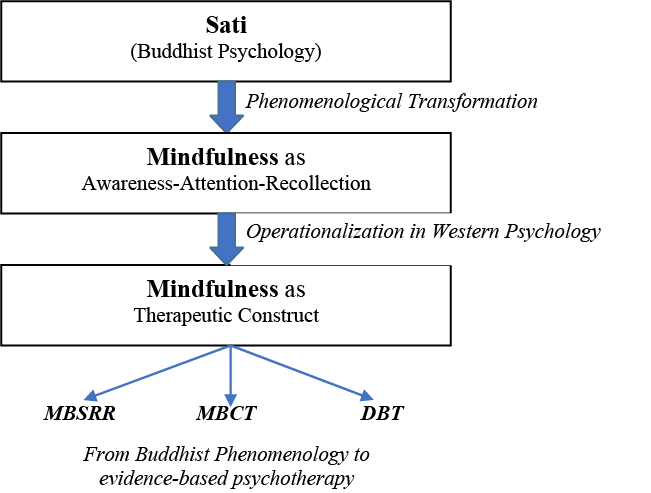
The historical and conceptual transition from the Buddhist notion of Sati to its clinical operationalization in Western psychology can be schematically represented as a sequence of transformations. Figure 1 illustrates this progression, demonstrating how Sati evolved from a contemplative framework of embodied awareness, attention, and recollection into the foundation of modern mindfulness-based interventions.
The figure shows the transformation of the Buddhist concept of Sati into a secular therapeutic construct within modern psychology. The journey of mindfulness from an ancient spiritual practice to a mainstream therapeutic technique represents a fascinating fusion of Eastern contemplative traditions and Western empirical science. This transformation, as outlined in the conceptual map, is not a simple translation but a systematic, multi-stage adaptation.
The origin of this journey lies in the Buddhist concept of Sati (a Pali word). In its original context, Sati was far more than simple awareness; it was a rich, multifaceted practice integral to the path of enlightenment. It encompassed awareness (a broad, encompassing consciousness of the present moment); attention (The cultivated ability to focus and sustain that awareness on a specific object, such as the breath or bodily sensations) and recollection (in Buddhism, this meant remembering the core teachings, such as impermanence and non-self, to guide ethical conduct and develop wisdom. The ultimate goal of Sati was spiritual liberation from suffering (Dukkha)).
For the concept to be introduced to a Western audience, it first had to be separated from its religious and metaphysical framework. This occurred through a phenomenological transformation. Pioneers like Jon Kabat-Zinn extracted the essential, universal core of Sati, the direct, first-person experience of paying attention – and set aside the specific Buddhist doctrines. The focus shifted from achieving enlightenment to understanding the bare mechanics of conscious experience: observing thoughts, feelings, and sensations without judgment.
{slider title="Fig. 1. Conceptual Model of the Evolution of Mindfulness ↓" class="tbl-articles my-figure" open="false"}
{/sliders}
To be accepted and validated within the scientific community, the transformed concept needed to be made measurable and testable. This process is known as operationalization. Researchers deconstructed mindfulness into observable and quantifiable components, such as the ability to describe inner experiences; acting with awareness instead of on "autopilot"; non-judgmental acceptance of thoughts and feelings; non-reactivity to inner experience.
This step successfully recast mindfulness as a secular therapeutic construct – a mental skill that could be rigorously studied, taught, and applied in clinical settings, independent of any spiritual belief system.
The final stage of this journey was the practical application of this operationalized construct into structured, evidence-based programs. The secularized concept of mindfulness became the foundational pillar for several highly effective therapeutic interventions, including:
- MBSR (Mindfulness-Based Stress Reduction): The pioneering program for managing chronic pain, illness, and stress.
- MBCT (Mindfulness-Based Cognitive Therapy): Designed to prevent the relapse of depression by changing one's relationship to negative thoughts.
- DBT (Dialectical Behavior Therapy): Incorporates mindfulness as a core skill to help individuals regulate emotions and improve interpersonal effectiveness, particularly for Borderline Personality Disorder.
The Concept of Mindfulness
Mindfulness may be defined as the practice of attending in a particular way: intentionally, in the present moment, and without judgment. Mindfulness may also be understood as the cultivation of a metaperspective on one’s mental life, wherein the individual sustains continuous awareness of the flow of thoughts, emotions, bodily sensations, and impulses, while recognising them precisely as mental events rather than as objective realities or imperatives for behavior. In this sense, mindfulness fosters an observing mode of consciousness: a reflective awareness that monitors the operations of the mind without becoming entangled in them [22].
In more accessible terms, mindfulness constitutes the very opposite of functioning on “autopilot” or drifting into daydreaming. Rather than being governed by unexamined habits or distractions, the mindful stance entails a deliberate and sustained attentiveness to what is most salient in the present moment [42]. This reorientation of awareness enhances self-regulation, diminishes the influence of automatic cognitive and affective patterns, and opens a psychological space for more flexible, adaptive, and values-consistent responses.
In contemporary clinical psychology, particularly within the third wave of cognitive-behavioral therapies, mindfulness is not regarded as a mere relaxation technique, but as a process-oriented strategy. It serves to cultivate clarity, acceptance, and openness to experience, thereby expanding the therapeutic agenda beyond the traditional emphasis on symptom reduction and first-order change [19].
Nevertheless, there is no single, universally endorsed definition of mindfulness. Within both contemplative traditions and modern psychological discourse, it has been variously described. Some authors emphasize mindfulness as the clear awareness of what is happening within oneself across successive moments of perception. Others present it more narrowly as a form of attentional control, the ability to sustain a vivid and non-judgemental awareness of present reality. Still others define it as the capacity to maintain full and continuous attention to consciousness moment by moment [6].
Despite these divergences, what unites these perspectives is the central emphasis on the intentional cultivation of present-centred awareness, whether this is framed as perceptual clarity, attentional skill, or sustained consciousness [4, 6].
Within the framework of Western psychology, mindfulness has additionally been conceptualized as a cognitive process encompassing the creation of new categories, openness to novel information, and an awareness of the multiplicity of perspectives through which experience can be apprehended. Yet, it is equally acknowledged that mindfulness resists exhaustive definition: it remains an essentially experiential phenomenon, subtle, non-verbal, and irreducible to purely conceptual or linguistic representation [19].
Mindfulness in the Therapeutic Context
Within contemporary psychotherapy, and particularly in the third wave of cognitive-behavioural approaches, mindfulness has emerged as both a unifying conceptual framework and a versatile clinical strategy. Its distinctiveness does not lie in symptom suppression or direct cognitive restructuring, but rather in cultivating a fundamentally different way of relating to one’s experience [7].
At the centre of mindfulness is the suspension of judgement and evaluation. It can be defined as the deliberate and intentional directing of attention towards present-moment experience, sustained without the imposition of value judgements or conceptual elaboration [32]. This stance is not passive; it constitutes an active discipline of awareness in which perception is approached with openness, curiosity, and acceptance [16].
Mindful awareness is non-conceptual in nature, grounded in the immediacy of lived experience rather than its linguistic or cognitive representation [44]. It is intentional, non-evaluative, and characterized by a participatory form of observation that is exploratory, non-verbal, and in many respects liberating. By suspending the automatic filters of categorisation, appraisal, and habitual reaction, mindfulness enables the individual to encounter phenomena more directly, thereby creating the conditions for clarity, psychological flexibility, and existential acceptance [4].
This reorientation, from modification of content to transformation of process, redefines the notion of therapeutic change. Rather than simply alleviating symptoms, mindfulness empowers individuals to cultivate a broader repertoire of adaptive responses, supporting both distress regulation and the pursuit of values-consistent living [6]
RESULTS AND DISCUSSION
Among the fundamental dimensions of mindfulness is the capacity to pay attention. Human beings inevitably develop automatic patterns of response shaped by personal history and cumulative learning across the lifespan. Although such patterns can serve adaptive purposes, they are frequently activated under conditions of stress or when operating on “autopilot.” In these circumstances, the mind often becomes passive, carried away by streams of thought, plans, memories, or emotions, many of which are negatively biased and manifest as worry, self-criticism, or feelings of inadequacy. Mindfulness interrupts this automaticity by cultivating a deliberate attentional stance, one that anchors awareness in the present moment and enables observation of mental activity without being ensnared by it. Attention in mindfulness is thus not merely a cognitive skill but a foundational process that underpins psychological flexibility, resilience, and intentional engagement with experience [47].
Purposefulness as a Foundational Principle
A second cornerstone of mindfulness is purposefulness. The practice requires conscious decision-making and sustains mental effort to maintain awareness of unfolding experience. This is crucial given that cognition is continuously drawn back into ingrained modes of processing and patterned responses [14, 16, 21].
Attending to the present moment, therefore, demands repetition, cultivated over time, and rooted in conscious motivation and deliberate choice. Purposefulness in mindfulness is not passive but an active discipline: it involves bringing the mind back, again and again, to the immediacy of experience with clarity, openness, and resolve. Through this ongoing commitment, mindfulness becomes transformative, nurturing resilience and greater psychological flexibility [21, 37, 51].
For most individuals, full awareness of the present without distraction is rare. Every day life fragments attention, pulling it in multiple competing directions. This fragmentation is intensified during strong emotional arousal, when people typically respond not to situations as they are but in accordance with automatic perceptual and behavioural habits shaped by prior learning. Mindfulness directly counters this tendency by fostering the ability to remain anchored in the “here and now,” thereby promoting a more accurate and less distorted engagement with experience. This capacity liberates individuals from reactive patterns and opens the possibility of more adaptive and intentional responses [48].
Non-Judgement as a Defining Quality
Humans habitually, and often unconsciously, impose judgements on their experiences. This is particularly pronounced in response to unpleasant events, where reactions tend to be immediate and intense. Situations, people, and even one’s own thoughts, emotions, and behaviours are continuously subjected to evaluation, often outside conscious awareness. While negative judgments generate distress, even positive ones may be problematic when they evoke powerful impulses or desires that are automatic, unexamined, and rigid [21, 37, 51].
In contrast, mindfulness cultivates a stance of non-judgement, grounded in openness and clarity. This stance allows individuals to perceive situations with greater transparency, to examine habitual emotional responses with distance, and to observe emotions as they emerge without attempting to suppress them or being overwhelmed by them. Such non-judgemental awareness fosters psychological freedom, diminishes reactivity, and supports a more balanced, intentional engagement with the full spectrum of lived experience [53].
The Role of the Instructor in Mindfulness-Based Interventions
Within mindfulness-based interventions, the role of the therapist diverges substantially from that of traditional psychotherapeutic practice. Rather than occupying the position of clinician in the conventional sense, the therapist assumes the role of instructor and facilitator, guiding participants through structured experiential practices within a group context. Central to this role is the requirement that the instructor maintains a sustained personal practice of mindfulness. Such experiential grounding enables the instructor not only to embody the attitudinal qualities of mindfulness but also to empathically attune to participants’ reports, thereby providing guidance, clarification, and modeling that are both authentic and effective [21, 51].
The overarching aim of mindfulness training is not the direct modification of dysfunctional thought patterns, nor the categorization of cognitions as irrational or distorted. Instead, it seeks to foster a deeper experiential understanding of the functioning of the mind. In this sense, mindfulness emphasizes decentring: the capacity to observe thoughts as transient mental events, rather than over-identifying with them as reflections of reality or determinants of action. This shift in stance cultivates a more balanced and flexible relationship with cognition, enabling participants to disengage from automatic reactivity without reliance on suppression or cognitive restructuring [21, 14, 16, 37, 51].
Therapeutic Advantages of Meditation
The clinical advantages of meditation are both extensive and multifaceted, with empirical evidence supporting its role in enhancing psychological, emotional, and physiological well-being [25]. From a psychotherapeutic perspective, meditation facilitates the release of accumulated tension and fosters greater affective availability, openness, receptivity, and sensitivity in interpersonal and intrapersonal domains. In addition, it has been shown to improve pain management, attentional performance, and learning capacity, thereby broadening its relevance beyond the treatment of psychopathology to include optimization of functioning [29].
A growing body of research further demonstrates the efficacy of meditation in the reduction of psychosomatic symptoms and the alleviation of anxiety, hostility, and stress-related conditions. Importantly, meditation-based interventions have also shown promise in the treatment of chemical dependencies, including alcohol and substance misuse, by promoting greater emotional regulation, distress tolerance, and non-reactivity to craving states [25]. These findings highlight the broad therapeutic potential of meditation. Rather than being confined to symptom reduction alone, meditation contributes to a more holistic transformation of psychological functioning, supporting resilience, self-regulation, and adaptive coping across a wide range of clinical and non-clinical contexts [49].
Mindfulness-Based Interventions
Although mindfulness can be taught and practised in multiple ways, three therapeutic models have been especially influential within clinical contexts, each integrating mindfulness strategies into structured interventions and subjected to extensive empirical evaluation. Among these, Mindfulness-Based Stress Reduction (MBSR), developed by Jon Kabat-Zinn at the University of Massachusetts Medical School, represents the seminal program through which mindfulness entered mainstream medical and psychological practice [27].
MBSR was designed as a group-based, trans-diagnostic intervention for heterogeneous populations presenting with a wide spectrum of physical and psychological difficulties, including chronic pain, stress-related conditions, and comorbid mental health problems. Crucially, the programme was not tailored to a specific diagnosis but sought instead to provide a broadly applicable framework for reducing stress, enhancing resilience, and fostering overall well-being [37, 54].
The programme is delivered over eight weeks and consists of weekly sessions lasting approximately two to three hours. A hallmark feature is the all-day intensive practice session conducted in the sixth week. Equally central is the expectation of daily home practice: participants are asked to engage in mindfulness exercises for around 45 minutes per day, six days per week, thereby consolidating skills between sessions [21, 16, 37, 51].
Within the group context, three core practices are taught: the body scan, sitting meditation, and mindful movement. These experiential practices are supplemented with structured discussions and psycho-educational components aimed at strengthening participants’ capacity to manage stress and respond more adaptively to life’s demands [30, 43, 45].
The overarching objective of MBSR is the systematic cultivation of presence across both internal and external domains of experience, as well as their interrelationship. Internal experience includes bodily sensations, cognitions, and emotions, while external experience encompasses interpersonal interactions, actions in the world, and situational contexts. Through sustained awareness of these domains, MBSR fosters an integrated mode of presence that enhances clarity, resilience, and psychological flexibility [8, 15, 18, 22, 33, 39].
Mindfulness-Based Cognitive Therapy (MBCT) emerged as a clinical adaptation of both traditional cognitive therapy and the generic MBSR program. While retaining the meditative structure and core practices of MBSR, MBCT is specifically designed as a relapse-prevention intervention for individuals with recurrent depression, particularly those in remission who have experienced three or more previous episodes [30, 41, 42, 45].
The integrative development of mindfulness-based interventions can be conceptually traced to their Buddhist foundations. Figure 2 presents the Conceptual Model of the Evolution of Mindfulness, which outlines the transformation from Sati in Buddhist psychology to contemporary secular therapeutic constructs such as MBSR, MBCT, and DBT. This model encapsulates the continuity between contemplative tradition and clinical innovation, illustrating how phenomenological insights have been operationalised within modern evidence-based psychotherapy.
The figure depicts the transformation of Sati through successive stages – from Buddhist phenomenology and awareness-attention-recollection to its operationalization in Western psychology and its culmination in mindfulness-based interventions (MBSR, MBCT, DBT). The model highlights mindfulness as a dynamic mechanism of psychological change linking ancient contemplative frameworks with contemporary clinical science. As illustrated in Figure 2, the contemporary understanding of mindfulness cannot be separated from its historical and philosophical lineage. The model reinforces that mindfulness-based therapies represent not a rupture from tradition but a structured adaptation of Buddhist phenomenology into evidence-based clinical methodologies. This conceptual bridge sets the stage for the ensuing discussion of how mindfulness functions as a process-oriented mechanism of psychological transformation.
The central mechanism of MBCT lies in enabling patients to decentre from ruminative thought patterns, thereby weakening cognitive reactivity and fostering a more balanced relationship with internal experience. The theoretical rationale is that in individuals with a history of recurrent depression, the low mood triggered by everyday stressors can reactivate maladaptive ruminative styles that characterised previous episodes, increasing vulnerability to relapse. Mindfulness training directly addresses this risk by encouraging participants to observe thoughts as transient mental events rather than as accurate reflections of reality or imperatives for action. This stance reduces over-identification with cognitive content and disrupts habitual patterns of ruminative processing, redirecting attention to the immediacy of present experience [15, 28, 30, 41].
MBCT is delivered in a structured group format over eight weeks, with weekly sessions lasting approximately two hours. Between sessions, participants engage in daily home practice supported by worksheets and guided materials. Core training includes cultivating awareness of early warning signs of relapse, such as self-perpetuating negative thoughts and dysphoric affective cycles [42, 45].
The practice itself often centres on using the breath and bodily sensations as anchors for present-moment awareness. By employing these techniques during periods of vulnerability, individuals strengthen their capacity to disengage from maladaptive cycles before they escalate into full depressive episodes. In this way, MBCT exemplifies the integration of mindfulness practice with cognitive-behavioural principles, uniquely addressing the chronic and recurrent nature of depression by targeting its cognitive and attentional mechanisms [5, 11, 45].
Dialectical Behavior Therapy (DBT), developed by Marsha Linehan, was originally formulated for the treatment of borderline personality disorder (BPD) [24]. The term dialectical signifies the balancing, integration, and synthesis of opposites, a principle that frames the therapeutic process as a dynamic tension between acceptance of present realities and commitment to change [1, 12, 15].
DBT is a multifaceted intervention in which mindfulness occupies a foundational role. Mindfulness skills are not conceived as auxiliary practices but as core strategies that provide patients with the capacity to stabilize attention, regulate intense emotions, increase tolerance of distress, and foster more effective interpersonal functioning. Crucially, mindfulness within DBT enables individuals to bridge the acceptance of current difficulties with the acquisition of behavioural and emotional competencies necessary for lasting change [30, 41, 42, 45].
{slider title="Fig. 2. Integrative Model of the Three Waves of Cognitive-Behavioral Therapy ↓" class="tbl-articles my-figure" open="false"}
{/sliders}
The standard DBT program is delivered as a one-year outpatient treatment that integrates weekly individual psychotherapy with weekly group-based skills training. The group component is organized into four modules: mindfulness, interpersonal effectiveness, emotion regulation, and distress tolerance. This dual format ensures that patients benefit from both individualized therapeutic support and systematic skill acquisition [15, 22, 45].
DBT is now widely recognized as the gold-standard intervention for borderline personality disorder [13, 20, 23].
Its empirical support is extensive, with numerous studies demonstrating its effectiveness in reducing impulsive and dysregulated behavior, decreasing self-harm and suicidal ideation, and improving overall psychosocial functioning. Beyond BPD, DBT’s structured and integrative framework has been adapted to a range of clinical populations characterized by severe emotional dysregulation and impulsivity, consolidating its position as one of the most influential third-wave behavioral therapies [15, 22, 30, 41, 42, 45].
These interventions illustrate the translation of mindfulness from its contemplative and philosophical origins into structured, evidence-based psychotherapeutic frameworks. While each addresses distinct clinical populations and therapeutic objectives, they converge on a common principle: the cultivation of non-judgemental, present-centered awareness as a means of transforming the individual’s relationship to thoughts, emotions, and bodily states.
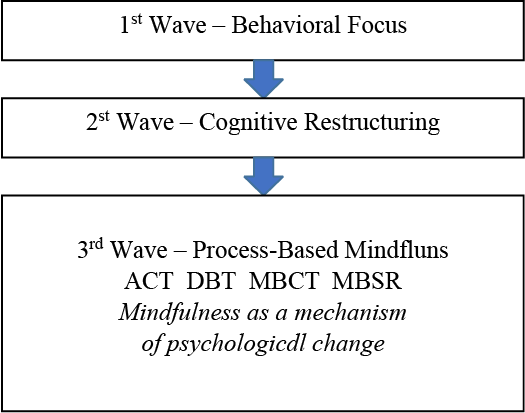
Mindfulness-based therapies represent one of the most significant innovations within the so-called third wave of cognitive-behavioral approaches. Unlike earlier waves, which prioritised symptom reduction through the direct modification of behaviour or cognition, these interventions conceptualize mindfulness not as an ancillary technique but as a central mechanism of therapeutic change. They foreground awareness, acceptance, and psychological flexibility, shifting the emphasis from the content of cognition to the processes through which experience is apprehended and regulated.
The evolution of cognitive-behavioral therapy can be broadly understood through the framework of three successive “waves” that reflect shifts in theoretical emphasis and therapeutic technique. Figure 3 presents the Integrative Model of the Three Waves of Cognitive-Behavioral Therapy, illustrating the historical progression from behavioral conditioning, through cognitive restructuring, to the process-based and mindfulness-oriented paradigms that characterize contemporary clinical practice.
The figure depicts the evolutionary transition from behavioral to cognitive and, finally, to process-based mindfulness approaches. Within the third wave, ACT, DBT, MBCT, and MBSR represent mindfulness-centered frameworks where mindfulness functions as a mechanism of psychological change. The third wave of cognitive-behavioural therapies transcends the boundaries of traditional symptom-oriented methods. By embedding mindfulness within structured therapeutic systems such as ACT, DBT, MBCT, and MBSR, these approaches emphasize experiential awareness, psychological flexibility, and acceptance as primary mechanisms of transformation. This development establishes mindfulness as both an integrating principle and a unifying paradigm within modern psychotherapy.
{slider title="Fig. 3. Conceptual Framework of Mindfulness Transformation ↓" class="tbl-articles my-figure" open="false"}
{/sliders}
Beyond MBSR, MBCT, and DBT, models such as Acceptance and Commitment Therapy (ACT) further extend the clinical role of mindfulness. In ACT, mindfulness functions to facilitate the acceptance of aversive internal experiences while simultaneously supporting commitment to values-based action. Across modalities, the therapeutic significance of mindfulness lies not in the eradication of symptoms but in the cultivation of experiential openness, attentional stability, and an expanded repertoire of adaptive responses. At the organizational and systemic levels, this process-oriented transformation conceptually resonates with management models of process maturity and patient orientation that define sustainable adaptation within healthcare institutions [3]. These multidimensional therapeutic processes correspond with broader European rehabilitation paradigms, which emphasize the integration of psychological, medical, and social dimensions in restoring functional health and resilience [40]. This holistic approach aligns with current Ukrainian and European perspectives on psychosocial rehabilitation, which highlight the importance of integrating psychological training, stress-resilience enhancement, and electronic learning environments for social-psychological support [2, 9].
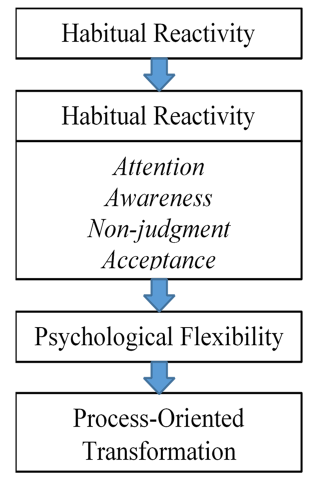
In this way, mindfulness-based therapies decisively transcend the paradigm of first-order change. By addressing deeper, process-oriented dimensions of human suffering, they enable individuals to cultivate greater clarity, balance, and authenticity, thereby broadening the scope and deepening the transformative potential of contemporary psychotherapy. The conceptual evolution described above can be synthesised in a visual form. Figure 3 presents the Conceptual Framework of Mindfulness Transformation, illustrating the dynamic progression from habitual reactivity toward process-oriented psychological transformation. This framework highlights how mindfulness practice – through cultivating attention, awareness, non-judgment, and acceptance – fosters psychological flexibility as the foundation of therapeutic change.
As demonstrated in Figure 3, mindfulness-based therapies move beyond symptom-level interventions to target the underlying processes that shape human experience. By fostering non-judgmental awareness and flexibility, they enable individuals to transform their relationship to internal and external events, thus bridging phenomenological insight with evidence-based clinical methodology.
CONCLUSIONS
- The trajectory of mindfulness, from its origins in the Buddhist concept of Sati to its integration within contemporary psychotherapy, illustrates a profound process of conceptual adaptation and clinical innovation. This evolution underscores how an ancient contemplative tradition has been reframed through the lens of modern psychological science.
- While Sati originally functioned as a contemplative discipline aimed at cultivating clarity, equanimity, and liberation from habitual reactivity, its translation into Western psychology has redefined mindfulness as a secular, process-oriented mechanism of therapeutic change.
- Mindfulness-based interventions – such as MBSR, MBCT, and DBT-demonstrate the adaptability of this construct in addressing a wide spectrum of clinical needs, including stress reduction, chronic pain management, recurrent depression, and borderline personality disorder. Despite their methodological differences, these models share a unifying principle: psychological well-being arises not from suppressing or restructuring mental content, but from transforming the individual’s relationship to thoughts, emotions, and bodily experiences.
- This reconceptualization signifies a decisive shift in the evolution of cognitive-behavioural therapies. By moving beyond first-order symptom reduction, mindfulness-based approaches emphasize awareness, acceptance, and psychological flexibility, thus broadening the therapeutic focus to include deeper, process-oriented dimensions of human suffering.
- The integration of mindfulness into psychotherapy embodies both continuity and transformation: continuity through its empirical validation and therapeutic efficacy, and transformation through its redefinition of meaningful psychological change. In bridging ancient wisdom and contemporary science, mindfulness establishes itself as a unifying framework poised to shape the future of psychotherapy.
Contributors:
Cunha M.N. – conceptualization, methodology, investigation, formal analysis, validation, writing – original draft, data curation, writing – review & editing;
Krupskyi O.P. – methodology, investigation, supervision, project administration, writing – review & editing;
Balan O.S. – conceptualization, supervision, writing – review & editing.
Funding. This study did not receive external funding.
Conflict of interests. The authors declare no conflict of interest.
REFERENCES
- Bogodistov Y, Moormann J, Sibbel R, Krupskyi OP, Hromtseva O. Process maturity and patient orientation in times of a health system reform. Bus Process Manag J. 2022;28(1):258-72. doi: https://doi.org/10.1108/BPMJ-09-2020-0428
- Boxer A, Shawyer F, Coghlan I, Ling D, Meadows G. Mindfulness-based interventions: what more can the West learn from Buddhism? A fieldwork study. Front Psychol. 2025 Jun 23;16:1579575. doi: https://doi.org/10.3389/fpsyg.2025.1579575
- Brandmeyer T, Delorme A. Meditation and the Wandering Mind: A Theoretical Framework of Underlying Neurocognitive Mechanisms. Perspect Psychol Sci. 2021;16(1):39-66. doi: https://doi.org/10.1177/1745691620917340
- Castellanos R, Flory K. Mindfulness, Culture, and Clinical Practice: Clinician Experiences Utilizing Mindfulness and Acceptance with Hispanic/Latinx Populations. In: Fleming CM, Womack VY, Proulx J, editors. Beyond white mindfulness: critical perspectives on racism, well-being and liberation. New York: Routledge;p. 40-63. doi: https://doi.org/10.4324/9781003090922-4
- Creswell JD. Mindfulness Interventions. Annu Rev Psychol. 2017 Jan 3;68(1):491-516. doi: https://doi.org/10.1146/annurev-psych-042716-051139
- Dawson AF, Brown WW, Anderson J, Datta B, Donald JN, Hong K, et al. Mindfulness‐Based Interventions for University Students: A Systematic Review and Meta‐Analysis of Randomised Controlled Trials. Appl Psychol Health Well Being. 2020;12(2):384-410. doi: https://doi.org/10.1111/aphw.12188
- Faber M, Krasich K, Bixler RE, Brockmole JR, D’Mello SK. The eye–mind wandering link: Identifying gaze indices of mind wandering across tasks. J Exp Psychol Hum Percept Perform. 2020 Oct;46(10):1201-21. doi: https://doi.org/10.1037/xhp0000743
- Feruglio S, Matiz A, Grecucci A, Pascut S, Fabbro F, Crescentini C. Differential effects of mindfulness meditation conditions on repetitive negative thinking and subjective time perspective: a randomized active-controlled study. Psychol Health. 2021;36(11):1275-98. doi: https://doi.org/10.1080/08870446.2020.1836178
- Feruglio S, Matiz A, Pagnoni G, Fabbro F, Crescentini C. The Impact of Mindfulness Meditation on the Wandering Mind: a Systematic Review. Neurosci Biobehav Rev. 2021 Dec;131:313-30. doi: https://doi.org/10.1016/j.neubiorev.2021.09.032
- Fulton PR, Siegel RD. Buddhist and Western psychology. In: Germer CK, Fulton PR, Siegel RD, editors. Mindfulness and Psychotherapy. 2nd ed. New York: Guilford Press; 2016. р. 36-56. Available from: https://surl.li/quzjdp
- Furnell M, Van Gordon W, Elander J. Calmer, Kinder, Wiser: A Novel Threefold Categorization for Mindfulness-Based Interventions. Mindfulness. 2024;15(1):144-56. doi: https://doi.org/10.1007/s12671-023-02273-7
- Germer C, Siegel RD, Fulton PR, editors. Mindfulness and psychotherapy. 2nd ed. New York: Guilford Press; 2016. 382 p. Available from: https://surl.li/quzjdp
- Grabovac AD, Lau MA, Willett BR. Erratum to: Mechanisms of Mindfulness: A Buddhist Psychological Model. Mindfulness.2011 Jul 9;2(3):218. doi: https://doi.org/10.1007/s12671-011-0062-5
- Graves BS, Hall ME, Dias-Karch C, Haischer MH, Apter C. Gender differences in perceived stress and coping among college students. Dalby AR, editor. PLOS ONE. 2021 Aug 12;16(8):e0255634. doi: https://doi.org/10.1371/journal.pone.0255634
- Harrington A, Dunne JD. When mindfulness is therapy: Ethical qualms, historical perspectives. Am Psychol.2015;70(7):621-31. doi: https://doi.org/10.1037/a0039460
- Hayes SC, Hofmann SG. “Third‐wave” cognitive and behavioral therapies and the emergence of a process‐based approach to intervention in psychiatry. World Psychiatry.2021 Sep 9;20(3):363-75. doi: https://doi.org/10.1002/wps.20884
- Hirshberg MJ, Goldberg SB, Rosenkranz M, Davidson RJ. Prevalence of harm in mindfulness-based stress reduction. Psychol2022;52(6):1080-8. doi: https://doi.org/10.1017/s0033291720002834
- Hofmann SG, Grossman P, Hinton DE. Loving-kindness and compassion meditation: Potential for psychological interventions. Clin Psychol Rev. 2011 Nov;31(7):1126-32. doi: https://doi.org/10.1016/j.cpr.2011.07.003
- Jin Y, Zhang M, Wang Y, An J. The relationship between trait mindfulness, loneliness, regulatory emotional self-efficacy, and subjective well-being. Pers Individ Dif. 2020 Feb;154:109650. doi: https://doi.org/10.1016/j.paid.2019.109650
- Jones BDM, Umer M, Kittur ME, Finkelstein O, Xue S, Dimick MK, et al. A systematic review on the effectiveness of dialectical behavior therapy for improving mood symptoms in bipolar disorders. Int J Bipolar Disord. 2023 Feb 5;11(1):6. doi: https://doi.org/10.1186/s40345-023-00288-6
- Joshi B, Jha JP, Karn A, Shrestha L. Neurophysiology of Mindfulness Meditation: A Narrative Review Based on Buddhist Perspective. Kathmandu Univ Med J. 2025;22(88):91-8. PMID: 40464241
- Kang C, Whittingham K. Mindfulness: A Dialogue between Buddhism and Clinical Psychology. Mindfulness.2010 Jun 29;1(3):161-73. doi: http://dx.doi.org/10.1007/s12671-010-0018-1
- Kelly BD. Beyond mindfulness: Buddhist psychology and the Abhidharma. J Spiritual Ment Health. 2023;25(1):71-82. doi: https://doi.org/10.1080/19349637.2022.2081952
- Kubota R, Nixon RDV. The effect of mindfulness training on rumination and intrusions after analogue trauma. Aust Psychol. 2020 Apr 1;55(2):108-20. doi: https://doi.org/10.1111/ap.12410
- Kudesia RS, Nyima VenT. Mindfulness Contextualized: An Integration of Buddhist and Neuropsychological Approaches to Cognition. Mindfulness. 2015;6(4):910-25. doi: https://doi.org/10.1007/s12671-014-0337-8
- Kuyken W, Watkins E, Holden E, White K, Taylor RS, Byford S, et al. How does mindfulness-based cognitive therapy work? Behav Res Ther. 2010 Nov;48(11):1105-12. doi: https://doi.org/10.1016/j.brat.2010.08.003
- Lee KC. Demystifying Buddhist mindfulness: Foundational Buddhist knowledge for mindfulness-based interventions. Spiritual Clin Pract. 2018 Sep;5(3):218-24. doi: https://doi.org/10.1037/scp0000133
- Dimidjian S, Linehan MM. Mindfulness practice. In: O'Donohue W, Fisher JE, Hayes SC, editors. Cognitive behavior therapy: applying empirically supported techniques in your practice. New York: Wiley; 2003. p. 229-37.
- Nandarathana RevN, Ranjan JK. The Application of Theravāda Buddhist Meditation Practices and Techniques in Mindfulness-Based Interventions. Vidyodaya J Humanit Soc Sci. 2024;9(1):171-83. doi: https://doi.org/10.31357/fhss/vjhss.v09i01.11
- Neale M. Buddhist origins of mindfulness meditation. In: Loizzo JJ, Neale M, Wolf EJ, editors. Advances in contemplative psychotherapy: accelerating healing and transformation. New York: Routledge; 2017. p. 17-34. doi: https://doi.org/10.4324/9781315630045-3
- Ng PF. Buddhist influence in the Mindfulness Movement within Western Psychology. Braz J Dev. 2025 May 26;11(5):e79974. doi: https://doi.org/10.34117/bjdv11n5-084
- O’Neill K, Smith AP, Smilek D, Seli P. Dissociating the freely-moving thought dimension of mind-wandering from the intentionality and task-unrelated thought dimensions. Psychol Res. 2021;85(7):2599-609. doi: https://doi.org/10.1007/s00426-020-01419-9
- Pilla D, Qina’au J, Patel A, Meddaoui B, Watson N, Dugad S, et al. Toward a Framework for Reporting and Differentiating Key Features of Meditation- and Mindfulness-Based Interventions. Mindfulness. 2020 Aug 8;11(11):2613-28. doi: https://doi.org/10.1007/s12671-020-01475-7
- Rapgay L, Ross JL, Petersen O, Izquierdo C, Harms M, et al. A Proposed Protocol Integrating Classical Mindfulness with Prolonged Exposure Therapy to Treat Posttraumatic Stress Disorder. Mindfulness. 2014;5(6):742-55. doi: https://doi.org/10.1007/s12671-013-0231-9
- Resende KIDS de, Teodoro MLM, Barros VV de, Ohno PM. [The effects of Mindfulness-Based Interventions (MBI) on the mental health of university students: a systematic review study]. Revista Brasileira de Terapias Cognitivas [Internet]. 2021 [cited 2025 Oct 12];17(1). Portuguese. doi: https://doi.org/10.5935/1808-5687.20210002
- Seegers M. Mindfulness and the Judging Mind in the Context of Buddhist Models of Mind. Mindfulness. 2025;16(2):381-90. doi: https://doi.org/10.1007/s12671-024-02481-9
- Segal Z, Williams M, Teasdale J. Mindfulness-based cognitive therapy for depression. 2nd ed. New York: Guilford Press; 2012. 471 p. Available from: https://lnk.ua/be8AWKxV5
- Shapiro SL, Carlson LE. The art and science of mindfulness: Integrating mindfulness into psychology and the helping professions. Washington, DC: American Psychological Association; 2009. 194 p. doi: https://doi.org/10.1037/11885-000
- Tang YY, Tang R. The neuroscience of meditation: understanding individual differences. London: AcademicPress; 216 p. doi: https://doi.org/10.1016/C2018-0-03129-1
- Wang C. Beyond mindfulness: how Buddhist meditation transforms consciousness through distinct psychological pathways. Front Psychol. 2025;16:1649564. doi: https://doi.org/10.3389/fpsyg.2025.1649564
- Whitmoyer P, Fountain-Zaragoza S, Andridge R, Bredemeier K, Londeree A, Kaye L, et al. Mindfulness Training and Attentional Control in Older Adults: a Randomized Controlled Trial. Mindfulness.2020;11(1):203-18. doi: https://doi.org/10.1007/s12671-019-01218-3
- Xunlin N, Lau Y, Klainin-Yobas P. The effectiveness of mindfulness-based interventions among cancer patients and survivors: a systematic review and meta-analysis. Support Care Cancer. 2020;28(4):1563-78. doi: https://doi.org/10.1007/s00520-019-05219-9
- Yeun YR, Kim SD. Psychological Effects of Online-Based Mindfulness Programs during the COVID-19 Pandemic: A Systematic Review of Randomized Controlled Trials. Int J Environ Res Public Health. 2022;19(3):1624. doi: https://doi.org/10.3390/ijerph19031624
- Zarotti N, Povah C, Simpson J. Mindfulness mediates the relationship between cognitive reappraisal and resilience in higher education students. Pers Individ Dif. 2020 Apr;156:109795. doi: https://doi.org/10.1016/j.paid.2019.109795