Ключові слова: якість харчування, продовольча безпека, кишкова мікробіота, харчування, соціально-економічний статус
Abstract
One of the key roles of the gut microbiota is to maintain human health. Food security, including diet-related factors such as diet quality, food access, and socioeconomic conditions, may influence dietary intake and, consequently, gut microbiota composition. This systematic review aimed to synthesize evidence from studies in human populations regarding the associations of food security and diet-related factors with gut microbiota diversity and composition. A literature search was conducted in the PubMed, Scopus, Google Scholar, Crossref, and Semantic Scholar databases for articles published between 2005 and 2025, following the PRISMA guidelines. The review included observational and interventional studies in humans that directly assessed food security status or used related indicators, such as diet quality, dietary patterns, and socioeconomic status, and reported findings on gut microbiota diversity or composition based on sequencing analysis. A total of 20 studies met the inclusion criteria. In general, studies that directly assessed food security reported differences in gut microbiota diversity and composition between groups with different levels of food security. Other studies using diet-related factors showed that higher-quality diets, particularly those rich in plant foods and fiber, were associated with greater microbiota diversity and a higher abundance of short-chain fatty acid – producing bacteria. Meanwhile, low-quality diets or limited access to food were often associated with less diverse microbiota and a predominance of opportunistic bacteria. These findings varied across age groups and geographic contexts, with the majority of evidence coming from observational studies. In conclusion, this systematic review demonstrates associations of food security and diet-related factors with gut microbiota diversity and composition in human populations. However, heterogeneity in the definitions of food security, variations in microbiota assessment methods, and limitations in study designs require cautious interpretation of the results. Longitudinal and experimental studies using standardized measures of food security are needed to strengthen the existing evidence.
Реферат
Продовольча безпека та пов’язані з харчуванням фактори, асоційовані зі складом і різноманітністю мікробіоти кишківника в людській популяції: систематичний огляд літератури. Нурваті Ю., Діана Р., Гардінсях Г., Ангграіні Р., Нур Афіфа Ч.А., Ісмаваті Р., Фікрі А.М., Праното А. Однією з ключових ролей мікробіоти кишківника є підтримання здоров’я людини. Продовольча безпека, зокрема пов’язані з харчуванням фактори, такі як якість раціону, доступність продуктів харчування та соціально-економічні умови, може впливати на відмінності в характері харчування і, відповідно, на склад мікробіоти кишківника. Метою цього систематичного огляду є узагальнення даних досліджень за участю людей щодо взаємозв’язку між продовольчою безпекою та пов’язаними з харчуванням факторами, з одного боку, і різноманітністю та складом мікробіоти кишківника – з іншого. Пошук літератури проводили в базах даних PubMed, Scopus, Google Scholar, Crossref та Semantic Scholar за публікаціями, опублікованими у 2005-2025 роках, відповідно до рекомендацій PRISMA. До огляду включали обсерваційні та інтервенційні дослідження за участю людей, у яких безпосередньо оцінювали стан продовольчої безпеки або використовували пов’язані з ним показники, такі як якість раціону, характер споживання їжі та соціально-економічний статус, а також наводили результати щодо різноманітності або складу мікробіоти кишківника на основі аналізу секвенування. Загалом критеріям включення відповідали 20 досліджень. У цілому дослідження, у яких безпосередньо оцінювали продовольчу безпеку, виявили відмінності в різноманітності та складі мікробіоти кишківника між групами з різним рівнем продовольчої безпеки. В інших дослідженнях, у яких використовували пов’язані з харчуванням фактори, було показано, що раціони вищої якості, зокрема багаті на рослинні продукти та клітковину, асоціюються з більшою різноманітністю мікробіоти та підвищеною чисельністю бактерій, що продукують коротколанцюгові жирні кислоти. Водночас раціони низької якості або обмежений доступ до продуктів харчування часто асоціювалися з менш різноманітною мікробіотою та переважанням умовно-патогенних бактерій. Ці результати відрізняються залежно від вікових груп і географічних умов, причому більшість доказів отримано в обсерваційних дослідженнях. Отже, цей систематичний огляд демонструє наявність взаємозв’язку між продовольчою безпекою та пов’язаними з харчуванням факторами, з одного боку, і різноманітністю та складом мікробіоти кишківника в людських популяціях – з іншого. Однак неоднорідність визначень продовольчої безпеки, відмінності в методах оцінювання мікробіоти та обмеження дизайну досліджень потребують обережної інтерпретації отриманих результатів. Для посилення наявної доказової бази необхідні лонгітюдні та експериментальні дослідження з використанням стандартизованих методів оцінювання продовольчої безпеки.
The human gastrointestinal tract not only digests food and absorbs nutrients but also defends against disease-causing microbes (pathogens),contributes to immune homeostasis, and plays a role in regulating the immune system. The amount and quality or type of food components or nutrients influence the changes in the composition and diversity of gut microbiota including the relative abundance of commensal taxa, short-chain fatty acids (SCFA)-producing bacteria, proteolytic bacteria, and opportunistic taxa. Indigestible carbohydrates, a major components of dietary fiber, are fermented by fiber-degrading bacteria to produce SCFAs that support intestinal homeostasis under physiological conditions [1, 2]. In contrast, undigested proteins, of which an estimated 12-18 grams of protein reach the intestine daily and undergoes fermentation by the colonic microbiota[3,4], can serve as a substrate for the growth of proteolytic bacteria that produce branched-chain fatty acids such as isobutyrate, isovalerate, as well as nitrogen metabolites such as ammonia and p-cresol [4]. Meanwhile, dietary fat stimulates the secretion of bile acids from the gallbladder into the small intestine, where primary bile acids are further modified by intestinal bacteria into secondary bile acids through the processes of deconjugation and dehydroxylation [5]. Approximately 5% of conjugated bile acids that escape ileal reabsorption reach the colon and undergo further metabolism by the colonic microbiota, thereby influencing the composition and diversity of the gut microbiota [6].
The human gut microbiota, with the colon as its major reservoir, plays a key role in enabling and maintaining health by engaging in digestion, metabolic regulation, immune modulation, and neurodevelopment. Diversity and composition in this complex ecosystem, comprising trillions of microorganisms, are formed by multiple host, dietary, lifestyle, and environmental factors [7-9]. Considering the fact that up to 1,150 bacterial species may inhabit the human gastrointestinal tract, with the average healthy individual hosting 160 different species, the dominant phyla include Actinobacteria, Bacteroidetes, Firmicutes, Proteobacteria, and Verrucomicrobia, with Firmicutes and Bacteroidetes alone accounting for nearly 90% of the total microbial community [10, 11].
The last two decades of growing research have proven that ecological imbalance is a sign of microbiota dysbiosis. One of the most significant environmental and socioeconomic factors affecting gut microbiota dysbiosis is food intake, which is linked to food security status. Food security, including the availability, accessibility, and utilization of food, remains a cornerstone of public health globally [12]. In contrast, food insecurity, which indicates limited or no access to sufficient nutritious food, has the potential to decrease diet diversity and quality. In the long term, food insecurity can reduce dietary diversity and quality and can be categorized as mild, moderate, or severe [13]. The human gut microbiota is a complex ecosystem strongly influenced by diet-related factors, including food availability, accessibility, and utilization – dimensions that are closely linked to socioeconomic status, which forms individuals' capacity to access and consume nutritionally adequate diets [14, 15, 16].
These identified factors include low income, lower education, restricted community access to technology, particularly food-processing technologies, and limited household availability of food high in protein, vitamins, and minerals. Robinson et al. [17] also highlighted social equity as a major research priority in microbiome science, emphasizing the need to better understand how social conditions shape microbial exposures and health outcomes.Insufficient household food access may result in stunted children [18]. A study by Khine et al. [19] showed that dietary variables and the gastrointestinal environment had an influence on children’s microbiota profiles more strongly than does maternal microbial transmission. Children’s faecal microbiota changes from Bacteroides and Bifidobacterium to Prevotella as a result of dietary changes following weaning, which lowers Bifidobacterium levels [19]. Poor nutrition among toddlers and pre-schoolers has been reported to be associated with reduced gut microbiota diversity and increased Firmicutes-to-Bacteroidetes ratio, an indication of a dysbiosis condition [20].
Astudy by Ratnayani et al. [21] further highlights the interconnected influence of diet, environmental factors, and lifestyle on the gut microbiota composition. The results showed that stunted children were shown to have higher levels of potentially pathogenic bacteria, such as Escherichia coli, Enterococcus, Mitsuokella, and Providencia alcalifaciens, whereas non-stunted children demonstrated higher abundances of beneficial bacteria such as Bifidobacterium, Lactobacillus, and Akkermansia muciniphila. Determinants such as delivery mode, exclusive breastfeeding, sanitation practices, drinking water quality, and overall nutrient intake play critical roles in modulating gut microbiota composition [21]. Similarly, a study in Bangladesh revealed that despite nutritional interventions with the use of ready-to-use therapeutic foods (RUTF) and Kichuri Halwa, there remain chronic gut microbiota immaturity in malnourished children, suggesting that longer-term interventions or microbial supplementation may be needed for restoration of gut microbial development [22].
Food insecurity can contribute to nutritional deficiencies, thus adversely affecting the gut microbiome composition. Based on the bidirectional relationships between food security, diet quantity and quality, health, and the gut microbiota, this systematic review aims to summarize scientific evidence regarding the relationship between food security and dietary factors on gut microbiota diversity and composition in human populations. This review is expected to clarify the role of food security as an indirect determinant of the microbiota through diet quality, while also identifying evidence gaps for further research.
This research paper is structured over several sections. First, the methodology describes the search strategy, eligibility criteria, and data extraction procedures. Later, the results section integrates the findings obtained from the literature review. Further, the discussion section examines the findings and limitations of the review. Finally, the conclusion summarizes the key findings and provides recommendations for future research. Following this structured approach, the research aims to provide critical insights for nutrition policies, especially to improve food security condition and microbiome-targeted interventions to achieve the Sustainable Development Goals (SDGs), especially those aimed to ending hunger and malnutrition by 2030.
MATERIALS AND METHODS OF RESEARCH
This review was conceived as a systematic review to identify, select, and synthesize human studies reporting associations between food security or diet-related factors on gut microbiota diversity and composition. A systematic literature search was conducted from June 2025 to December 2025. Duplicate records were identified and removed using Covidence software prior to screening. The screening process was conducted in two stages: title and abstract screening followed by full-text assessment, both performed independently by two reviewers. Disagreements were resolved through discussion or consultation with a third reviewer. Studies were excluded if they were not published in English, involved non-human subjects, did not report gut microbiota outcomes, or lacked data on dietary or food security exposures.
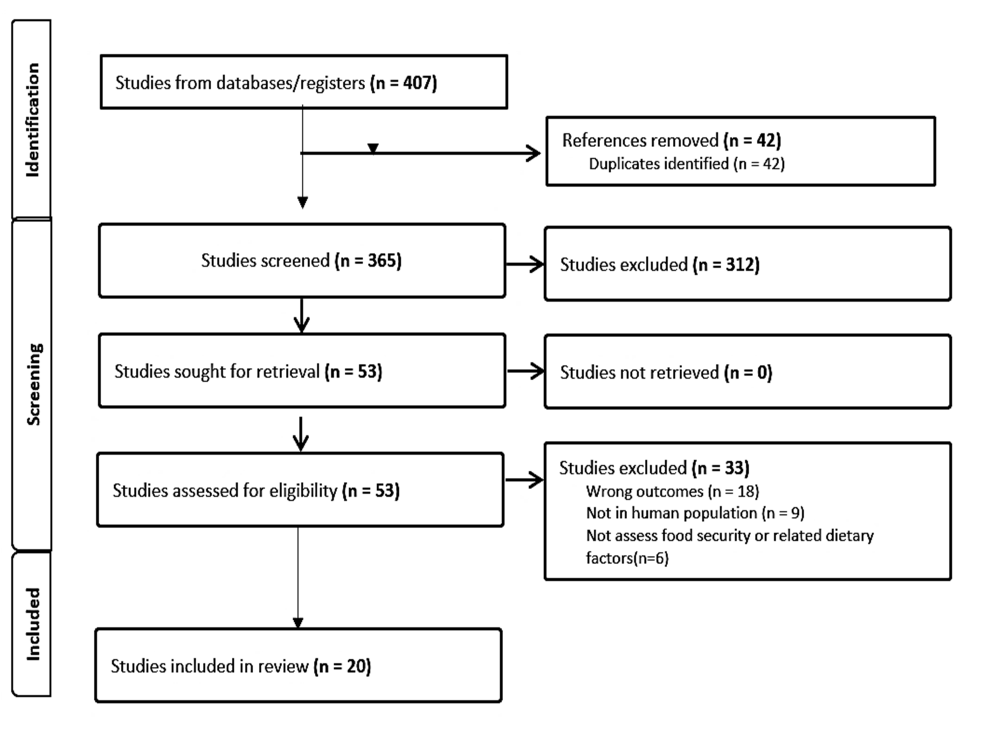
A literature search was conducted using PubMed, Scopus, Google Scholar, Crossref, and Semantic Scholar databases. The search was conducted for articles published between 2005 and 2025. The keywords used were combined using the following Boolean operators: (“food insecurity” OR “food security” OR “diet quality” OR “food access” OR “socioeconomic status”) AND (“gut microbiota” OR “gut microbiome”) AND (“diversity” OR “composition”). An example of the search strategy in PubMed is as follows: (((“food security”[Title/Abstract]) OR (“diet quality”[Title/Abstract]) OR (“dietary pattern”[Title/Abstract]) OR (“food access”[Title/Abstract]) OR (“socioeconomic status”[Title/Abstract])) AND ((“gut microbiota”[Title/Abstract]) OR (“gut microbiome”[Title/Abstract])) AND ((“diversity”[Title/Abstract]) OR (“composition”[Title/Abstract]))). Based on preliminary evidence suggesting a link between food security, dietary patterns, and microbial health, this systematic review hypothesizes that food security status and diet-related factors are associated with gut microbiota diversity and composition in human populations. Furthermore, a better-quality diet is expected to be associated with higher microbiota diversity and a greater proportion of short-chain fatty acid (SCFA)-producing bacteria. This identification step, with the application of these keywords, yielded a total of 407 articles. Figure illustrates the steps involved in conducting this systematic literature review.
Ethical approval for the study was granted by the Ethical Committee Universitas KH. A.Wahab Hasbullah (No. Ket-081/LPPM-UNWAHA/S.Ket/IV/2026).
{slider title="Figure. PRISMA flow diagram ↓" class="tbl-articles my-figure" open="false"}
{/sliders}
Data sources were chosen based on predefined criteria established by the authors. Eligible studies were defined as follows: 1) original research written in English; 2) research in human populations; 3) assessed food security directly or using related indicators (diet quality, food access, or socioeconomic status); 4) reported results on gut microbiota diversity or composition based on sequencing analysis; 5) observational or interventional study designs. The selection process followed PRISMA guidelines. Both the selection and screening were conducted collaboratively by the authors through iterative evaluation.
Extracted data included authors, study design, population characteristics, location, method of assessing food security or dietary factors, microbiota analysis method, and key outcomes related to gut microbiota diversity and composition. The methodological quality of cross-sectional and longitudinal observational studies (13 studies) was assessed using the Newcastle-Ottawa Scale (NOS) and studies with randomized controlled trial designs (7 studies) were assessed using the Cochrane Risk of Bias tool version 2 (RoB 2). Assessments were conducted independently by two authors and discrepancies were resolved through discussion. Most observational studies demonstrated good to high methodological quality (NOS 8-9/10) (Table 2 and 3). RCTs generally showed a risk of bias of some concern, primarily due to the lack of blinding and short intervention duration. Overall, the quality of evidence was assessed as adequate for the systematic review. Due to heterogeneity in study designs, food security measurement methods, and microbiota outcomes, a structured narrative synthesis was conducted. Results are presented by age group and type of exposure to food security or diet-related factors.
RESULTS AND DISCUSSION
A literature search of scientific databases yielded a number of articles, which were then selected through identification, title and abstract screening, and full-text evaluation. After eliminating duplicates and applying inclusion criteria, 20 studies were eligible for analysis in this systematic review (Table 1). The detailed study selection process is shown in the PRISMA diagram (Figure). The included studies came from various geographic regions, including Europe, Asia, North America, and Latin America. This diversity of study locations allows for exploration of the relationship between food security, dietary patterns, and gut microbiota in populations with different socioeconomic and cultural backgrounds. Therefore, the results of this review reflect evidence from diverse geographic and socioeconomic contexts of microbiota variation associated with dietary factors and food access. A recent narrative synthesis by Ratcliff et al. reviewed 26 studies investigating the relationship between socioeconomic position and gut microbiota. While their review provided an important conceptual overview, our systematic review expands the evidence by incorporating more recent studies and applying a structured systematic-review methodology [15].
{slider title="Table 1. Selected studies in this review (20 studies) ↓" class="tbl-articles my-figure" open="false"}
|
Author |
Design |
Subjects |
Location |
Methods |
Results |
|
Bixby et al [23] |
Cross-sectional |
643 participants from the Survey of the Health Wisconsin (SHOW) and its ancillary Wisconsin Microbiome Study (WMS) |
Madison |
Individual nutrition scores were calculated using the My Nutrition Index (MNI) from food frequency questionnaires (FFQ) and demographic surveys. Food security assessment: self-reported questionnaires Gut microbiome analysis: 16S amplicon sequencing of DNA extracted Associations, adjusted for confounding and interaction by food security, were estimated using Weighed Quantile Sum (WQS) regression models with Random Subset and Repeated Holdout extensions (WQSRSRH) |
The average MNI was 66.5 and 22.8% of participants were food insecure. Increased MNI was significantly associated with gut microbiome alteration, with Ruminococcus, Oscillospira, and Blautia among the most heavily weighted of the 21 genera associated with the MNI score. |
|
Bisanz et al. [24] |
Randomized open-label pilot study |
A group |
Mwanza, Tanzania |
Blood-metal analysis: HR-SF-ICP-MS Gut microbiome analysis: 16S rRNA sequencing on Ion Torrent platform DNA Extraction: EZNA stool kit |
The children and pregnant women in the study were found to have elevated blood levels of lead and mercury compared to age- and sex-matched Canadians Consumption of probiotic yoghurt had a protective effect against further increases in mercury and arsenic blood levels in the pregnant women, but this trend was Elevated blood lead was associated with increases in Succinivibrionaceae and Gammaproteobacteria relative abundance levels in stool |
|
Noh et al. [25] |
Cross-sectional |
222 healthy Koreans aged 18-58 years |
The Republic of Korea |
Lifestyle questionnaire and a food frequency questionnaires (FFQ) on-site fecal |
A plant-and fermented food-based diet was positively associated with higher alpha diversity and beneficial Firmicutes genera such as Lactobacillus, Ruminococcus, and Eubacterium. The Ruminococcus heterotype was associated with higher intake of vegetables, seaweeds, and nuts/seeds, and higher scores of the high alpha diversity dietary pattern |
|
Garcỉa-Vega et al. [26] |
Cross-sectional |
441 Colombians 18-62 years of age, sex, age groups (18-40 and 41-62 years) and BMI (lean, overweight, and obese) |
Colombia |
Dietary data were collected using 24-hour dietary recalls. Gut microbiota was assessed using PCR amplification and sequencing of the 16S rRNA gene. |
Individuals with higher intake of plant-based nutrients had higher microbial diversity and a microbiota rich in SCFA-producing bacteria. Diets high in animal products and ultra-processed foods were associated with an inflammatory microbiota characterized by bile-tolerant and opportunistic pathogens Diet quality was strongly associated with gut microbiota composition with plant-based diets promoting a healthier microbiota |
|
Han et al. [27] |
Randomized-controlled trial |
24 obese women (30-60 years) were randomly assigned to either fresh or fermented kimchi group for eight weeks of intervention |
The Republic of Korea |
Pyrosequencing was used to analyze fecal microbiota |
Fermented kimchi decreased the Firmicutes/Bacteroidetes ratio, increased Bacteroides and Prevotella and decreased Blautia, indicating a shift towards a lean enterotype pattern. |
|
Foerster et al. [28] |
Randomized-crossover intervention trial |
20 healthy adults consumed two isocaloric diets; one rich in whole grain products and the other high in red meat, in a 10-week crossover intervention |
Germany |
Gut microbiome analysis used 16S rRNA-based denaturing gradient gel electrophoresis (DGGE) Blood samples were collected to analyze clinical blood parameters (CRP, cholesterol, and uric acid) Faecal samples were analyzed for microbiota composition using PCR-DGGE and for SCFA using gas chromatography |
Dietary intervention with whole grain (WG) and red meat (RM) modified intestinal microbiota composition with 8 bands changing in at least 4 participants. The WG intervention reduced obesity parameters, while the RM diet increased serum levels of uric acid and creatine. The intervention did not significantly change SCFA concentrations and calprotectin measured in faecal samples |
|
Koponen et al. [29] |
Cross-sectional |
4930 participants aged 25-74 from the FINRISK 2002 study |
Finland |
Dietary intake was assessed using a food propensity questionnaire which was transformed into a healthy food choices (HFC) score Stool samples were analyzed using SHOGUN for taxonomic classification |
Both microbial alpha diversity and beta diversity were associated with the HFC score For alpha diversity, the strongest associations were observed for fiber-rich breads, poultry, fruits, and low fat cheeses (all positive) For beta diversity, the most prominent associations were observed for vegetables, followed by berries and fruits. Genera with fiber-degrading and SCFA-producing capacities were positively associated with the EHFC score |
|
Bourdeau-Julien et al. [30] |
Longitudinal |
21 healthy young adults from 20 to 34 years old consisting of 11 women and 10 men with general good health and a body mass index between 18.5 and 30 kg/m2 |
Quebec City, Canada |
Participants received a Mediterranean diet for 3 days, followed by a Canadian diet for 13 days, and then another Mediterranean diet for 3 days Fecal and blood samples were collected at the end of each dietary phase Plasma lipid mediators were measured using LC-MC/MS SCFA and BCFA were quantified using a GC-FID system |
The gut microbiota responded immediately to dietary changes, |
|
Neacsu et al. [31] |
Randomized-controlled crossover trial |
20 healthy male and female volunteers aged 18-65 years old with BMI 18-35 kg/m2, received two |
Aberdeen, UK |
The intervention diets were standardized with a four-day rotation menu, and energy requirements were tailored to individual participants based on their resting metabolic rate |
Both intervention diets were as satiating as the volunteers’ Fava bean diet promoted the growth of the gut bacterium Coprococcus eutactus |
|
Rosés et al. [32] |
Observational |
360 Spanish adults of self-reported European ancestry |
Spain |
Participants’ dietary intake was assessed using a validated FFQ and a PREDIMED questionnaire to measure adherence to the Mediterranean Diet (MD) Fecal samples were collected and analyzed using 16S rRNA gene sequencing |
Bifidobacterium animalis was the species with the strongest association with the MD. In conclusion, this study showed that MD, fiber, legumes, vegetable, fruit, and nut intake are associated with an increase in butyrate-producing taxa such as Roseburia faecis, Ruminococcus bromii, and Oscillospira plautii |
|
Malinowska et al. [33] |
Cross-sectional |
200 participants divided into healthy dietary pattern (HDP) and western dietary pattern (WDP) groups |
Poznań, Poland |
Diet assessment using 3-day food records and Easy Diet Screener questionnaire Fecal microbiota composition assessed by 16S rRNA gene sequencing |
There was a difference in gut microbiota composition between individuals with healthy (higher abundance of Firmicutes and Faecalibacterium) and western dietary pattern The abundance of beneficial gut microbiota is associated with high intake of vegetables, fruits, and fiber, while unfavorable microbiota is linked to high intake of added sugar and soft drinks and the low intake of fiber |
|
Zhang et al. [34] |
Longitudinal |
64 Mongolians; 454 pyrosequencing and q-PCR technology |
Ulan Bator, TUW Province and the Khentii pasturing area |
Fecal samples were collected from 64 Mongolian |
The Mongolian gut microbiota is dominated by Bacteroidetes The dietary structure was diverse and stable throughout the year in Ulan Bator and TUW but was simple and varied during the year in Khentii Seasonal dietary changes significantly impact the intestinal microbiota, particularly |
|
Stull et al. [35] |
Randomized-crossover trial |
20 healthy adults, aged 18-65 years |
Finland |
Participants consumed either cricket-containing or control breakfast foods for 14 days, followed by a washout period and then switched to the other treatment Blood and stool samples were collected at baseline and after each treatment period |
Cricket consumption was found to be safe and non-toxic Cricket powder supported the growth of the probiotic bacterium Bifidobacterium animalis. Cricket consumption was associated with reduced plasma TNF-alpha, indicating a decrease in systemic inflammation |
|
Ren et al. [36] |
Independent cohort |
The Chinese Healthy Gut Project (n=483) |
China |
Fecal samples were collected using sterile tubes |
Prevotella and Bacteroides were identified as the most abundant genera in a healthy Chinese gut microbiome Lifestyle factors, such as sleep procrastination, negative mood, and drinking habits were found |
|
Wang et al. [37] |
Randomized-crossover controlled trial |
123 healthy subjects (63 men and 60 women) |
China |
Participants consumed ginger juice Gut microbiota analysis: 16S rRNA sequencing; DNA extraction |
Ginger juice intervention increased the species number of intestinal flora and altered the relative abundance of certain bacterial genera, such as decreasing proinflammatory species and increasing anti-inflammatory species Short-term intake of ginger juice had substantial effects on the composition and function of gut microbiota in healthy people |
|
Roy et al. [38] |
Observational |
1,000 predominantly female UK twins Employed FFQs from Twin-UK cohort |
UK |
Consumption of yoghurt: 131-item FFQ Healthy Eating Index (HEI) to identify the association between yoghurt consumption and eating patterns Healthy biomarkers by collecting body composition measurements Faecal sample collection for measuring gut microbiota |
Yoghurt consumption is associated with reduced visceral fat mass and changes in the gut microbiome, including a transient increase in yoghurt-containing species like Streptococcus thermophilus, and Bifidobacterium lactis Consumers have a healthier diet pattern and improved metabolic health as indicated by higher healthy eating index and reduced visceral fat mass |
|
Moran-Ramos et al. [39] |
Cross-sectional |
926 children aged 6-12 years |
Latin America |
926 faecal samples |
SES is the leading environmental factor influencing gut microbiota composition in Mexican children Overweight and obese children do not show the normal increase in gut microbial diversity associated with age |
|
Huey et al. [40] |
Cross-sectional |
Children between 10 and 18 months of age living in urban slums of Mumbai, India |
Urban Slums of Mumbai, India |
Rectal swabs were collected |
Increased microbial diversity was associated with current breastfeeding, greater head circumference, higher fat intake, lower hemoglobin concentration and weight-for-length Z-score Age and dietary intakes of iron and PUFA significantly explained variations in phylogenetic diversity Differences in microbiota community structure were observed based on the consumption of fats and oils, with Proteobacteria dominating the gut microbiota |
|
Zapico et al. [41] |
Experimental studies |
20 low-income adults underwent a 4-week intervention |
Northern Spain |
Dietary information was collected using three 24-hour dietary recalls The intervention included a 1-hour educational session on healthy and affordable diets |
35% of subjects presented higher compliance with dietary recommendations, increased consumption of vegetables and lignans and reduced consumption of processed meats and nitrosamines, together with depleted levels of Actinomycetota |
|
Eggers et al. [42] |
Observational |
Data came from the Survey of the Health of Wisconsin and its ancillary Wisconsin Microbiome study (n=360) |
Madison |
Analytic sample included adult participants with complete data on food insecurity, risk of cognitive impairment, and 16S rRNA sequencing Alpha diversity and individual taxa associations with RCI were estimated using linear regression |
Food insecurity status was weakly associated with RCI Gut microbiome diversity had an increased association with RCI in both the food secure and insecure groups Bacteroidetes sp. was associated with RCI in the food secure group only |
{/sliders}
Sample sizes varied from fewer than 50 participants in small intervention studies to more than 4000 participants in large population studies. Most studies assessed gut microbiota using 16S rRNA sequencing or shotgun metagenomics [23, 24, 26, 28, 32, 33, 42]. Dietary patterns were measured using food frequency questionnaires, diet quality indices, or food intake records, while food security was assessed using household food security instruments or socioeconomic indicators.
Food security is an important social determinant that influences the diversity and quality of household food consumption, including access to nutrient-rich foods, dietary diversity, and overall nutritional status [23,42-44]. Studies by Bixby et al. [23] and Eggers et al. [42] provide complementary evidence for the relationship between food insecurity, gut microbiome, and human health. Bixby et al. [23] found that individual nutritional quality was associated with changes in gut microbiota composition in food-insecure adults, indicating that nutritional status plays an important mediating role in the relationship between food insecurity and microbiota composition, with better diet quality potentially supporting a healthier microbiota composition even under conditions of limited food access. Furthermore, a study from Eggers et al. [42] demonstrated that food insecurity modified composition and risk of cognitive impairment in adults, with the food-insecure groups showing significantly different patterns of microbiota-cognition associations than the food-secure group.
In turn, several studies demonstrated that diet quality and composition are well-established modulators of gut microbiota composition, with fiber-rich and plant-based diets associated with greater microbial diversity and abundance of SCFA-producing taxa.Koponen et al. [29] reported that individuals with high diet quality, assessed using the Healthy Food Choices (HFC) score among 4,930 participants, had greater microbiota alpha-diversity and higher relative abundance of fiber-degrading and SCFA-producing bacteria. Similar findings were reported by Malinowska et al. [33], who demonstrated that beta diversity, but not alpha diversity, differed between healthy and Western dietary-pattern groups; the healthy dietary-pattern group showed higher relative abundance of Firmicutes and Faecalibacterium. Large population studies in Poland also have shown that there were no differences in alpha-diversity between healthy dietary pattern group and Western dietary patterns group, while beta-diversity and selected taxa differed [33]. These findings are reinforced by a cohort study in the UK showing that regular consumption of fermented foods is correlated with increased microbiota diversity in adults [38]. Moreover, Garcia-Vega et al. [26] demonstrated that diet quality, specific food group consumption, and nutrient intake were associated with variations in gut microbiota composition in Colombian adults. Other studies conducted by Rosés et al. [32] and Noh et al. [25] reported that adherence to a Mediterranean diet or a high-fiber diet was associated with increased Bifidobacterium, Lactobacillus, and other butyrate-producing bacteria. Roy et al. [38] also found that regular consumption of fermented foods (yoghurt) correlated with a more diverse microbiota in adults. On the other hand, high consumption of ultra-processed foods, saturated fats, and refined sugars was associated with an increase in pro-inflammatory bacteria and a decrease in protective bacteria [33, 38]. These findings collectively suggest that diet-related factors which are closely intertwined with food security conditions may contribute to shifts in microbiota composition in these populations.
{slider title="Table 2. Quality appraisal of observational studies using NOS (13 studies) ↓" class="tbl-articles my-figure" open="false"}
|
Author |
Design |
Selection |
Comparability |
Outcome |
Total score |
Quality |
|
Malinowska et al. [33] |
Cross-sectional |
★★★★ |
★★ |
★★★ |
9/10 |
High |
|
Koponen et al. [29] |
Cross-sectional |
★★★★ |
★★ |
★★★ |
9/10 |
High |
|
Huey et al. [40] |
Cross-sectional |
★★★ |
★★ |
★★★ |
8/10 |
Moderate |
|
Garcia-Vega et al. [26] |
Cross-sectional |
★★★★ |
★★ |
★★★ |
9/10 |
High |
|
Noh et al. [25] |
Cross-sectional |
★★★★ |
★★ |
★★★ |
9/10 |
High |
|
Roy et al. [38] |
Cohort |
★★★★ |
★★ |
★★★ |
9/10 |
High |
|
Rosés et al. [32] |
Cross-sectional |
★★★ |
★★ |
★★★ |
8/10 |
Moderate |
|
Bixby et al. [23] |
Cross-sectional |
★★★★ |
★★ |
★★★ |
9/10 |
High |
|
Moran-Ramos et al. [39] |
Observational |
★★★★ |
★★ |
★★★ |
9/10 |
High |
|
Bourdeau-Julien et al. [30] |
Observational |
★★★★ |
★★ |
★★★ |
9/10 |
High |
|
Zhang et al. [34] |
Observational |
★★★★ |
★★ |
★★★ |
9/10 |
High |
|
Eggers et al. [42] |
Observational |
★★★★ |
★★ |
★★★ |
9/10 |
High |
|
Ren et al. [36] |
Observational |
★★★★ |
★★ |
★★★ |
9/10 |
High |
{/sliders}
Dietary patterns have emerged as a key mediator between food security and gut microbiota composition. On the other hand, high consumption of ultra-processed foods and saturated fats has been reported to be associated with an increase in pro-inflammatory bacteria and a decrease in protective bacteria [33, 38]. This condition is common in populations with limited access to healthy food, as reported by Moran-Ramos et al. [39]. Thus, food security influences the microbiota primarily through the quality of the daily diet.
Cross-sectional studies of large populations consistently show that socioeconomic factors and food security are associated with variations in the gut microbiota. Huey et al. [40] reported that economic constraints limit children’s dietary diversity and contribute to low microbiota diversity from an early age. A longitudinal study by Zhang et al. [34] showed that changes in consumption patterns due to environmental and economic factors were followed by shifts in the microbiota community over time. Moreover, populations with limited food access or low socioeconomic status exhibit less stable and lower microbiota diversity. Moran-Ramos et al. [39] also reported that environmental and socioeconomic status markers were linked to differences in microbiota composition in Mexican children. A study of children in urban slum settings in India found a predominance of opportunistic bacteria and a low prevalence of protective bacteria [40]. Conversely, populations with limited food access exhibited less diverse microbiota profiles. Huey et al. [40] found low alpha-diversity and a high proportion of opportunistic bacteria in children in poor urban settings. Moreover, several studies showed that food insecurity was directly associated with differences in gut microbiota composition and metabolome profiles, with food-insecure individuals showing higher abundance of Enterobacteriaceae and Eisenbergiella compared to food-secure counterparts [43, 44].
{slider title="Table 3. Quality appraisal of randomized-controlled trial using RoB 2 (7 studies) ↓" class="tbl-articles my-figure" open="false"}
|
Author |
Results of assessment |
Risk of bias |
|
Bisanz et al. [24] |
Randomization: Some concerns; Deviations: Some concerns; Missing data: low; Outcome measurement: Some concerns; Selective reporting: Low |
Overall: Some concerns |
|
Han et al. [27] |
Randomization: Some concerns; Deviations: Some concerns; Missing data: low; Outcome measurement: Some concerns; Selective reporting: Low |
Overall: Some concerns |
|
Wang et al. [37] |
Randomization: Some concerns; Carry-over effect: Unclear; Outcome measurement: Low |
Overall: Some concerns |
|
Foerster et al. [28] |
Randomization: Some concerns; Wash-out period: Unclear; Outcome measurement: Low |
Overall: Some concerns |
|
Neacsu et al. [31] |
Randomization: Some concerns; Wash-out period: clear; Outcome measurement: Low |
Overall: Some concerns |
|
Stull et al. [35] |
Randomization: Some concerns; Deviations: Some concerns; Missing data: low; Outcome measurement: Some concerns; Selective reporting: Low |
Overall: Some concerns |
|
Zapico et al. [41] |
Randomization: Some concerns; Wash-out period: clear; Outcome measurement: Low |
Overall: Some concerns |
{/sliders}
Several intervention studies support the biological mechanism by which dietary changes can modulate microbiota metabolism. A study of fermented kimchi consumption showed an increase in lactic acid bacteria (LAB) and improved metabolic parameters within eight weeks [27]. Meanwhile, Foerster et al. [28] reported that whole grain consumption increased the proportion of fermentative bacteria compared to a diet high in red meat. Neacsu et al. [31] reported that fava bean and buckwheat diets modulated biomarkers, metabolites, and selected bacteria, including increased Coprococcus eutactus after the fava bean diet. Wang et al. [37] showed short-term ginger juice intake changed microbiota composition and predicted function, including changes in richness/evenness and selected genera. Plant-based food or functional beverage interventions can increase SCFA production by microbiota. These metabolites play a crucial role in maintaining intestinal mucosal integrity, regulating inflammation, and insulin sensitivity. Thus, diet-mediated changes in the microbiota may be a biological pathway linking food security to metabolic disease risk [45, 46].
Intervention studies improving food access demonstrate the potential impact of food security on the microbiota through improved diet quality. Bixby et al. [23] reported that food assistance programs increased household fruit and vegetable consumption, which was followed by a shift in the microbiota toward an increase in fermentative bacteria. Similar findings were reported by Zapico et al. [41] who showed that food support-based interventions improved microbiota community stability. However, most interventions were short-term and had limited sample sizes. This limits the studies’ ability to assess long-term microbiota stability. Overall, the evidence suggests a potential association between socioeconomic status and gut microbiota composition. Overall, the findings of this review strengthen the evidence that the gut microbiota is an important mediator between socioeconomic factors, dietary patterns and host health. Findings from large population studies such as Koponen et al. [29] and Roy et al. [38] suggest that improving diet quality may be a promosing strategy for supporting gut mircobiota health. From a policy perspective, these results suggest that food security programs may influence not only nutritional status but also microbial ecosystem, which plays a role in preventing chronic diseases. Food aid interventions, healthy food subsidies, and nutrition education can be a dual strategy to improve dietary quality and population microbial health [26, 41].
Our findings complement the recent narrative synthesis by Ratcliff et al. (2026), which reviewed 26 studies examining the association between socioeconomic position and gut microbiota. While that review summarized the existing evidence narratively, our systematic review expands the evidence base by including more recently published studies and providing a structured comparison of observational and intervention studies. In addition, our review emphasizes dietary pathways and microbiota-related mechanisms that may explain socioeconomic disparities in health outcomes.
This study has several limitations. First, only studies published in English were included, which may have introduced language bias and resulted in the exclusion of relevant evidence published in other languages.Second, grey literature (e.g., conference proceedings, dissertations, and preprints) was not systematically searched, potentially increasing publication bias.Third, this review was not prospectively registered in PROSPERO.Nevertheless, the review followed PRISMA reporting guidance.Finally, the relatively small number of intervention studies limits the strength of conclusions regarding causality.
CONCLUSIONS
- Food security and diet quality are associated with microbiota diversity and composition, as demonstrated by most observational studies. Although consistent associations have been reported across various populations, the predominantly observational nature of the evidence does not allow definitive causal conclusions.
- Available evidence indicates that increasing access to nutritious food and improving diet quality are potentially promising strategies for improving microbiota health.
- This review identified significant heterogeneityamong the included studies, including differences in food security measurement instruments, dietary assessment methods, microbiota sequencing techniques, and diverse characteristics. This methodological heterogeneity limited the comparability of quantitative measures across studies and made meta-analysis difficult. Therefore, more standardized longitudinal studies and further studies are needed in the future to confirm the evidence and establish causal relationships between food security, diet quality, and gut microbiota composition.
Contributors:
Nurwati Y. – conceptualization, methodology, investigation, formal analysis, visualization, validation, writing – original draft;
Diana R. – conceptualization, methodology, investigation, formal analysis;
Hardinsyah H. – conceptualization, methodology, investigation, formal analysis, writing –original draft;
Anggraini R. – conceptualization, methodology, investigation;
Nur Afifah C.A. – validation, project administration, data curation, writing – review &editing;
Ismawati R. – validation, project administration, supervision, data curation, writing – review &editing;
Fikri A.M. – investigation, formal analysis, validation, data curation;
Pranoto A. – conceptualization, validation, project administration, resources, data curation, writing – review &editing.
Funding. This research received no external funding.
Conflict of interests. The authors declare no conflict of interest.
REFERENCES
- Akhtar M, Chen Y, Ma Z, Zhang X, Shi D, Khan JA, et al. Gut microbiota-derived short chain fatty acids are potential mediators in gut inflammation. Animal Nutrition. KeAi Communications Co; 2022. p. 350-60. doi: https://doi.org/10.1016/j.aninu.2021.11.005
- Fusco W, Lorenzo MB, Cintoni M, Porcari S, Rinninella E, Kaitsas F, et al. Short-Chain Fatty-Acid-Producing Bacteria: Key Components of the Human Gut Microbiota. Nutrients.2023;15(9):2211. doi: https://doi.org/10.3390/nu15092211
- Bartlett A, Kleiner M. iScience Dietary protein and the intestinal microbiota: An understudied relationship. iScience. 2022;25(11):105313. doi: https://doi.org/10.1016/j.isci.2022.105313
- Rodríguez-Romero J de J, Durán-Castañeda AC, Cárdenas-Castro AP, Sánchez-Burgos JA, Zamora-Gasga VM, Sáyago-Ayerdi GS. What we know about protein gut metabolites: Implications and insights for human health and diseases. Food Chem X. 2021 Dec 22;13:100195. doi: https://doi.org/10.1016/j.fochx.2021.100195
- Kiriyama Y, Nochi H. Physiological role of bile acids modified by the gut microbiome. Microorganisms. 2021 Dec 30;10(1):68. doi: https://doi.org/10.3390/microorganisms10010068
- Larabi AB, Masson HLP, Bäumler AJ. Bile acids as modulators of gut microbiota composition and function. Gut2023 Jan-Dec;15(1):2172671. doi: https://doi.org/10.1080/19490976.2023.2172671
- Kanimozhi NV, Sukumar M. Aging through the lens of the gut microbiome: Challenges and therapeutic opportunities. Archives of Gerontology and Geriatrics Plus. 2025;2:100142. doi: https://doi.org/10.1016/j.aggp.2025.100142
- Schoultz I, Claesson MJ, Dominguez-Bello MG, Fåk Hållenius F, Konturek P, Korpela K, et al. Gut microbiota development across the lifespan: Disease links and health-promoting interventions. J Intern Med. 2025;297(6):560-83. doi: https://doi.org/10.1111/joim.20089
- Anwar H, Iftikhar A, Muzaffar H, Almatroudi A, Allemailem KS, Navaid S, et al. Biodiversity of Gut Microbiota: Impact of Various Host and Environmental Factors. Biomed Res Int. 2021 May 12:2021:5575245. doi: https://doi.org/10.1155/2021/5575245
- Fujio-Vejar S, Vasquez Y, Morales P, Magne F, Vera-Wolf P, Ugalde JA, et al. The gut microbiota of healthy Chilean subjects reveals a high abundance of the phylum Verrucomicrobia. Front Microbiol. 2017 Jun 30;8:1221. doi: https://doi.org/10.3389/fmicb.2017.01221
- Qin J, Li R, Raes J, Arumugam M, Burgdorf KS, Manichanh C, et al. A human gut microbial gene catalogue established by metagenomic sequencing. Nature. Nature Publishing2010;464:59-65. doi: https://doi.org/10.1038/nature08821
- Eggers S, Hoggarth ZE, Nagdeo K, Banas MJ, Lane JM, Rechtman E, et al. Food Insecurity Modifies the Association Between the Gut Microbiome and the Risk of Cognitive Impairment in Adults. Res Sq [Preprint]. 2024 Nov 25:rs.3.rs-5486286. doi: https://doi.org/10.21203/rs.3.rs-5486286/v1
Update in: NPJ Aging. 2025 Jun 18;11(1):47. doi: https://doi.org/10.1038/s41514-025-00241-0 - Coates J, Swindale A, Bilinsky P. Household Food Insecurity Access Scale (HFIAS) for Measurement of Food Access: Indicator Guide: Version 3 [Internet]. 2007 [cited 2026 Jan 24]. Available from: fantaproject.org
- Zuniga-Chaves I, Eggers S, Kates AE, Safdar N, Suen G, Malecki KMC. Neighborhood socioeconomic status is associated with low diversity gut microbiomes and multi-drug resistant microorganism colonization. NPJ Biofilms2023 Aug 28;9(1):61. doi: https://doi.org/10.1038/s41522-023-00430-3
- Ratcliff JS, Kumari M, Varga-Weisz P, O’Gorman R. Socioeconomic position and the gut microbiota: a narrative synthesis of the association and recommendations. Gut2026;18(1):2623356. doi: https://doi.org/10.1080/19490976.2026.2623356
- Shafiee NH, Razalli NH, Muhammad Nawawi KN, Mohd Mokhtar N, Raja Ali RA. Implication of food insecurity on the gut microbiota and its potential relevance to a multi-ethnic population in Malaysia. JGH Open. 2022;6(2):112-9. doi: https://doi.org/10.1002/jgh3.12709
- Robinson JM, Redvers N, Camargo A, Bosch CA, Breed MF, Brenner LA, et al. Twenty Important Research Questions in Microbial Exposure and Social Equity. mSystems. 2022 Feb 22;7(1):e0124021. doi: https://doi.org/10.1128/msystems.01240-21
- Dewi P, Khomsan A, Cesilia Meti Dwiriani. Household Food Security and Stunting of Under-Five Children in Indonesia: A Systematic Review. Media Gizi Indonesia.2024;19:17-27. doi: https://doi.org/10.20473/mgi.v19i1.17-27
- Khine WWT, Rahayu ES, See TY, Kuah S, Salminen S, Nakayama J, et al. Indonesian children fecal microbiome from birth until weaning was different from microbiomes of their mothers. Gut Microbes. 2020 Nov 9;12(1):1761240. doi: https://doi.org/10.1080/19490976.2020.1761240
- Addae HY, Apprey C, Kwarteng A. Gut Microbiome-Targeted Nutrition Interventions and Growth among Children in Low- and Middle-Income Countries: A Systematic Review and Meta-Analysis. Curr Dev Nutr. 2024 Feb 14;8(3):102085. doi: https://doi.org/10.1016/j.cdnut.2024.102085
- Ratnayani, Hegar B, Sunardi D, Fadilah F, Gunardi H, Fahmida U, et al. Association of Gut Microbiota Composition with Stunting Incidence in Children under Five in Jakarta Slums. Nu trients. 2024 Oct 11;16(20):3444. doi: https://doi.org/10.3390/nu16203444
- Subramanian S, Huq S, Yatsunenko T, Haque R, Mahfuz M, Alam MA, et al. Persistent gut microbiota immaturity in malnourished Bangladeshi children. Nature. 2014;510:417-21. doi: https://doi.org/10.1038/nature13421
- Bixby M, Gennings C, Malecki KMC, Sethi AK, Safdar N, Peppard PE, et al. Individual Nutrition Is Associated with Altered Gut Microbiome Composition for Adults with Food Insecurity. Nutrients. 2022;14(16):3407. doi: https://doi.org/10.3390/nu14163407
- Bisanz JE, Enos MK, Mwanga JR, Changalucha J, Burton JP, Gloor GB, et al. Randomized Open-Label pilot study of the influence of probiotics and the gut microbiome on toxic metal levels in Tanzanian pregnant women and school children. mBio. 2014 Oct 7;5(5):e01580-14. doi: https://doi.org/10.1128/mBio.01580-14
- Noh H, Jang HH, Kim G, Zouiouich S, Cho SY, Kim HJ, et al. Taxonomic composition and diversity of the gut microbiota in relation to habitual dietary intake in korean adults. Nutrients.2021;13:366. doi: https://doi.org/10.3390/nu13020366
- García-Vega ÁS, Corrales-Agudelo V, Reyes A, Escobar JS. Diet quality, food groups and nutrients associated with the gut microbiota in a nonwestern population. Nutrients.2020;12:2938. doi: https://doi.org/10.3390/nu12102938
- Han K, Bose S, Wang JH, Kim BS, Kim MJ, Kim EJ, et al. Contrasting effects of fresh and fermented kimchi consumption on gut microbiota composition and gene expression related to metabolic syndrome in obese Korean women. Mol Nutr Food Res. 2015;59:1004-8. doi: https://doi.org/10.1002/mnfr.201400780
- Foerster J, Maskarinec G, Reichardt N, Tett A, Narbad A, Blaut M, et al. The influence of whole grain products and red meat on intestinal microbiota composition in normal weight adults: A randomized crossover intervention trial. PLoS One. 2014 Oct 9;9(10):e109606. doi: https://doi.org/10.1371/journal.pone.0109606
- Koponen KK, Salosensaari A, Ruuskanen MO, Havulinna AS, Männistö S, Jousilahti P, et al. Associations of healthy food choices with gut microbiota profiles. Am J Clin Nutr. 2021;114:605-16. doi: https://doi.org/10.1093/ajcn/nqab077
- Bourdeau-Julien I, Castonguay-Paradis S, Rochefort G, Perron J, Lamarche B, Flamand N, et al. The diet rapidly and differentially affects the gut microbiota and host lipid mediators in a healthy population. Microbiome. 2023 Feb 11;11:26.
doi: https://doi.org/10.1186/s40168-023-01469-2 - Neacsu M, Sayegh M, Vaughan NJ, Duncan GJ, Cantlay L, Anderson S, et al. Fava bean and buckwheat are sustainable food sources which support satiety and beneficially modulate several biomarkers, bacteria and metabolites associated with human health. Eur J Nutr. 2025;64(5):211. doi: https://doi.org/10.1007/s00394-025-03726-6
- Rosés C, Cuevas-Sierra A, Quintana S, Riezu-Boj JI, Alfredo Martínez J, Milagro FI, et al. Gut microbiota bacterial species associated with mediterranean diet-related food groups in a northern spanish population. Nutrients. 2021;13(2):636. doi: https://doi.org/10.3390/nu13020636
- Malinowska AM, Kok DE, Steegenga WT, Hooiveld GJEJ, Chmurzynska A. Human gut microbiota composition and its predicted functional properties in people with western and healthy dietary patterns. Eur J Nutr. 2022;61:3887-903. doi: https://doi.org/10.1007/s00394-022-02928-6
- Zhang J, Guo Z, Lim AAQ, Zheng Y, Koh EY, Ho D, et al. Mongolians core gut microbiota and its correlation with seasonal dietary changes. Sci Rep. 2014 May 16;4:5001. doi: https://doi.org/10.1038/srep05001
- Stull VJ, Finer E, Bergmans RS, Febvre HP, Longhurst C, Manter DK, et al. Impact of Edible Cricket Consumption on Gut Microbiota in Healthy Adults, a Double-blind, Randomized Crossover Trial. Sci Rep. 2018 Jul 17;8(1):10762. doi: https://doi.org/10.1038/s41598-018-29032-2
- Ren Y, Wu J, Wang Y, Zhang L, Ren J, Zhang Z, et al. Lifestyle patterns influence the composition of the gut microbiome in a healthy Chinese population. Sci Rep. 2023 Sep 2;13(1):14425. doi: https://doi.org/10.1038/s41598-023-41532-4
- Wang X, Zhang D, Jiang H, Zhang S, Pang X, Gao S, et al. Gut Microbiota Variation With Short-Term Intake of Ginger Juice on Human Health. Front Microbiol. 2021 Feb 23;11:576061. doi: https://doi.org/10.3389/fmicb.2020.576061
- Le Roy CI, Kurilshikov A, Leeming ER, Visconti A, Bowyer RCE, Menni C, et al. Yoghurt consumption is associated with changes in the composition of the human gut microbiome and metabolome. BMC Microbiol. 2022 Feb 3;22(1):39.
doi: https://doi.org/10.1186/s12866-021-02364-2 - Moran-Ramos S, Lopez-Contreras BE, Villarruel-Vazquez R, Ocampo-Medina E, Macias-Kauffer L, Martinez-Medina JN, et al. Environmental and intrinsic factors shaping gut microbiota composition and diversity and its relation to metabolic health in children and early adolescents: A population-based study. Gut Microbes. 2020;11:900-17. doi: https://doi.org/10.1080/19490976.2020.1712985
- Huey SL, Jiang L, Fedarko MW, McDonald D, Martino C, Ali F, et al. Nutrition and the Gut Microbiota in 10- to 18-Month-Old Children Living in Urban Slums of Mumbai, India. mSphere. 2020 Sep 23;5(5):e00731-20. doi: https://doi.org/10.1128/msphere.00731-20
- Zapico A, Arboleya S, Salazar N, Perillán C, Ruiz-Saavedra S, de los Reyes-Gavilán CG, et al. Impact on Fecal Microbiota and Health-Related Markers of an Intervention Focused on Improving Eating Behavior in People at Risk of Food Insecurity. Nutrients. 2023 Aug 11;15(16):3537. doi: https://doi.org/10.3390/nu15163537
- Eggers S, Hoggarth ZE, Nagdeo K, Banas MJ, Lane JM, Rechtman E, et al. Food insecurity modifies the association between the gut microbiome and the risk of cognitive impairment in adults. NPJ Aging. 2025 Jun 18;11(1):47. doi: https://doi.org/10.1038/s41514-025-00241-0
- Mohr AE, Jasbi P, van Woerden I, Bowes DA, Chi J, Gu H, et al. Longitudinal assessment of food insecurity status on the gut microbiome and metabolome of first-year college students. British Journal of Nutrition. 2025;133:1473-86. doi: https://doi.org/10.1017/S0007114525103668
- Mohr AE, Jasbi P, Vander Wyst KB, van Woerden I, Shi X, Gu H, et al. Association of food insecurity on gut microbiome and metabolome profiles in a diverse college-based sample. Sci Rep. 2022 Aug 23;12(1):14358. doi: https://doi.org/10.1038/s41598-022-18515-y
- Basnet TB, Srijana GC, Basnet R, Fatima S, Safdar M, Sehar B, et al. Interaction between gut microbiota metabolites and dietary components in lipid metabolism and metabolic diseases. Access Microbiol. 2023;5(6):000403. doi: https://doi.org/10.1099/acmi.0.000403
- Dalamaga M, Tsigalou C. Diet patterns, gut microbiota and metabolic disorders: Perspectives and challenges. Metabol Open. 2024;23:100310. doi: https://doi.org/10.1016/j.metop.2024.100310
Ключові слова: відкрита наука, управління даними, великі дані, охорона здоров'я, медицина, стоматологія, цифрова медицина
Abstract
Open science is focused on the free exchange of knowledge in all scientific fields and promotes closer cooperation between scientists and society. In the biomedical field, its importance is particularly great, because research results directly affect people's health, the functioning of healthcare systems and the formation of relevant policies. In the modern scientific environment, the principles of this concept are gaining special importance for the development of medical research and the improvement of clinical practice. Ukraine is actively adapting Open Science policies, which provides a number of strategic advantages. In particular, open research data contribute to the implementation of evidence-based medicine and reproducible research, a personalized approach to treatment, improving the practice of clinical research and the application of artificial intelligence in the field. All this contributes to improving the quality of medical services and supporting the health of the population as a whole. Relevant policies are being implemented in Ukraine through the adoption of relevant legislation, participation in Erasmus+, Horizon and other projects. Thanks to the projects of the European Union, including Erasmus+ KA2 Capacity Building in Higher Education, more stakeholders are involved, and not only the audience of scientists who implement the principles of Open Science. However, the openness of biomedical and dental data requires consistency between accessibility, ethics, security and legal regulation. There is a need to form common standards and form a new professional competence in the system of science and education – data stewardship, which has important features in the biomedical field. The study summarizes the main principles and practices of Open Science that relate to medicine and dentistry, as well as relevant practices and integration of Ukraine into the European research space. The literature search was carried out in electronic databases: MEDLINE (PubMed) and Google Scholar using the keywords "FAIR data", "open data", "big data", "medicine", "dentistry", "education", "deep learning". Works published from 2015 to 2025 were considered. It is necessary to further promote a national infrastructure, develop data management professions, and ensure the ethical use of medical information in the context of the digitalization of healthcare.
Реферат
Трансформаційний вплив відкритої науки на медичні дослідження та охорону здоров'я: погляд з України. Шевчук О.О., Левків М.О., Березко О.Л., Бойцанюк С.І., Кочан О.В., Шульгай А.Г., Корда М.М. Відкрита наука орієнтована на вільний обмін знаннями в усіх наукових галузях і сприяє тісній співпраці між вченими та суспільством. У біомедичній сфері її значення особливо велике, адже результати досліджень безпосередньо впливають на здоров’я людей, функціонування систем охорони здоров’я та формування відповідних політик. У сучасному науковому середовищі принципи відкритої науки набувають особливої ваги для розвитку медичних досліджень та удосконалення клінічної практики. Україна активно адаптує політики відкритої науки, що дає низку стратегічних переваг. Зокрема, відкриті дослідницькі дані сприяють імплементації доказової медицини та відтворюваних досліджень, персоналізованого підходу до лікування, вдосконаленню практики клінічних досліджень та застосуванню штучного інтелекту в галузі. Усе це сприяє покращенню якості надання медичних послуг та підтримці здоров’я населення загалом. В Україні впроваджуються відповідні політики через впровадження відповідного законодавства, участь у проєктах Erasmus+, Horizon та інших. Завдяки проєктам Євросоюзу, включно з Erasmus+ KA2 Capacity Building in Higher Education, залучається більше стейкхолдерів, а не лише аудиторії науковців, які впроваджують принципи відкритої науки. Однак відкритість біомедичних та стоматологічних даних вимагає узгодженості між доступністю, етикою, безпекою та правовим регулюванням. Постає необхідність у формуванні єдиних стандартів та формування нової професійної компетенції в системі науки й освіти – управління дослідницькими даними, яка має важливі особливості в біомедичній галузі. У дослідженні узагальнені основні принципи і практики відкритої науки, які стосуються медицини та стоматології, а також відповідних практик та інтеграції України до європейського дослідницького простору. Пошук літератури проводився в електронних базах даних: MEDLINE (PubMed) та Google Scholar за ключовими словами «FAIR data», «open data», «big data», «medicine», «dentistry», «education», «deep learning». Розглядалися роботи, опубліковані з 2015 року до 2025 року. Необхідним є подальше формування національної інфраструктури, розвиток професій з управління даними та забезпечення етичного використання медичної інформації в умовах цифровізації охорони здоров’я.
Open Science is an umbrella concept encompassing open access, open research data, reproducible research, open peer review, and other practices aimed at increasing the transparency and accessibility of science and expanding scientific collaboration and knowledge exchange for the benefit of science and society [1, 2]. This review paper explains that open data refers specifically to data that are made available for access and reuse under appropriate legal and licensing conditions. FAIR principles (Findable, Accessible, Interoperable, Reusable), in contrast, describe how research data should be managed to ensure their Findability, Accessibility, Interoperability, and Reusability. Importantly, FAIR data are not necessarily open, particularly in biomedical research, where access may need to be restricted to protect sensitive information. In recent years, global crises such as the coronavirus pandemic and climate change have only underscored the importance of Open Science as a means to overcome them [3, 4]. In the biomedical field, this concept is of particular importance because research results directly affect public health, the functioning of healthcare systems, and the development of evidence-based policy in this area [5, 6]. The relevance of this topic stems from Ukraine’s active integration of Open Science principles into health research and healthcare practices as part of its European integration policy. This process is creating new opportunities for developing evidence-based medicine and personalized treatment approaches [7]. The use of open data can improve research reproducibility, support clinical trial procedures, and facilitate the application of artificial intelligence in diagnostics and therapy [8]. This directly contributes to a higher quality of medical services and an improved health level and well-being for the population. At the same time, the openness of medical data requires the establishment of reliable standards for ethical, legal, and secure information management. This, in turn, highlights the necessity of developing professional competencies in the field of research data management. In this context, open access to or sharing of research outputs is no longer limited to the academic community alone [9, 10]. To ensure the practical application of scientific discoveries, numerous public-private partnerships have been created [11]. These partnerships help ensure that research results do not remain confined to scientific publications but find real-world use – in the design of medical devices [12, 13], the creation of new medicines or new pharmaceutical forms of existing medicines [14], and the development of software for healthcare facilities [15]. Funding programs, such as the European Union's Horizon 2020 / Horizon Europe Research and Innovation Program, play an important role in this process [16]. Within the framework of the programs and its calls, collaboration between research institutions and businesses is supported, stimulating the transfer of knowledge and technologies to the commercial sector. Thanks to such initiatives, scientific achievements are more quickly transformed into innovative solutions that benefit society.
The purpose of this study was to summarize the principles, practices, and main mechanisms of Open Science and innovation encountered by research teams in medicine and dentistry. It also aimed to outline national and international initiatives that facilitate Ukraine’s integration into the European scientific space.
MATERIALS AND METHODS OF RESEARCH
This study was conducted as a narrative review with a structured literature search. The review aimed to provide a broad synthesis of scientific evidence, policy documents, and institutional initiatives related to Open Science, open data, FAIR data practices, and digital transformation in medicine, with particular attention to the Ukrainian context. Given the broad and heterogeneous nature of the research question and the inclusion of scientific publications, regulatory documents, and institutional materials, a narrative review design was considered appropriate.
The reporting and methodological transparency of the present review were checked against the principles of the SANRA scale for narrative review articles [17].
The primary research method used in this paper is the analysis of modern scientific literature and the regulatory framework regarding the impact of open science, open data, and modern electronic technologies on medicine. Based on the analysis, recommendations were synthesized for the development of regulatory support and institutional infrastructure of modern medical science in Ukraine.
The electronic literature search was conducted in MEDLINE (PubMed) and Google Scholar using predefined combinations of keywords. The PubMed search combined terms related to Open Science, open data, FAIR principles, research data management, medicine, dentistry, electronic health records, and artificial intelligence using the Boolean operators AND and OR. The following combinations were used: (“open science” OR “open data” OR “FAIR data”) AND (medicine OR healthcare OR dentistry), and (“FAIR data” OR “open data”) AND (“artificial intelligence” OR “deep learning”) AND medicine. The following Google Scholar queries were used: “open science” medicine healthcare, “FAIR data” medicine, “research data management” medicine, and “open data” “artificial intelligence” medicine.
The search covered publications, policy and grey literature published from January 2015 to September 2025. The final database search was performed on September 15, 2025.
Grey literature and policy documents were considered separately from peer-reviewed publications. Targeted searches were conducted on the official websites of international organizations, European institutions, Ukrainian governmental bodies, public health institutions, and Open Science projects relevant to Ukraine. Eligible sources included legislation and policy documents, official strategies and action plans, institutional reports, project outputs, and official web resources directly addressing Open Science, research data governance, FAIR principles, digital health, or the implementation of these approaches in Ukraine. Sources were assessed according to the authority of the issuing organization, relevance to the review objectives, document status, currency, and direct applicability to the Ukrainian or European research context.
The inclusion criteria were:
I) full-text articles from journals written in English and Ukrainian;
II) books and book chapters written in English;
III) scientific papers, policy and grey literature published in 2015 and later.
The exclusion criteria were as follows:
I) case reports;
II) conference reports;
III) materials published before 2015;
IV) randomized controlled trials;
V) editorials, short communications, errata.
The current review included heterogeneous types of evidence and did not aim to estimate pooled treatment effects, therefore no formal risk-of-bias instrument was applied across all sources. Instead, publications were critically assessed for their direct relevance to the review question, methodological transparency, consistency of the reported evidence, recency, and the extent to which they directly supported the statement for which they were cited. Official and grey-literature sources were additionally evaluated according to the authority of the issuing organization, document status, and applicability to the Ukrainian context.
The selected information was synthesized narratively and organized into thematic domains: clinical trials and data sharing; electronic health records and real-world data; artificial intelligence and open medical data; FAIR data and metadata; and Open Science policies, infrastructure, and collaborative initiatives, with Ukrainian developments considered within each domain.
This study was based exclusively on previously published literature and publicly available documents and did not involve human participants, animals, or identifiable personal data; therefore, approval by an ethics committee was not required.
RESULTS AND DISCUSSION
Open Science is a crucial player that fundamentally changes biomedical research and healthcare practice. Its main goal is to make scientific results – including publications, datasets, software, and educational materials – more accessible to researchers, students, educators, and the general public.
This movement, recognized as a new scientific paradigm [2] and a global standard by organizations such as UNESCO [1], is crucial for advancing healthcare. Ensuring openness at all stages of the research cycle allows for a quicker response to global health challenges, promotes the development of evidence-based medicine, and fosters international collaboration in the field [18, 19]. The transparent exchange of information is at the core of the Open Science concept [4]. Open research data, in particular, ensures the reliability of published scientific information by promoting its free use, modification, and dissemination [19]. This directly supports the reproducibility and repeatability of experiments, thereby increasing trust in scientists, their work, and the scientific system as a whole [20]. Furthermore, open data fosters collaboration among different scientific schools and teams, allows for the analysis of large volumes of information, and aids in the development of innovative solutions for global problems. In this context, data science in healthcare offers significant benefits and opportunities but also faces unique challenges due to the specific nature of the field, particularly the need to handle sensitive patient data [15].
Clinical trials and data sharing
A transparent system for conducting clinical trials of medicines is a central element of responsible scientific research. Open science practices in this area are aimed at improving reproducibility, scientific value, and strengthening the public’s trust in trial results. In particular, the Peer Reviewers' Openness Initiative, as a foundational document, called on reviewers of scientific publications to accept for publication only those manuscripts whose authors commit to openly sharing their data and other related materials [19]. The initiative has shown a clear tendency to directly stimulate open science practices through the peer review process. Shared clinical trial data can support reanalysis, meta-analysis, and other secondary analyses, extending their scientific value beyond the objectives of the original trials [21]. These datasets enable secondary research that goes beyond the initial experiments. This was also confirmed in broader discussions on research reproducibility [20, 22]. These studies emphasize how open data can maximize the scientific utility of research. Open scientific data systematically leads to an increase in the number of citations, enhances the academic influence of researchers and their institutions, and provides wider opportunities for collaboration and attracting funding [23, 24]. It also encourages public involvement in scientific research ("citizen science"). State-funded research organizations are increasingly recognizing their moral obligation to promote data sharing, which further stimulates open science practices [5]. However, significant ethical challenges remain. Participants in clinical trials continue to be concerned about the possibility of data depersonalization, commercial exploitation of results, and other abuses [25-27]. These fears underscore the importance of transparent management of the clinical trial system, clear and understandable informed consent procedures for participants, and the application of robust technical measures to ensure information security. These issues have been consistently raised in discussions regarding the ethical aspects of using big data in healthcare [28]. Adherence to ethical norms, such as the Declaration of Helsinki, is paramount in achieving global health goals [29]. Registries play an important role in clinical research, quality improvement, benchmarking, and clinical decision support [25, 30]. These systems are crucial for connecting healthcare with science, education, and innovation [25].
The International Committee of Medical Journal Editors (ICMJE) has introduced data-sharing requirements to improve transparency and reproducibility in clinical trials. The ICMJE requires manuscripts reporting clinical trials to include a data-sharing statement. Clinical trials that began enrolling participants on or after January 1, 2019, are also required to include a data-sharing plan in the trial registration [31]. Initiatives like ClinicalTrials.gov and the European Open Science Cloud (EOSC) underscore the need for open, traceable data pipelines.
In line with international trends, after joining the Horizon Europe and Euratom programs in 2021, Ukraine committed to promoting the adoption of Open Science practices in national programs, projects, and initiatives, in accordance with the requirements of these programs and current Ukrainian legislation [32]. Despite the challenges posed by the full-scale war, the adoption of the National Open Science Plan in October 2022 cemented these commitments, particularly regarding the deployment of best practices for research data management. Some Ukrainian medical journals align their editorial policies with international publishing standards, including ICMJE recommendations [33].
Electronic health records (EHRs) and real-world data (RWD) of clinical practice
Electronic health records (EHRs) are a rich but complex source of scientific evidence from real-world clinical practice [10]. They pose significant challenges for Open Science due to their heterogeneity and the sensitive nature of patient data. To address this issue, efforts are being made to convert raw medical data into digital assets that comply with FAIR principles, using systematic "FAIR-ification" processes [34] and automated metadata quality monitoring [35]. These approaches are vital for making sensitive medical data usable while preserving ethical standards. This is a known barrier in FAIR practices for biomedical data [36]. A crucial step in this area is the use of standardized metadata repositories, such as the Portal of Medical Data Models, which support interoperable formats [37]. These systems enable wider reuse, support reproducibility, and expand the possibilities for decentralized data integration, contributing to a better understanding of big data analytics in healthcare [38]. Data from EHRs are an important component of healthcare information systems and can support secondary analysis of clinical data [38]. Despite their immense potential, real-world EHR datasets require further harmonization and methodological innovation for their full use in evidence-based medicine [20, 22, 38]. The establishment of these systems is critical for advancing evidence-based decision-making [39] and overcoming information discontinuity in clinical practice [40]. Due to the heightened sensitivity of medical data concerning confidentiality, its processing requires adherence to strict information protection standards. This includes compliance with relevant data protection frameworks and careful consideration of ethical and legal requirements for sharing sensitive health information [41]. In addition, the use of open medical data requires a high level of cybersecurity, including data encryption, multi-layered protection, and regular audits to prevent the serious consequences of information leaks [42, 43].
In the context of digital reforms and adaptation to the challenges of war, Ukraine has significantly developed its digital healthcare infrastructure. The national e-Health system, launched in 2017, now includes electronic health records (EHRs), e-prescriptions, e-referrals, and integration with state registries. It plays a key role in ensuring the continuity of medical services, especially amid war and humanitarian crises. As a result of hostilities and mass displacement, the application of telemedicine solutions has become critically necessary. However, digital inequality, particularly in regions with weak communication infrastructure, hinders the effective use of EHRs and digital access to services. In addition to technical barriers, the insufficient level of digital literacy among medical staff also limits the potential of digital transformation [44]. Despite this, the e-Health system has made significant progress toward standardizing and reusing medical data, laying the foundation for compliance with FAIR principles and international practices [45, 46]. In 2025, the e-Health system also showed progress in data openness: the edata.e-health.gov.ua portal provides analytical monitoring of the financial reports of healthcare institutions, and the state platform data.gov.ua contains a significant number of open medical datasets. This facilitates the transparency and accountability of the healthcare system. Meanwhile, strategic documents emphasize the need to coordinate digital investments and develop a high-quality data infrastructure as a prerequisite for the effective transformation of the healthcare system during crisis and post-conflict recovery [47]. Thus, in the Ukrainian context, the further use of EHR-derived data for research will depend not only on digitalization itself but also on interoperability, standardized metadata, secure access mechanisms, and clear governance of secondary data use.
Artificial intelligence and open medical data
The integration of artificial intelligence (AI) into medicine has been largely made possible by open, multi-modal data. Open access to research outputs stimulates the development of AI and machine learning, which can significantly improve information analysis and the discovery of new patterns in various fields of science [48]. From advances in dental diagnostics [49, 50] to radiology [51], AI tools trained on open datasets show great potential in increasing the accuracy and speed of diagnostics. This is further confirmed by reviews on deep learning in medicine [52]. The availability of publicly accessible dental image datasets for AI training also contributes to this progress [53]. The effectiveness of applying artificial intelligence (AI) directly depends on the quality, balance, and transparency of the training data. Initiatives like federated learning enable the development of predictive models without the need for direct transfer of sensitive personal data. This ensures compliance with confidentiality requirements while promoting scientific collaboration between research organizations. Additionally, the integration of open bioinformatic workflows, such as the BioCompute Object (BCO, IEEE 2791-2020), enhances the reproducibility of AI by documenting each step of the analytical process in a machine-readable format [54]. This aligns with the principles of transparency and openness for data-driven research [55]. The use of open medical data makes it possible to train AI models on real clinical examples, which helps improve algorithms for disease diagnosis and prognosis. Specifically, neural networks trained on large datasets of medical images demonstrate high accuracy in detecting pathologies, such as malignant tumors at early stages [56]. In parallel, predictive algorithms successfully forecast the development of complications in patients with chronic diseases, particularly diabetes [57]. Studies have shown that AI can effectively recognize periapical lesions on panoramic radiographs, and with cone-beam computed tomography, it achieves a diagnostic accuracy of up to 93% [49]. Other studies show that deep learning models applied to various types of dental images provide a caries detection accuracy ranging from 74.5% to 98.7% [50, 58]. Taken together, these findings show the growing importance of data sharing for AI-based healthcare innovation, while highlighting the need to protect the privacy of medical data [41].
Artificial Intelligence (AI) holds significant potential for improving the quality of medical care in Ukraine, especially during wartime when healthcare system resources are severely limited and the burden on medical professionals is increasing. The use of AI can contribute to more accurate diagnostics, personalized treatment planning, continuous patient monitoring, and more effective allocation of available resources. Together, these factors can reduce medical errors and improve the quality of healthcare services. At the same time, the integration of such technologies requires a comprehensive approach that considers ethical, legal, and social challenges, including the protection of personal data and the prevention of algorithmic bias [59, 60]. It is important to note that Ukraine already has positive experience using AI in medicine, particularly for the automatic diagnosis of tuberculosis [61] and the monitoring of HIV infection prevalence [59]. For Ukraine, the expansion of AI-based healthcare therefore depends not only on access to algorithms but also on the availability of high-quality, interoperable and ethically governed medical data.
FAIR data and metadata
The FAIR principles are central to Open Science, and adherence to them is increasingly required by research funders and publishers. Implementing the FAIR principles is transforming approaches to datasets management, particularly regarding the creation, sharing, and reuse of data. A key aspect of FAIR use is ensuring the machine-readability of data, which is critical for effective long-term management [54]. FAIR compliance does not necessarily mean the data is open [36].
Numerous studies have highlighted the importance of international data-sharing communities in supporting AI research [48]. The promotion of FAIR principles involves using standard repositories, assigning a unique identifier such as a DOI to each dataset, and utilizing standardized metadata schemas [35]. This involves validating data formats and integrity, prioritizing open formats, and selecting an appropriate open license, such as Creative Commons Attribution 4.0 (CC BY 4.0), to facilitate accessibility, interoperability, and reuse of research outputs [62]. The availability of standardized datasets and supporting tools increases reproducibility, reduces redundant research, and accelerates cumulative scientific progress [10, 36, 62]. European research institutions are actively working on creating harmonized data-sharing mechanisms, with a particular focus on handling sensitive medical data [63]. Examples of such infrastructures include biomedical databases like GenBank (the US National DNA Sequence Database) and EMBL-EBI (the European Molecular Biology Laboratory – European Bioinformatics Institute) [64], as well as the Nightingale Open Science platform and dental datasets on the Kaggle platform, which provide access to open data to support health research and the development of clinical practice [55].
Implementing FAIR principles in the field of medical data is crucial for the development of modern medicine in Ukraine, especially in the context of the digital transformation of the healthcare system and integration with the European research space. The standardization of medical data is a prerequisite for ensuring its interoperability, improving the quality of clinical research, increasing the accuracy of artificial intelligence, and effective administration [65]. A promising example is the creation of a platform for anonymizing, harmonizing, and labeling medical datasets to support machine learning research [66]. Simultaneously, Ukraine is gradually developing an institutional infrastructure for implementing FAIR principles, including the creation of a roadmap for applying FAIR in scientific information management systems [67]. Additionally, the draft Strategy for the Development of Ukraine’s Open Data Sphere for 2025-2027 includes a number of directions that directly correlate with the FAIR principles. Specifically, the document provides for improving data quality, interoperability, and expanding open data and metadata sets, which corresponds to the principles of findability and interoperability [68]. Meanwhile, in the context of the war in Ukraine, the FAIR system may be insufficient to ensure the protection of community rights and ethical responsibility. Instead, the CARE principles – Collective Benefit, Authority to Control, Responsibility, and Ethics – supplement FAIR by integrating moral foundations and focusing on the protection of vulnerable populations, particularly internally displaced persons and civilians under occupation [69]. Accordingly, the implementation of FAIR principles in Ukraine should be considered primarily as a research data governance challenge rather than simply as an expansion of open access to medical data.
Ecosystems of collaboration and policy changes
Implementing systemic changes in Open Science requires not only legal and regulatory support but also a developed institutional infrastructure and sustainable international partnerships. Cross-border initiatives, particularly the Observational Health Data Sciences and Informatics platform, as well as European research infrastructures, demonstrate the practical effectiveness of harmonized and decentralized approaches to scientific research in a global context [70]. In the field of research funding, the Horizon Europe program enshrines the principles of open access and data management in accordance with FAIR standards as key criteria for project evaluation [16], thereby creating institutional incentives for implementing open practices.
Parallel to this, grassroots initiatives are also becoming more active, changing the approaches to setting scientific priorities and participating in research. Examples of citizen science in healthcare [71] and the Indigenous data governance approaches [27], which are also applicable in the context of the war in Ukraine [69], illustrate the growing role of communities in the co-creation of knowledge. Such practices are increasingly being reflected in institutional strategies in both high-income and developing countries, where the integration of Open Science values into local research cultures is underway [72]. In developing countries, public-private partnerships can play an important role, but their implementation requires a balanced approach based on the principles of transparency, academic freedom, and long-term sustainability [11]. An important condition is the support of academic libraries as key centers for research data management and open access [73]. Overall, these processes indicate that Open Science is gradually transforming from a set of individual practices into a structural foundation for modern biomedical research – with a focus on open innovation [23] and prioritizing free access to research data [24].
Physician-scientists, who combine clinical practice with scientific activity [74], play a key role in translating research results into healthcare practice, particularly by working with open biomedical data repositories [75]. Engaging researchers in the analysis of thematically structured databases contributes to effective research process management and the development of interdisciplinary team collaboration [40]. The active participation of students in such projects shapes modern research education by providing practical experience in project management, data work, and analytics [76]. Another important aspect is, is that the use of open biomedical data supports the continuous professional development of healthcare professionals, giving them access to current scientific information and evidence-based clinical decisions [77, 78]. In this context, medical informatics serves as a strategic tool for responding to public health challenges and improving the quality of medical care [79].
Alongside considering international experience, Ukraine is actively forming its own initiatives for implementing Open Science principles. Specifically, the National Open Science Plan has been approved, as well as the Open Government Partnership Action Plan for 2023-2025. International educational programs, particularly Erasmus+ CBHE projects such as OPTIMA and Open4UA, play a vital role in this process by promoting the integration of Open Science into the higher education system. As a result of these projects, specific recommendations, methodological materials, and tools have been developed for implementing Open Science in universities [80, 81]. The National Research Foundation of Ukraine is actively supporting these approaches, adapting the terms of its competitions to the principles of the Coalition for Advancing Research Assessment. Additionally, the methodology for evaluating the effectiveness of scientific activities at research and higher education institutions during state attestation, which was updated by the Ministry of Education and Science in 2024, now includes qualitative indicators that promote fairer and more comprehensive institutional development. Parallel to this, the development of a professional standard for “Research Data Management Specialist” – data steward, is ongoing, and the Ukrainian Reproducibility Network (UARN) coordinates efforts to promote the principles of openness and reproducibility within the scientific community. Open medical data is becoming an increasingly powerful tool for improving the quality of medical services and advancing science [82].
Open Science in Ukraine and its current progress and remaining challenges
Taken together, the reviewed evidence indicates that Ukraine has already established several important elements of an Open Science ecosystem, including the National Open Science Plan, participation in Horizon Europe, the development of digital health infrastructure, the expansion of open governmental data, and institutional initiatives aimed at research data management and reproducibility. International projects such as OPTIMA and Open4UA have additionally supported the transfer of European Open Science practices into Ukrainian higher education and research institutions.
At the same time, the Ukrainian context reveals several areas that require further development. In medicine and dentistry, the implementation of Open Science is closely linked to the governance of sensitive health data, interoperability of information systems, FAIR-compliant research data management, ethical and legal safeguards, and the development of professional competencies in data stewardship. These issues are particularly relevant under wartime conditions, when continuity of healthcare, cybersecurity, protection of vulnerable populations, and reliable digital infrastructure become especially important. Thus, for Ukraine, further integration into the European Research Area requires not only formal adoption of Open Science policies but also their practical implementation in biomedical research and healthcare institutions.
Research limitations
The study is a narrative review, and does not provide quantitative synthesis or meta-analysis. The concept of Open Science is highly dependent on legislative, infrastructural and communication aspects, as well as on the interactions between them. Thus, any changes in one of these components may have unpredictable impacts on other components of the ecosystem. Legal aspects were interpreted according to current legislation and published legal analyses. The legal considerations presented in this review are intended to support the discussion of Open Science in medicine rather than provide a comprehensive legal interpretation. Some relevant studies may not have been retrieved because they were not indexed in Google Scholar or PubMed at the time of literature search.
Prospects for further research
Future research should focus on developing qualimetric indicators to assess the impact of the implementation of Open Science and digital transformation on medical research and the healthcare system in Ukraine.
CONCLUSIONS
- Open Science provides a framework for improving transparency, reproducibility, data reuse, and collaboration in medical research. In biomedicine, however, greater accessibility must be balanced with confidentiality, data protection, informed consent, and other ethical requirements.
- FAIR principles support the findability, accessibility, interoperability, and reuse of research data but should not be equated with open data. Their implementation in medicine requires standardized metadata, interoperable infrastructures, appropriate access conditions, and sustainable research data management.
- Ukraine has taken important policy and institutional steps toward integrating Open Science into the European Research Area. Further progress requires stronger research data infrastructure, clear governance mechanisms for sensitive medical data, development of data stewardship competencies, and continued alignment of national practices with European standards.
Acknowledgements. The authors gratefully acknowledge the Open4UA project consortium (Erasmus+ CBHE KA2, Project Reference: 101129085) for their valuable input and constructive feedback on this study, particularly during the Open4UA workshop hosted by the University of Ljubljana, 2-6 June 2025. Moreover, several outputs of the Open4UA project – such as the Recommendations for Open Science and Research Assessment Reforms in Ukraine and the Draft Law of Ukraine Amending Legislation on National Open Science Policy – were drawn upon in the present research.
Contributors:
Shevchuk O.O. – conceptualization, writing – original draft, writing – review & editing, formal analysis, project administration;
Levkiv M.O. – conceptualization, validation, software, writing – original draft, visualization;
Berezko O.L. – conceptualization, methodology, writing – original draft, writing – review & editing, formal analysis;
Boitsaniuk S.I. – validation, supervision, resources, data curation;
Kochan O.V. – methodology, validation, writing – review & editing, formal analysis, visualization;
Shulhai A.H. – project administration, formal analysis, writing – review & editing, data curation;
Korda M.M. – validation, project administration, formal analysis, resources.
Funding. This research received no external funding.
Conflict of interests. The authors declare no conflict of interest.
REFERENCES
- Recommendation on Open Science [Internet]. Paris: UNESCO; 2021 [cited 2025 Sep 15]. doi: https://doi.org/10.54677/MNMH8546
- Gong K. Open science: the science paradigm of the new era. Cultures of Science. 2022;5(1):3-9. doi: https://doi.org/10.1177/20966083221091867
- Zhou C, Boyko T, Ruda M, Shybanova A, Dzhumelia E, Kochan O, et al. Stability indicator for defining environmental and protective requirements for landscape ecosystems. J Environ Eng Landsc Manag. 2024;32(1):57-71. doi: https://doi.org/10.3846/jeelm.2024.20608
- Cole NL, Kormann E, Klebel T, Apartis S, Ross-Hellauer T. The societal impact of Open Science: a scoping review. R Soc Open Sci. 2024;11(6):240286. doi: https://doi.org/10.1098/rsos.240286
- Wendelborn C, Anger M, Schickhardt C. Promoting data sharing: the moral obligations of public funding agencies. Sci Eng Ethics. 2024;30(4):35. doi: https://doi.org/10.1007/s11948-024-00491-3
- Reichmann S, Wieser B. Open science at the science-policy interface: bringing in the evidence? Health ResPolicy 2022;20(1):70. doi: https://doi.org/10.1186/s12961-022-00867-6
- Denefil O, Chorniy S, Boitsaniuk S, Manashchuk N, Chornij N, Levkiv M, et al. Analysis of microbiocenosis of a gingival sulcus and periodontal pockets of patients with periodontal diseases associated with systemic pathology. Explor2023;4(6):942-55. doi: https://doi.org/10.37349/emed.2023.00186
- Liu W, Zhao Z, Levkiv M. Automatic diagnosis of diabetic retinopathy based on EfficientNet. In: 2023 17th International Conference on the Experience of Designing and Application of CAD Systems (CADSM). 2023. p. 64-7. doi: https://doi.org/10.1109/CADSM58174.2023.10076511
- Bajcsy P, Bhattiprolu S, Börner K, Cimini BA, Collinson L, Ellenberg J, et al. Enabling global image data sharing in the life sciences. Nat Methods. 2025;22(4):672-6. doi: https://doi.org/10.1038/s41592-024-02585-z
- Pramanik PK, Pal S, Mukhopadhyay M. Healthcare big data: a comprehensive overview. In: Research anthology on big data analytics, architectures, and applications. Hershey (PA): IGI Global; 2022. p. 119-47. doi: https://doi.org/10.4018/978-1-6684-3662-2.ch006
- Leigland J. Public-private partnerships in developing countries: the emerging evidence-based critique. World Bank Res Obs. 2018;33(1):103-34. doi: https://doi.org/10.1093/wbro/lkx008
- Kobylianskyi R, Przystupa K, Lysko V, Vikhor L, Prybyla A, Havryliuk M, et al. Thermoelectric cooling devices for ophthalmology. In: 2025 15th International Conference on Measurement. 2025. p. 253-6. doi: https://doi.org/10.23919/MEASUREMENT66999.2025.11078697
- Jun S, Kochan O, Levkiv M. Metrological software test for studying the method of thermocouple error determination during operation. In: 2017 11th International Conference on Measurement (Measurement 2017); 2017 May 29-31; Bratislava, Slovakia. 2017. p. 171-4. doi: https://doi.org/10.23919/MEASUREMENT.2017.7983563
- Kochan O, Boitsaniuk S, Levkiv M, Przystupa K, Tsvyntarna I, Patskan L. Emergence of nano-dentistry as a reality of contemporary dentistry. Appl Sci. 2022;12(4):2008. doi: https://doi.org/10.3390/app12042008
- Abedjan Z, Boujemaa N, Campbell S, Casla P, Lojo A, Chatterjea S, et al. Data science in healthcare: benefits, challenges and opportunities. In: Consoli S, Reforgiato Recupero D, Petković M, editors. Data science for healthcare: methodologies and applications. Cham: Springer; 2019. p. 3-38.
doi: https://doi.org/10.1007/978-3-030-05249-2_1 - Weber KM, Lamprecht K, Biegelbauer P. Shaping a new understanding of the impact of Horizon Europe: the roles of the European Commission and Member States. fteval J Res Technol Policy Eval. 2019;47:146-54. doi: https://doi.org/10.22163/fteval.2019.347
- Baethge C, Goldbeck-Wood S, Mertens S. SANRA-a scale for the quality assessment of narrative review articles. Res Integr Peer Rev. 2019;4:5. doi: https://doi.org/10.1186/s41073-019-0064-8
- Pastorino R, De Vito C, Migliara G, Glocker K, Binenbaum I, Ricciardi W, et al. Benefits and challenges of Big Data in healthcare: an overview of the European initiatives. Eur J Public Health. 2019;29(Suppl 3):23-7. doi: https://doi.org/10.1093/eurpub/ckz168
- Morey RD, Chambers CD, Etchells PJ, Harris CR, Hoekstra R, Lakens D, et al. The Peer Reviewers’ Openness Initiative: incentivizing open research practices through peer review. R Soc Open Sci. 2016;3:150547. doi: https://doi.org/10.1098/rsos.150547
- Navale V, Ji M, Vovk O, Misquitta L, Gebremichael T, Garcia A, et al. Development of an informatics system for accelerating biomedical research. F1000Res. 2019;8:1430. doi: https://doi.org/10.12688/f1000research.19161.2
- Hollis S, Fletcher C, Lynn F, Urban HJ, Branson J, Burger HU, et al. Best practice for analysis of shared clinical trial data. BMC Med Res Methodol. 2016;16(Suppl 1):76. doi: https://doi.org/10.1186/s12874-016-0170-y
- Wallach JD, Boyack KW, Ioannidis JPA. Reproducible research practices, transparency, and open access data in the biomedical literature, 2015-2017. PLoS Biol. 2018;16(11):e2006930. doi: https://doi.org/10.1371/journal.pbio.2006930
- Kankanhalli A, Zuiderwijk A, Tayi GK. Open innovation in the public sector: a research agenda. Gov Inf Q.2017;34(1):84-9. doi: https://doi.org/10.1016/j.giq.2016.12.002
- Yaroshenko T. [Open access, open science, open data: how it was and where we are going (to the 20th anniversary of the Budapest Open Access Initiative)]. Ukrainskyi zhurnal z bibliotekoznavstva ta informatsiinykh nauk. 2021;8:10-26. Ukrainian. doi: https://doi.org/10.31866/2616-7654.8.2021.247582
- Posadas-Martinez ML, Vicens J, Dawidowski AR, Martinez Von Scheidt MA, Pagotto VL, Blugerman GA, et al. The role of registries in improving health and bridging healthcare, research, education, innovation and development: a research department perspective. J Int Med Res.2024;52(3):03000605241233140. doi: https://doi.org/10.1177/03000605241233140
- Knoppers BM, Thorogood AM. Ethics and big data in health. Curr Opin Syst Biol. 2017;4:53-7. doi: https://doi.org/10.1016/j.coisb.2017.07.001
- Carroll SR, Herczog E, Hudson M, Russell K, Stall S. Operationalizing the CARE and FAIR Principles for Indigenous data futures. Sci Data. 2021;8(1):108. doi: https://doi.org/10.1038/s41597-021-00892-0
- Favaretto M, Shaw D, De Clercq E, Joda T, Elger BS. Big data and digitalization in dentistry: a systematic review of the ethical issues. Int J Environ Res Public Health. 2020;17(7):2495. doi: https://doi.org/10.3390/ijerph17072495
- Kurihara C, Kerpel-Fronius S, Becker S, Chan A, Nagaty Y, Naseem S, et al. Declaration of Helsinki: ethical norm in pursuit of common global goals. Front Med (Lausanne).2024;11:1360653. doi: https://doi.org/10.3389/fmed.2024.1360653
- Blumenthal S. The Use of Clinical Registries in the United States: A Landscape Survey. EGEMS (Wash DC). 2017 Dec 7;5(1):26. doi: https://doi.org/10.5334/egems.248
- Taichman DB, Sahni P, Pinborg A, Peiperl L, Laine C, James A, et al. Data sharing statements for clinical trials: a requirement of the International Committee of Medical Journal Editors. Lancet. 2017;389(10086):e12-4. doi: https://doi.org/10.1016/S0140-6736(17)31282-5
- European Union, European Atomic Energy Community, Ukraine. Agreement between the European Union and the European Atomic Energy Community of the one part and Ukraine of the other part, on the participation of Ukraine in Horizon Europe - the Framework Programme for Research and Innovation and the Research and Training Programme of the European Atomic Energy Community (2021-2025) complementing Horizon Europe. Off J Eur Union. 2022 Mar 23;L95:1-17. Available from: https://eur-lex.europa.eu/legal-content/EN/TXT/PDF/?uri=CELEX%3A22022A0323%2801%29
- Shevchenko AS, Danylchenko SI. [Adherence to ethical norms in scientific research and publications: generalization of editorial policies of journals of Kharkiv National Medical University]. Eksperymentalna i klinichna medytsyna. 2025;94(3):172-81. Ukrainian. doi: https://doi.org/10.35339/ekm.2025.94.3.shd
- Sinaci AA, Núñez-Benjumea FJ, Gencturk M, Jauer ML, Deserno T, Chronaki C, et al. From raw data to FAIR data: the FAIRification workflow for health research. Methods Inf Med. 2020;59(S01):e21-32. doi: https://doi.org/10.1055/s-0040-1713684
- Devaraju A, Huber R. An automated solution for measuring the progress toward FAIR research data. Patterns (N Y). 2021;2(11):100370. doi: https://doi.org/10.1016/j.patter.2021.100370
- Hughes LD, Tsueng G, DiGiovanna J, Horvath TD, Rasmussen LV, Savidge TC, et al. Addressing barriers in FAIR data practices for biomedical data. Sci Data. 2023;10(1):98. doi: https://doi.org/10.1038/s41597-023-01969-8
- Dugas M, Neuhaus P, Meidt A, Doods J, Storck M, Bruland P, et al. Portal of medical data models: information infrastructure for medical research and healthcare. Database (Oxford). 2016;2016:bav121. doi: https://doi.org/10.1093/database/bav121
- Mallappallil M, Sabu J, Gruessner A, Salifu M. A review of big data and medical research. SAGE Open Med. 2020;8:2050312120934839. doi: https://doi.org/10.1177/2050312120934839
- Chanyalew MA, Yitayal M, Atnafu A, Tilahun B. Routine health information system utilization for evidence-based decision making in Amhara national regional state, northwest Ethiopia: a multi-level analysis. BMC Med Inform Decis Mak. 2021;21:28. doi: https://doi.org/10.1186/s12911-021-01400-5
- Gowda NR, Kumar A, Arya SK, Vikas H. The information imperative: to study the impact of informational discontinuity on clinical decision making among doctors. BMC Med Inform Decis Mak. 2020;20:175. doi: https://doi.org/10.1186/s12911-020-01190-2
- Yadav N, Pandey S, Gupta A, Dudani P, Gupta S, Rangarajan K. Data privacy in healthcare: in the era of artificial intelligence. Indian Dermatol Online J. 2023;14(6):788-92. doi: https://doi.org/10.4103/idoj.idoj_543_23
- Lieneck C, McLauchlan M, Phillips S. Healthcare cybersecurity ethical concerns during the COVID-19 global pandemic: a rapid review. Healthcare (Basel). 2023;11(22):2983. doi: https://doi.org/10.3390/healthcare11222983
- Cartwright AJ. The elephant in the room: cybersecurity in healthcare. J Clin Monit Comput. 2023;37(5):1123-32. doi: https://doi.org/10.1007/s10877-023-01013-5
- Kriachkova LV, Simon KI. [Medico-social rationale for the development of digital personnel potential in healthcare]. Medicni Perspektivi. 2025;30(2):234-46. Ukr. doi: https://doi.org/10.26641/2307-0404.2025.2.333698
- Malakhov KS. Insight into the digital health system of Ukraine (eHealth): trends, definitions, standards, and legislative revisions. Int J Telerehabil. 2023;15(2):e6599. doi: https://doi.org/10.5195/ijt.2023.6599
- Myronova G. Digitalization of healthcare in Ukraine: legal support of public and private interests. Entrep Econ2022;3:40-7. doi: https://doi.org/10.32849/2663-5313/2022.3.05
- World Health Organization Regional Office for Europe. Principles to guide health system recovery and transformation in Ukraine: consultation draft, May 2022 [Internet]. Copenhagen: WHO Regional Office for Europe; 2022 [cited 2025 Sep 15]. Available from: https://www.who.int/europe/publications/m/item/principles-to-guide-health-system-recovery-and-transformation-in-ukraine--consultation-draft--may-2022
- Huerta EA, Blaiszik B, Brinson LC, Bouchard KE, Diaz D, Doglioni C, et al. FAIR for AI: an interdisciplinary and international community building perspective. Sci2023;10(1):487. doi: https://doi.org/10.1038/s41597-023-02298-6
- Setzer FC, Shi KJ, Zhang Z, Yan H, Yoon H, Mupparapu M, et al. Artificial intelligence for the computer-aided detection of periapical lesions in cone-beam computed tomographic images. J Endod. 2020;46(7):987-93. doi: https://doi.org/10.1016/j.joen.2020.03.025
- Kühnisch J, Meyer O, Hesenius M, Hickel R, Gruhn V. Caries detection on intraoral images using artificial intelligence. J Dent Res. 2022;101(2):158-65. doi: https://doi.org/10.1177/00220345211032524
- Lee JG, Jun S, Cho YW, Lee H, Kim GB, Seo JB, et al. Deep learning in medical imaging: general overview. KoreanJ 2017;18(4):570-84. doi: https://doi.org/10.3348/kjr.2017.18.4.570
- Piccialli F, Di Somma V, Giampaolo F, Cuomo S, Fortino G. A survey on deep learning in medicine: why, how and when? Inf Fusion. 2021;66:111-37. doi: https://doi.org/10.1016/j.inffus.2020.09.006
- Uribe SE, Issa J, Sohrabniya F, Denny A, Kim NN, Dayo AF, et al. Publicly available dental image datasets for artificial intelligence. J Dent Res. 2024;103(13):1365-74. doi: https://doi.org/10.1177/00220345241272052
- Wilkinson MD, Dumontier M, Aalbersberg IJ, Appleton G, Axton M, Baak A, et al. The FAIR Guiding Principles for scientific data management and stewardship. Sci2016;3:160018. doi: https://doi.org/10.1038/sdata.2016.18
- Umbach G. Open Science and the impact of Open Access, Open Data, and FAIR publishing principles on data-driven academic research: towards ever more transparent, accessible, and reproducible academic output? StatJ 2024;40(1):59-70. doi: https://doi.org/10.3233/SJI-240021
- Debelee TG, Kebede SR, Schwenker F, Shewarega ZM. Deep learning in selected cancers’ image analysis-a survey. J2020;6(11):121. doi: https://doi.org/10.3390/jimaging6110121
- Maniruzzaman M, Rahman MJ, Ahammed B, Abedin MM. Classification and prediction of diabetes disease using machine learning paradigm. Health Inf Sci Syst. 2020;8(1):7. doi: https://doi.org/10.1007/s13755-019-0095-z
- Reyes LT, Knorst JK, Ortiz FR, Ardenghi TM. Machine learning in the diagnosis and prognostic prediction of dental caries: a systematic review. Caries Res. 2022;56(3):161-70. doi: https://doi.org/10.1159/000524167
- Holt E. AI-assisted HIV case finding in Ukraine. Lancet Microbe. 2024;5(7):631. doi: https://doi.org/10.1016/S2666-5247(24)00077-6
- Kolomoiets S. Concepts of creating an intelligent medical diagnostic system to assist in the work and training of doctors based on artificial intelligence. Inf Technol Soc. 2023;5(11):28-33. doi:https://doi.org/10.32689/maup.it.2023.5.4
- [Artificial intelligence helps diagnose tuberculosis and other lung pathologies: results of using modern equipment in Ukraine]. [Internet]. 2025 Apr 2 [cited 2025 Sep 15]. Ukrainian. Available from: https://www.phc.org.ua/news/shtuchniy-intelekt-dopomagae-diagnostuvati-tuberkuloz-ta-inshi-patologii-u-legenyakh-rezultati
- Research Data Sweden. Licences [Internet]. 2024 Dec 11 [cited 2025 Sep 15]. Available from: https://researchdata.se/en/manage-data/describe-share-and-preserve-data/what-should-i-share/licences
- Attieh HA, Haber A, Wirth FN, Buchner B, Prasser F. Enabling open science in medicine through data sharing: an overview and assessment of common approaches from the European perspective. J Open Access Law.2023;11(2):1-10. doi: https://doi.org/10.63567/j7djwk68
- Morales J, Pujar S, Loveland JE, Astashyn A, Bennett R, Berry A, et al. A joint NCBI and EMBL-EBI transcript set for clinical genomics and research. Nature. 2022;604(7905):310-5. doi: https://doi.org/10.1038/s41586-022-04558-8
- Kaduk D, Aleksandrova T, Talapova P, Agieieva I, Ved M, Trofymenko M, et al. Current state and prospects of implementation of data standardization in the health care system of Ukraine (literature review). Medicni Perspektivi.2023;28(3):190-8. doi: https://doi.org/10.26641/2307-0404.2023.3.289226
- Andreychenko A, Korzhuk V, Kondratenko S, Cheraneva P. Platform for generating medical datasets for machine learning in public health [Preprint]. arXiv; 2023. doi: https://doi.org/10.48550/arXiv.2310.08532
- Hauschke C, Nazarovets S, Altemeier F, Kaliuzhna N. Roadmap to FAIR research information in open infrastructures. J Libr Metadata. 2021;21(1-2):45-61. doi: https://doi.org/10.1080/19386389.2021.1999156
- [Notice of the beginning of public discussion of the draft order of the Cabinet of Ministers of Ukraine ’’On approval of the Strategy for the Development of Open Data in Ukraine for 2025-2027’’]. [Internet]. 2024 Aug 14 [cited 2025 Sep 15]. Ukrainian. Available from: https://thedigital.gov.ua/regulations/povidomlennya-pro-pochatok-gromadskogo-obgovorennya-proyektu-rozporyadzhennya-kabinetu-ministriv-ukrayini-pro-zatverdzhennya-strategiyi-rozvitku-sferi-vidkritih-danih-ukrayini-na-20252027-roki
- Suchikova Y, Nazarovets S. Extending the CARE Principles: managing data for vulnerable communities in wartime and humanitarian crises. Sci Data. 2025;12(1):420. doi: https://doi.org/10.1038/s41597-025-04756-9
- Lovestone S, EMIF Consortium. The European medical information framework: a novel ecosystem for sharing healthcare data across Europe. Learn Health Syst. 2020;4(2):e10214. doi: https://doi.org/10.1002/lrh2.10214
- Ciasullo MV, Carli M, Lim WM, Palumbo R. An open innovation approach to co-produce scientific knowledge: an examination of citizen science in the healthcare ecosystem. Eur J Innov Manag. 2022;25(6):365-92. doi: https://doi.org/10.1108/EJIM-02-2021-0109
- Okafor IA, Mbagwu SI, Chia T, Hasim Z, Udokanma EE, Chandran K. Institutionalizing Open Science in Africa: limitations and prospects. Front Res Metr Anal. 2022;7:855198. doi: https://doi.org/10.3389/frma.2022.855198
- Rice R. Supporting research data management and open science in academic libraries: a data librarian’s view. Mitteilungen der Vereinigung Österreichischer Bibliothekarinnen und Bibliothekare. 2019;72(2):263-73. doi: https://doi.org/10.31263/voebm.v72i2.3303
- Rosenblum ND, Kluijtmans M, Ten Cate O. Professional identity formation and the clinician-scientist: a paradigm for a clinical career combining two distinct disciplines. Acad2016;91(12):1612-7. doi: https://doi.org/10.1097/ACM.0000000000001252
- Lazem M, Sheikhtaheri A. Barriers and facilitators for disease registry systems: a mixed-method study. BMC Med Inform Decis Mak. 2022;22(1):97. doi: https://doi.org/10.1186/s12911-022-01840-7
- Ravikumar R, Kitana A, Taamneh A, Aburayya A, Shwedeh F, Salloum S, et al. The impact of big data quality analytics on knowledge management in healthcare institutions: lessons learned from big data's application within the healthcare sector. South East Eur J Public Health. 2022;2022(Special Issue 5):1-17. doi: https://doi.org/10.11576/seejph-6194
- Kerezoudis P, Devin CJ, Goncalves S, Alvi MA, Asher AL, Bydon M. The role of clinical registries in health care. In: Quality and safety in neurosurgery. Elsevier; 2018. p. 53-67. doi: https://doi.org/10.1016/B978-0-12-812898-5.00005-9
- Enticott J, Johnson A, Teede H. Learning health systems using data to drive healthcare improvement and impact: a systematic review. BMC Health Serv Res. 2021;21(1):200. doi: https://doi.org/10.1186/s12913-021-06215-8
- Geanta M, Cucos B, Boata A, Nuta AC, Nuta FM, Semenov VV. The Ukrainian war and the pandemic: the impact on public health and the need for new health digital tools and the next level of intelligence. Medicni Perspektivi.2023;28(4):207-17. doi: https://doi.org/10.26641/2307-0404.2023.4.294241
- Dahle S, Berezko O. Recommendations for the Open Science and Research Assessment reforms in Ukraine (1.2.1). Zenodo; doi: https://doi.org/10.5281/zenodo.15752905
- Luchenko D, Karnaukh B, Filatova-Bilous N, Tsuvina T, Yevkov A, Shumilo I. Draft Law of Ukraine Amending Legislation on National Open Science Policy (2.1) [Internet]. Zenodo;96 p. doi: https://doi.org/10.5281/zenodo.15441719
- Lee CH, Yoon HJ. Medical big data: promise and challenges. Kidney Res Clin Pract. 2017;36(1):3-11. doi: https://doi.org/10.23876/j.krcp.2017.36.1.3
]]>